Table of Contents
- Table of Contents
- What Happened at the Woodruff Property
- What Investigators Found Inside
- Who Was Cited and What Happens Next
- Where the Rescued Animals Are Now
- How You Can Help the Spartanburg County Pet Resource Center
- Did You Surrender a Pet to CLiFs No Kill Shelter?
- Thinking About Fostering a Rescued Cat? What to Expect
- Red Flags: How to Tell if a Rescue Is Safe
- A Bigger Problem in Spartanburg County
- Frequently Asked Questions
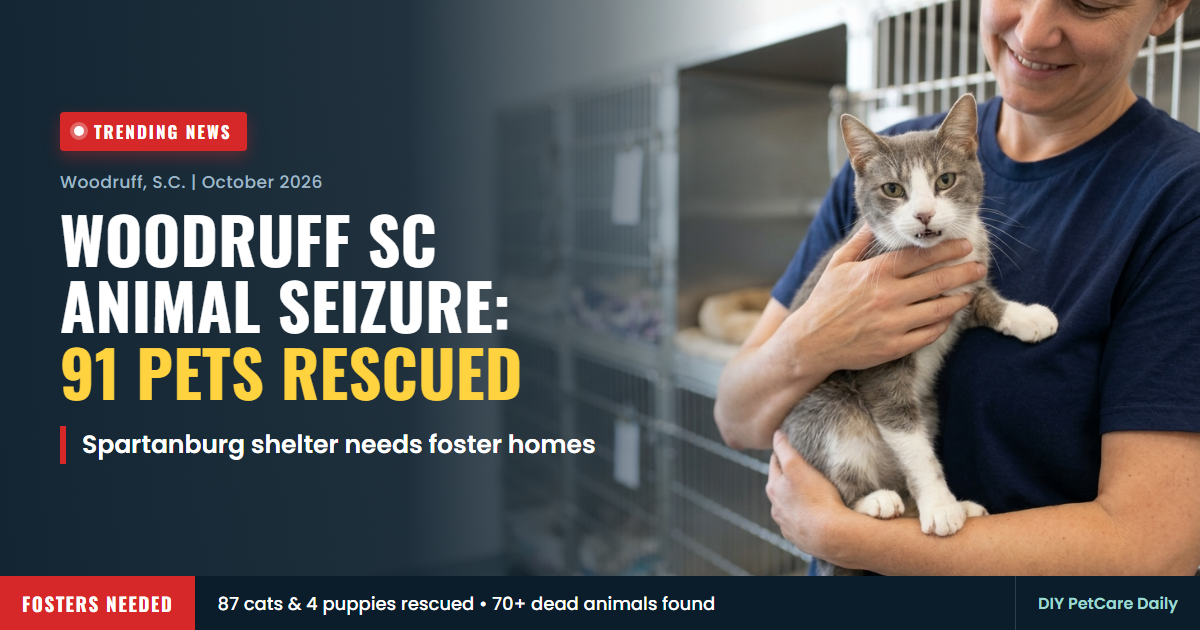
Quick answer: On October 20, 2026, Spartanburg County Animal Control removed 91 live animals (87 cats and 4 puppies) from a property on Greenpond Road in Woodruff, South Carolina, that operated as “CLiFs No Kill Shelter & Rescue.” Officers also found more than 70 dead animals, many in freezers. The Spartanburg County Pet Resource Center is now over capacity and is asking for foster homes, adopters, and donations of cat litter, cat food, and blankets.
A story out of Upstate South Carolina has animal lovers across the country upset, and for good reason. A private rescue that called itself “no-kill” was shut down after officers found dozens of sick cats living in stacked wire cages, along with the remains of more than 70 animals. The good news is that 91 animals made it out alive. The hard part is what comes next: one county shelter suddenly has far more cats than it has room for.
Here’s what we know about the Woodruff SC animal seizure so far, how the rescued cats are doing, and the simple ways you can help, even if you don’t live in South Carolina.
Table of Contents
- What Happened at the Woodruff Property
- What Investigators Found Inside
- Who Was Cited and What Happens Next
- Where the Rescued Animals Are Now
- How You Can Help the Spartanburg County Pet Resource Center
- Did You Surrender a Pet to CLiFs No Kill Shelter?
- Thinking About Fostering a Rescued Cat? What to Expect
- Red Flags: How to Tell if a Rescue Is Safe
- A Bigger Problem in Spartanburg County
- Frequently Asked Questions
What Happened at the Woodruff Property
According to Spartanburg County officials, Animal Control received calls about conditions at the property in mid-October. Local reports put the first complaint around October 15 or 16. Officers executed a search warrant at the home on Greenpond Road in Woodruff on Tuesday, October 20, 2026, with help from staff at the Spartanburg County Pet Resource Center.
The property was run as CLiFs No Kill Shelter & Rescue. County officials say the operation was not a registered 501(c)(3) nonprofit. Some local residents had surrendered their pets there, believing they were giving them to a real rescue.
Quick Timeline
- Around October 15–16: Animal Control receives complaints about the property.
- October 20: Officers serve a search warrant and remove 91 live animals.
- October 21: Spartanburg County announces the seizure and the citations.
- October 26: Local news reports that 20 cats have been medically cleared for adoption and 16 are already in foster homes.
- November 9: The operator is scheduled to appear in court, according to the Spartanburg Herald-Journal.
What Investigators Found Inside
The details in the officers’ report are hard to read. They described “numerous animals, unsanitary living conditions, excessive feces accumulation.” Here’s what was reported:
- More than 70 dead animals were found on the property. Several of the remains were stored in freezers, and officials believe some of the animals may have died as far back as 2023.
- Cats were kept in a tarp-covered structure with a strong ammonia smell, the kind of smell that comes from built-up urine.
- Wire crates and cages were stacked two to three levels high, with several cats inside each one.
- Some cages had no solid floor, which meant cats were standing on wire for long periods. That can cause painful sores on a cat’s paws.
- Many of the living cats were emaciated (severely underweight) and had serious medical problems, according to veterinary exams.
Spartanburg County Environmental Enforcement condemned the home and property, calling the structure “unsafe and unfit for human or animal occupancy.”
Who Was Cited and What Happens Next
The operator, Carol Ferger, was cited on 15 county ordinance violations:
- 6 counts of ill treatment and cruelty to animals
- 6 counts involving the duties of animal owners
- 3 counts involving maintenance of premises
These are citations, not convictions. As of the latest reports, no further criminal charges had been announced, and the case is expected to move through the court process in November. We’ll update this post if new information comes out.
Where the Rescued Animals Are Now
All 91 animals went into the care of Spartanburg County. The 4 puppies were moved to another shelter. The 87 cats went to the Spartanburg County Pet Resource Center, where staff veterinarians are treating them.
That’s a huge number for one building. The center’s cat adoption room has only 16 kennels, so staff are using every flexible space they have. The shelter says it has reached critical capacity.
Kennedi Harris, the center’s community relations manager, told the Spartanburg Herald-Journal that the care team will decide which cats are ready for adoption, adding, “A lot will be, we believe.”
As of October 26, local station WYFF reported that 20 cats had been medically cleared for adoption and 16 had gone to foster homes. That’s real progress, but it leaves dozens of cats still waiting.
How You Can Help the Spartanburg County Pet Resource Center
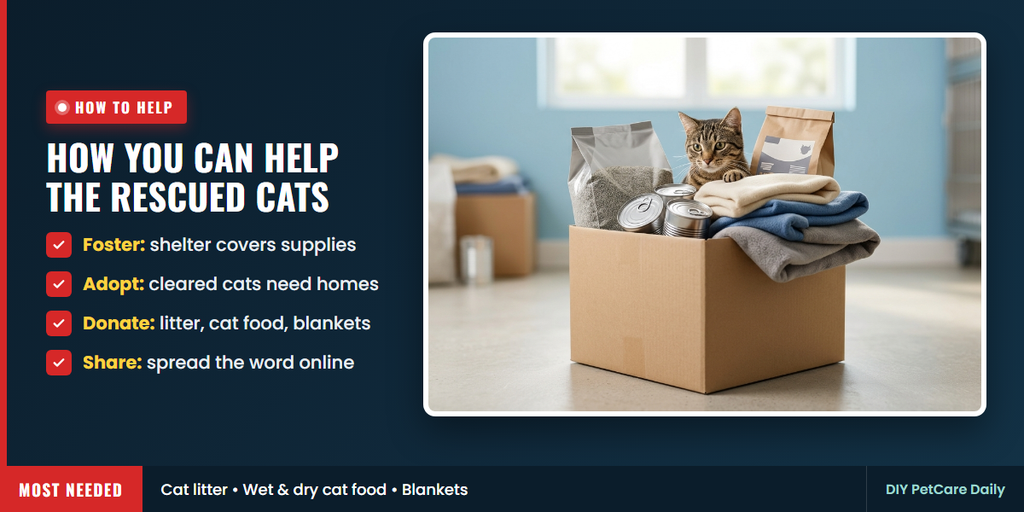
You don’t need to adopt to make a difference. Here are the main ways to help right now.
Become a Foster Home
Fostering is the fastest way to free up kennel space. Under the Pet Resource Center’s foster model, the center provides the food, supplies, and support, and the foster family provides a home and daily care. Some cats need only a quiet place to gain weight and relax. Others may need a little extra help while they recover.
If you live in the Spartanburg area and have a spare room, fostering even one cat helps. Email the center at prcinfo@spartanburgcounty.gov to ask about current foster openings.
Adopt a Cat
Cats that pass their medical checks are being prepared for adoption. Local reports say cats already at the center have been listed at a $25 adoption fee, though fees can change, so confirm when you visit. You can find adoptable animals through the Adopt page on the Spartanburg County government website.
Donate Supplies
The center says these items are needed most:
- Cat litter
- Wet cat food
- Dry cat food
- Blankets
Donations can be dropped off outside the center’s Adoption Lobby.
Help From Outside South Carolina
Not local? You can still help:
- Share the shelter’s posts about adoptable cats on social media. More eyes means faster adoptions.
- Support your own local shelter. Shelters all over the US are full this fall, and many need fosters too.
- Learn the red flags of unsafe rescues (we cover them below) so this doesn’t happen in your community.
Did You Surrender a Pet to CLiFs No Kill Shelter?
If you gave a pet to this rescue, the county wants to hear from you. Some of the cats may be yours, and Harris said some former owners “might be in a better situation now and could reclaim their pet.”
People often give up pets for reasons they can’t control, like moving to housing that doesn’t allow animals or going through money problems. There’s no shame in reaching out.
To ask about a pet, email prcinfo@spartanburgcounty.gov and include:
- Your pet’s name, age, sex, and color or markings
- When you surrendered the pet
- Any proof of ownership, such as photos, vet records, or a microchip number
Thinking About Fostering a Rescued Cat? What to Expect
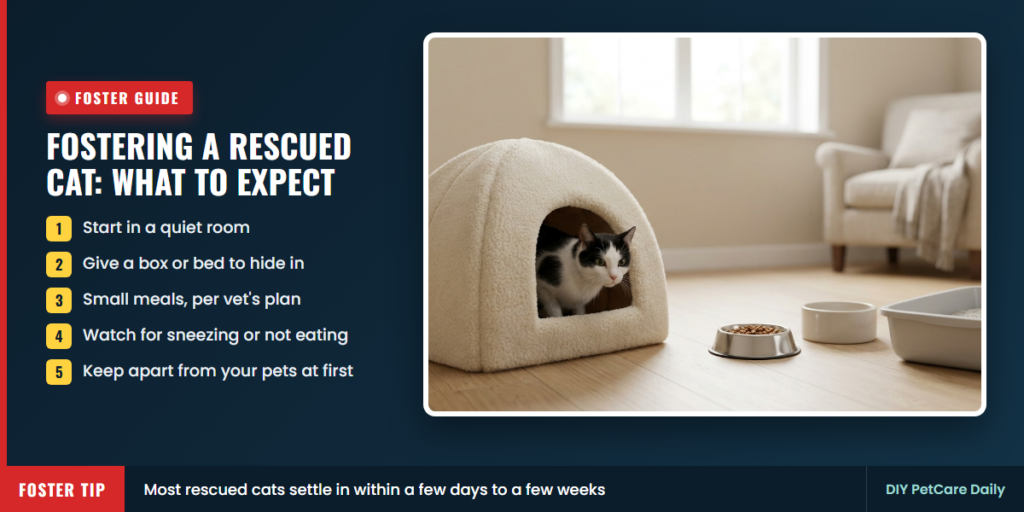
Cats from hoarding cases often need a gentle start. If you foster or adopt one of these cats, or any rescue cat, these tips will help.
Give Them a Quiet Room First
Set up a small, calm room with a litter box, food, water, a soft bed, and a hiding spot like a covered box. Many hoarding-case cats are scared of open spaces and people at first. Let your cat come to you. Most cats settle in within a few days to a few weeks.
Feed Slowly if Your Cat Is Underweight
It’s natural to want to fill up a skinny cat’s bowl. But a cat that has been starved can get very sick if it eats too much too fast. Follow the feeding plan from the shelter or your vet exactly. Small meals several times a day are usually the safest start. Our guide on how much to feed your cat explains normal portions once your cat is at a healthy weight.
Watch for Signs of Illness
Cats from crowded spaces can carry upper respiratory infections, parasites, ear mites, or skin problems. Call the shelter’s foster team or your vet if you notice:
- Sneezing, runny eyes, or nasal discharge
- Not eating for more than a day
- Diarrhea, vomiting, or straining in the litter box
- Hiding all the time and not coming out to eat
- Limping or sore paws
Cats are experts at hiding discomfort. Our checklists on signs of a sick cat and signs of pain in cats can help you catch problems early.
Take Care of Coat and Paws
Neglected cats often have matted fur and overgrown nails. Don’t try to fix it all on day one. Once your cat trusts you, go slowly. Our guides on how to remove mats from cat fur and how to trim cat nails walk you through it step by step. For severe mats, let a vet or groomer handle it.
Keep Them Apart From Your Other Pets at First
Keep a foster cat separated from your own pets until a vet clears them. This protects everyone from anything contagious and gives the new cat time to adjust.
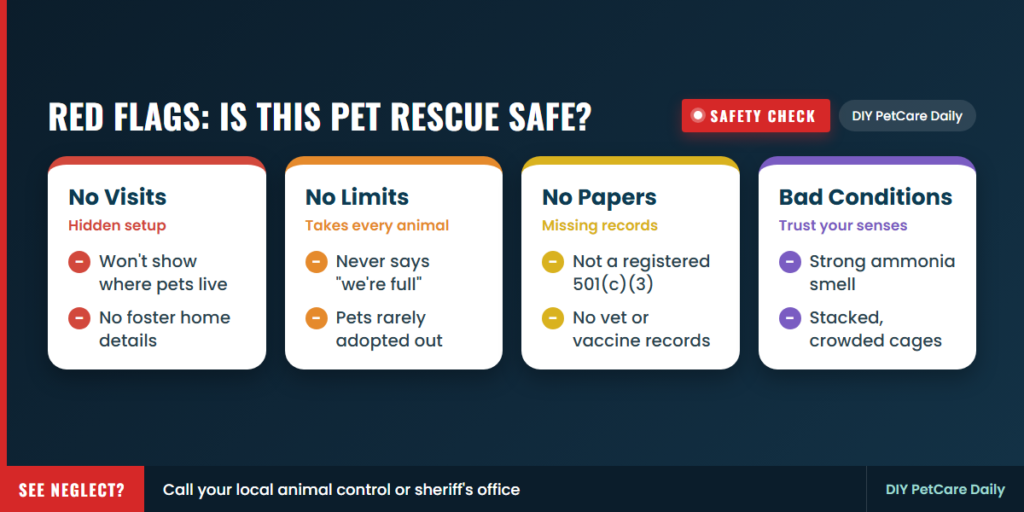
Red Flags: How to Tell if a Rescue Is Safe
The saddest part of this story is that some people surrendered their pets to CLiFs thinking they were doing the right thing. Before you give a pet to any rescue, or adopt from one, check for these warning signs:
- They won’t let you visit. A real rescue is usually happy to show you where animals live, or to explain its foster home setup.
- They take every animal, no matter what. Good rescues have limits and will say “we’re full” when they need to.
- No nonprofit status. Ask if they’re a registered 501(c)(3). You can confirm this with the IRS’s online Tax Exempt Organization Search.
- No vet records. A real rescue can show vaccine records, spay/neuter records, and the name of its vet.
- Strong smells or lots of crates. A strong ammonia smell, animals stacked in cages, or dirty bedding are big warning signs.
- Animals are never adopted out. If pets go in but rarely come out, something may be wrong.
If you see signs of animal neglect or hoarding anywhere, call your local animal control or sheriff’s office. You could save lives, just like the people who called about the Woodruff property.
A Bigger Problem in Spartanburg County
This case comes at a hard time for the area. The Spartanburg Herald-Journal has reported that the county’s stray cat population may be 30,000 or more, and volunteers have been working on trap-neuter-return programs to bring that number down. When 87 cats arrive at one shelter in a single day, it puts pressure on a system that was already busy.
That’s why spaying and neutering your own pets matters so much. Fewer unplanned litters means fewer cats ending up in crowded, unsafe places. If you’re a cat owner, our Cat Health & Wellness section has more tips for keeping your cat healthy at every age.
Frequently Asked Questions
How many animals were seized in the Woodruff SC animal seizure?
Officers removed 91 live animals, 87 cats and 4 puppies, from the Greenpond Road property on October 20, 2026. They also found more than 70 dead animals, many of them stored in freezers.
Can I adopt one of the cats rescued from Woodruff?
Yes, once a cat is medically cleared. As of October 26, 20 cats had been cleared for adoption. Check the Adopt page on the Spartanburg County government website or email prcinfo@spartanburgcounty.gov for the latest list.
How do I foster a cat for the Spartanburg County Pet Resource Center?
Email prcinfo@spartanburgcounty.gov and ask about foster openings. The center supplies food, supplies, and support. You provide a safe home and daily care until the cat is adopted.
What supplies does the shelter need?
Cat litter, wet cat food, dry cat food, and blankets are the top needs. You can drop donations off outside the center’s Adoption Lobby.
I surrendered my cat to CLiFs No Kill Shelter. Can I get them back?
Possibly. Email prcinfo@spartanburgcounty.gov with your cat’s description, the date you surrendered them, and any proof of ownership, like photos, vet records, or a microchip number. The center is working to reunite pets with former owners where it can.
This article is for general information and does not replace advice from your veterinarian. Details in this developing story are based on reports from Spartanburg County officials and local news as of October 27, 2026, and may change.