Table of Contents
- Table of Contents
- What Does DHPP Stand For?
- Why the DHPP Vaccine Is So Important
- DHPP Vaccine Schedule for Puppies
- DHPP Vaccine Schedule for Adult Dogs
- DHPP Vaccine Side Effects
- Can a Vaccinated Dog Still Get Parvo or Distemper?
- Signs of Distemper and Parvo to Watch For
- How Much Does the DHPP Vaccine Cost?
- Tips for Your Puppy’s Vaccine Visits
- Frequently Asked Questions
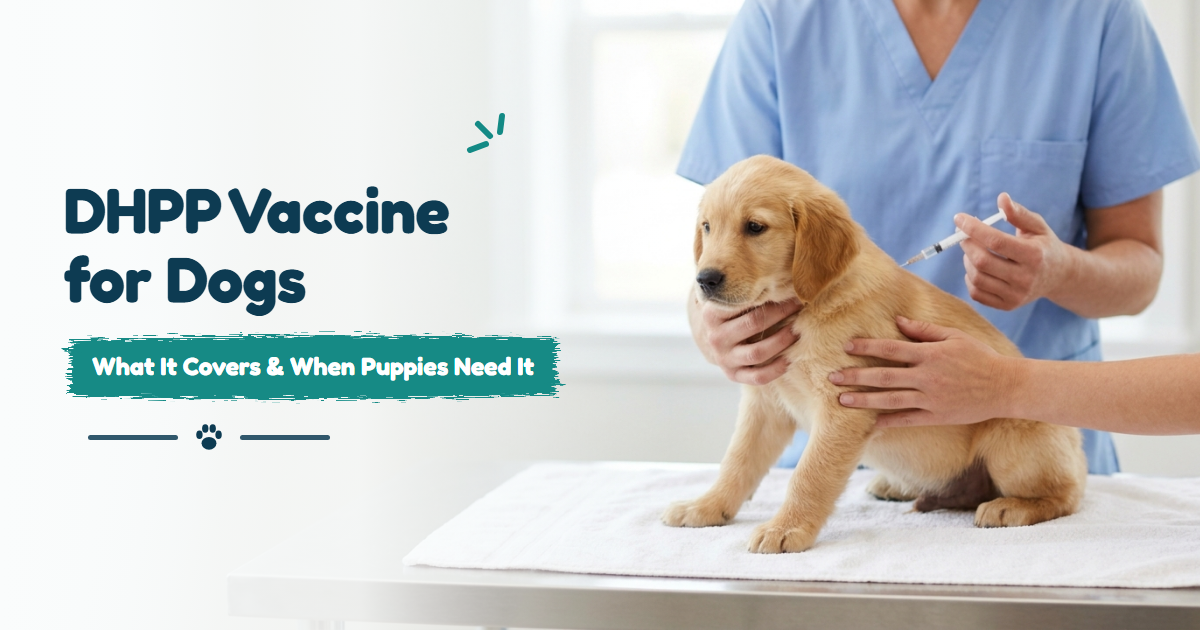
Quick answer: The DHPP vaccine is a core combination shot for dogs that protects against four diseases: distemper, hepatitis (adenovirus), parainfluenza, and parvovirus. Puppies get it every 2 to 4 weeks starting at 6 to 8 weeks old until they are at least 16 weeks old, then a booster 6 to 12 months later. Adult dogs usually need a booster every 3 years. It’s one of the most important vaccines your dog will ever get.
If you’ve just brought home a puppy, DHPP is probably the first vaccine you’ll see on their records. It’s often called the distemper shot for dogs, the “4-in-1,” or the “5-in-1,” and it protects against some of the most dangerous diseases dogs can catch.
This guide explains what the DHPP vaccine covers, the puppy and adult schedule, why stopping the puppy series early is risky, side effects, cost, and answers to common questions.
Table of Contents
- What Does DHPP Stand For?
- Why the DHPP Vaccine Is So Important
- DHPP Vaccine Schedule for Puppies
- DHPP Vaccine Schedule for Adult Dogs
- DHPP Vaccine Side Effects
- Can a Vaccinated Dog Still Get Parvo or Distemper?
- Signs of Distemper and Parvo to Watch For
- How Much Does the DHPP Vaccine Cost?
- Tips for Your Puppy’s Vaccine Visits
- Frequently Asked Questions
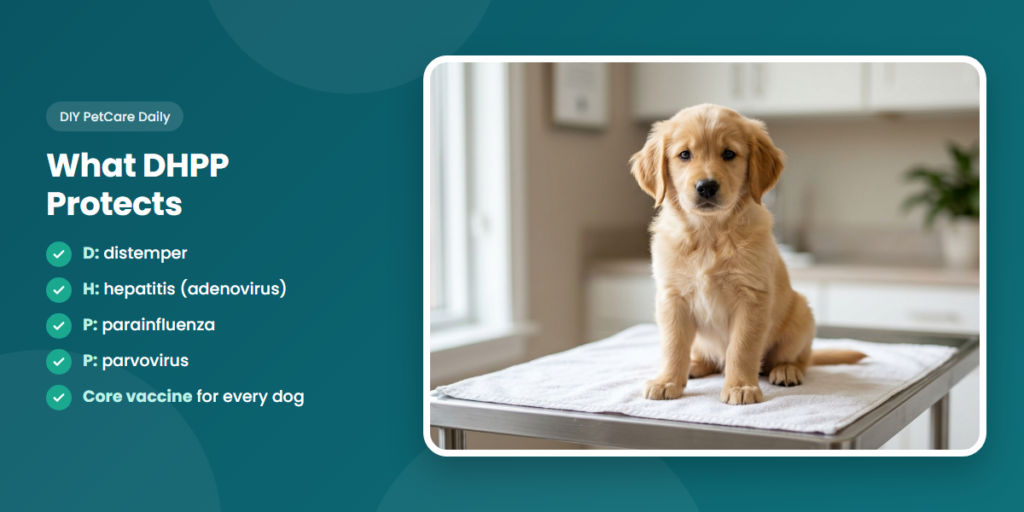
What Does DHPP Stand For?
| Letter | Disease | What It Does |
| D | Distemper | A virus that attacks the lungs, gut, and nervous system. It can cause coughing, eye and nose discharge, vomiting, diarrhea, thickened paw pads, seizures, and death. Many survivors have lasting nerve damage. |
| H | Hepatitis (canine adenovirus) | Infectious canine hepatitis damages the liver, kidneys, and eyes. The vaccine uses adenovirus type 2, which also protects against kennel cough. |
| P | Parainfluenza | A virus that’s one of the common causes of kennel cough. |
| P | Parvovirus | A very tough virus that causes severe vomiting and bloody diarrhea. It’s often fatal in puppies without intensive treatment. |
Other Names: DAPP Vaccine, DA2PP and the 5 in 1
You might see this vaccine listed in different ways on your dog’s records:
- DHPP or the DAPP vaccine (A stands for adenovirus)
- DA2PP (adenovirus type 2)
- DHLPP or DAPPL when leptospirosis is added, often called the 5 in 1 vaccine for dogs
- DAPP-C when canine coronavirus is added, which most vets no longer recommend
All of these include the same core protection against distemper, adenovirus, parainfluenza, and parvovirus.
Why the DHPP Vaccine Is So Important
The DHPP vaccine is a core vaccine, meaning US vet groups like the American Animal Hospital Association (AAHA) recommend it for every dog. Here’s why:
- Parvovirus is everywhere. It can survive in soil, on floors, and on shoes for months or longer and is hard to kill with regular cleaners.
- Distemper still spreads. It’s carried by wildlife like raccoons, foxes, and skunks, as well as unvaccinated dogs.
- These diseases are hard to treat. There’s no cure for distemper or parvo. Treatment means days of hospital care, and many puppies don’t survive.
- The vaccine works very well. A properly completed puppy series gives strong, long-lasting protection.
DHPP Vaccine Schedule for Puppies
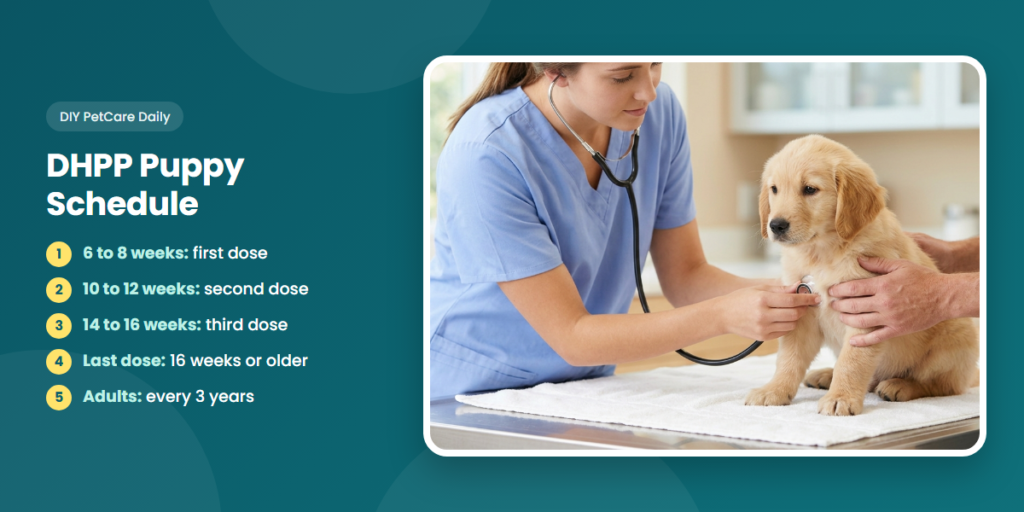
Puppies get antibodies from their mother’s milk. These protect them early on but also block vaccines from working. The antibodies fade at different times in different puppies, often between 6 and 16 weeks or later. That’s why puppies need several doses.
| Puppy’s Age | DHPP Dose |
| 6 to 8 weeks | First dose |
| 10 to 12 weeks | Second dose |
| 14 to 16 weeks | Third dose |
| 16 to 20 weeks | Final dose for high-risk breeds or if the series started early |
| 6 to 12 months after the last puppy dose | First booster |
Don’t Stop the Series Early
The most important rule is this: the last DHPP dose must be given at 16 weeks of age or older. A puppy who gets three shots but finishes at 12 weeks may still not be protected, because mother’s antibodies may have blocked those doses. This is one of the most common reasons vaccinated puppies still get parvo.
Some breeds, including Rottweilers, Doberman Pinschers, German Shepherds, and Pit Bull-type dogs, may be at higher risk for parvo. Your vet may suggest a final dose at 18 to 20 weeks for these puppies.
See our full dog vaccination schedule for how DHPP fits with rabies, leptospirosis, and lifestyle vaccines.
Keeping Your Puppy Safe Until They’re Protected
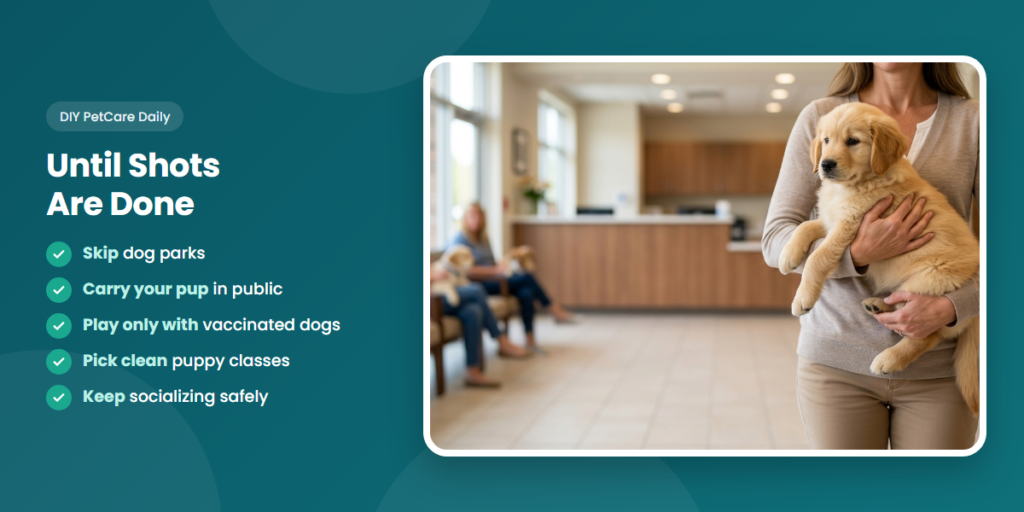
Your puppy isn’t fully protected until about 1 to 2 weeks after their final DHPP dose. Until then:
- Avoid dog parks, pet store floors, and rest stops where many dogs go
- Carry your puppy through the vet’s waiting room
- Let them play only with healthy, fully vaccinated dogs you know
- Choose puppy classes that require shots and clean well
Socialization still matters a lot, so don’t keep your puppy fully isolated. Just pick safe places.
DHPP Vaccine Schedule for Adult Dogs
| Situation | DHPP Schedule |
| Finished puppy series and first booster | Every 3 years |
| Adult with unknown vaccine history | 1 or 2 doses, 2 to 4 weeks apart, then every 3 years |
| Senior dogs | Usually every 3 years; your vet may check a titer instead |
| Pregnant dogs | Usually not vaccinated during pregnancy; plan vaccines before breeding |
What Is a Titer Test?
A titer test is a blood test that measures your dog’s antibodies against distemper and parvovirus. If the levels are good, your vet may decide your dog doesn’t need a DHPP booster yet. Titers are often used for senior dogs or dogs who’ve had vaccine reactions. They usually cost more than the vaccine itself.
Note: a titer can’t replace the rabies vaccine where it’s required by law. Our guide on the rabies vaccine for dogs explains those rules.
DHPP Vaccine Side Effects
Most dogs have no side effects or only mild ones that pass in a day or two.
Common, mild side effects:
- Tiredness or a quieter mood
- A mild fever
- Eating a little less for a day
- Soreness or a small lump at the injection site
Rare, serious reactions (go to a vet right away):
- Vomiting or diarrhea soon after the shot
- Swelling of the face, muzzle, or around the eyes
- Hives or very itchy skin
- Trouble breathing
- Collapse
Small dogs who get several vaccines in one visit may be at a slightly higher risk of reactions. Ask your vet about spacing vaccines out if your dog is tiny or has reacted before.
Can a Vaccinated Dog Still Get Parvo or Distemper?
It’s rare, but it can happen, most often in puppies who:
- Haven’t finished their full DHPP series
- Got their last dose before 16 weeks
- Were exposed before the vaccine had time to work
Fully vaccinated adult dogs are very well protected. If your puppy has vomiting and bloody diarrhea, especially before their series is done, go to a vet right away. Our guide on blood in dog stool explains which signs are emergencies.
Signs of Distemper and Parvo to Watch For
Knowing the early signs helps you act fast, especially with a young puppy who hasn’t finished their shots.
| Disease | Early Signs | Later Signs |
| Parvovirus | Low energy, not eating, fever | Repeated vomiting, bloody and very smelly diarrhea, dehydration |
| Distemper | Watery or goopy eyes, runny nose, cough, fever | Vomiting, diarrhea, thickened nose and paw pads, twitching, seizures |
| Infectious hepatitis | Fever, low energy, not eating | Belly pain, vomiting, yellow gums, cloudy blue eyes |
| Parainfluenza | Dry, honking cough | Rarely, pneumonia in puppies |
If your puppy shows any of these signs, call your vet right away. Keep your puppy away from other dogs until they’ve been checked, since these diseases spread easily. Early treatment gives puppies the best chance of recovery.
How Much Does the DHPP Vaccine Cost?
| Service | Typical US Cost |
| DHPP vaccine (one dose) | $20 to $50 |
| Vet exam | $50 to $90 |
| Full puppy DHPP series (3 to 4 doses) | $80 to $200, plus exam fees |
| Low-cost clinic DHPP | $15 to $30 |
| Titer test (distemper and parvo) | $60 to $150 |
Shelters, humane societies, and pet stores often hold low-cost vaccine clinics. Many puppies adopted from shelters or breeders come with their first dose already given, so ask for those records.
Tips for Your Puppy’s Vaccine Visits
- Bring all records from the breeder or shelter
- Feed a small meal beforehand unless your vet says otherwise
- Bring tasty treats to make the visit fun
- Ask about deworming and starting flea, tick, and heartworm prevention
- Ask how much to feed as your puppy grows; our how much to feed a puppy guide has a chart
- Watch your puppy for a few hours after the visit
For more guides on keeping your dog healthy, visit our Dog Health & Wellness section.
Frequently Asked Questions
What is the DHPP vaccine?
The DHPP vaccine is a core combination shot that protects dogs against distemper, hepatitis (adenovirus), parainfluenza, and parvovirus. These are serious, contagious diseases, and distemper and parvo are often fatal in puppies.
How many DHPP shots does a puppy need?
Most puppies need 3 or 4 DHPP shots, given every 2 to 4 weeks from 6 to 8 weeks old until at least 16 weeks old. The exact number depends on when the series starts. The last dose must be at 16 weeks or later.
How often do adult dogs need the DHPP vaccine?
After the puppy series and a booster 6 to 12 months later, most adult dogs need a DHPP booster every 3 years. Your vet may use a titer test to check if a booster is needed.
Is DHPP the same as the distemper shot for dogs?
Yes. People often call the DHPP vaccine the “distemper shot,” but it protects against four diseases, not just distemper.
Is the DHPP vaccine required by law?
No. Rabies is the only dog vaccine required by law in nearly every US state. But DHPP is a core vaccine for every dog, and most boarding kennels, groomers, and daycares require it. Many also require the Bordetella vaccine