Table of Contents
Quick answer: Can dogs eat ham? Not as a regular treat. Ham isn’t toxic to dogs, and a small plain bite usually won’t cause harm, but it’s very high in salt and fat. Big portions, fatty trimmings, sweet glazes, and especially ham bones can lead to vomiting, diarrhea, pancreatitis, or a blocked gut. Lean, unseasoned turkey or chicken is a much safer holiday treat.
Every December, a lot of dogs sit politely under the dinner table with one goal: a piece of the Christmas ham. It smells amazing, it’s right there, and those eyes are hard to say no to.
The honest answer is that ham sits in a gray zone. It isn’t poisonous like chocolate or grapes, but it’s one of the worse meats you can share with a dog. Below, we’ll cover why, how much is too much, what to do if your dog steals a slice (or the whole bone), and better ways to include your dog in the holiday meal.
Table of Contents
- Can Dogs Eat Ham Safely?
- Why Ham Is a Problem for Dogs
- How Much Ham Can a Dog Have?
- My Dog Ate Ham: What Should I Do?
- Is Ham Different From Other Pork?
- Better Holiday Treats to Share Instead of Ham
- Tips to Keep Your Dog Away From the Ham
- Frequently Asked Questions
Can Dogs Eat Ham Safely?
In very small amounts, most healthy dogs can eat plain ham without a problem. A thumbnail-sized piece of lean ham with no glaze isn’t going to hurt a 50-pound Lab.
The trouble is that ham is almost never served “plain.” Holiday hams are cured in salt, often smoked, and usually coated with a sugary glaze. They also come with fatty edges and a big bone. Each of those adds risk. So while ham isn’t on the list of foods that are toxic to dogs, vets generally put it on the “better not” list.
Here’s a quick way to think about it:
| Type of ham | Is it OK for dogs? |
| Small bite of lean, unglazed ham | Usually fine once in a while |
| Glazed spiral ham (honey, brown sugar) | Not recommended |
| Ham fat and trimmings | No, high risk for pancreatitis |
| Ham bone (cooked) | No, can splinter or cause a blockage |
| Deli ham and lunch meat | Not recommended, very salty |
| Prosciutto, country ham | No, extremely salty |
| Ham with onion, garlic, or seasoning rubs | No |
Why Ham Is a Problem for Dogs
It’s Loaded With Salt
Curing is the process that turns pork into ham, and it relies on salt. According to USDA nutrition data, a 3-ounce serving of cured ham can carry roughly 1,000 to 1,200 milligrams of sodium. That’s a lot for a person, and dogs are much smaller than we are.
A small dog who eats a few slices can end up very thirsty and may vomit or have diarrhea. Large amounts of salt can lead to sodium poisoning, which causes vomiting, weakness, wobbliness, tremors, and in severe cases seizures. Dogs with heart disease or kidney disease are especially sensitive to extra sodium.
It’s High in Fat
Ham, especially the outer layer and trimmings, is fatty. A sudden rich, fatty meal is one of the classic triggers for pancreatitis in dogs. Vets see a spike in pancreatitis cases around Thanksgiving and Christmas for exactly this reason: dogs get table scraps they aren’t used to.
Pancreatitis can be mild or serious. Signs include:
- Vomiting, sometimes repeated
- A painful belly (your dog may stand hunched or in a “prayer” position, front end down and back end up)
- Not wanting to eat
- Diarrhea
- Low energy
Small breeds like Miniature Schnauzers, Yorkies, and other dogs prone to high blood fats are at higher risk.
Glazes and Seasonings Add More Risk
Holiday hams are often brushed with honey, brown sugar, maple syrup, or pineapple glaze. Sugar isn’t toxic, but it’s empty calories and can upset the stomach. Some glazes and rubs also contain garlic or onion powder, both of which can damage a dog’s red blood cells. Cloves pressed into the ham are another thing your dog doesn’t need to swallow.
If you’re ever using a store-bought “sugar-free” glaze or sauce, check the label for xylitol (sometimes listed as birch sugar). Xylitol is highly toxic to dogs even in small amounts.
Ham Bones Are Dangerous
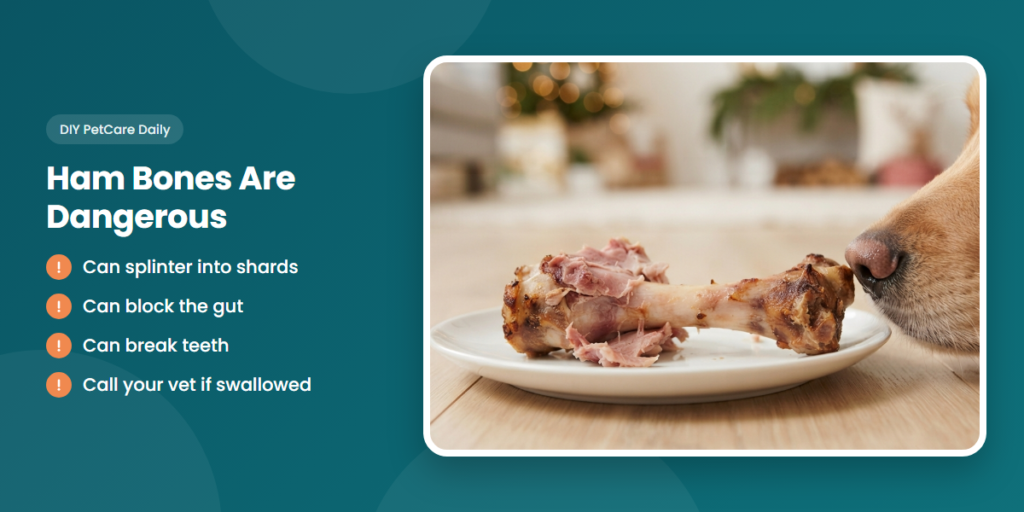
This is the biggest worry. Cooked bones get brittle, so they can splinter into sharp pieces when a dog chews them. Big chunks can also get stuck in the throat, stomach, or intestines. Possible problems include:
- Choking
- Cuts inside the mouth
- Broken teeth
- Constipation from bone fragments
- A blockage in the stomach or intestines, which may need surgery
The FDA has warned pet owners about “bone treats” and cooked bones for this reason. A ham bone is never a safe holiday gift for your dog, no matter how happy it would make them.
How Much Ham Can a Dog Have?
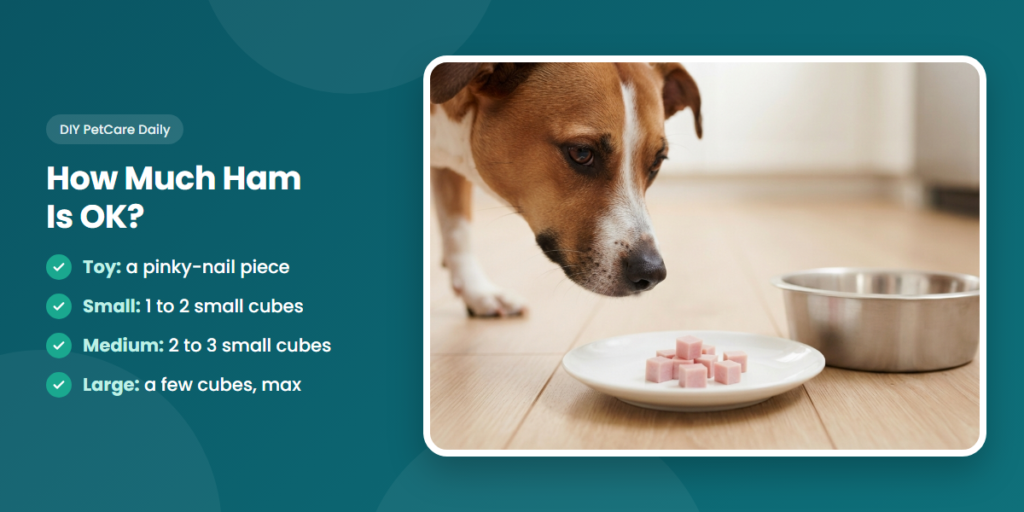
If you decide to share, keep it tiny. Treats and extras of any kind should stay under about 10% of your dog’s daily calories, and salty, fatty foods like ham should be a small part of that.
As a rough guide for a one-time taste of lean, unglazed ham with the fat trimmed off:
| Dog size | A safe “taste” of plain ham |
| Toy (under 10 lb) | A piece about the size of your pinky nail, or skip it |
| Small (10 to 25 lb) | 1 to 2 small cubes, about 1/2 inch |
| Medium (25 to 50 lb) | 2 to 3 small cubes |
| Large (50 lb and up) | A few small cubes, no more than a thin slice |
Skip ham completely if your dog has a history of pancreatitis, a sensitive stomach, heart disease, kidney disease, or is on a low-fat or low-sodium diet. Not sure how many calories your dog needs? Our guide on how many calories a dog needs breaks it down by size.
My Dog Ate Ham: What Should I Do?
Don’t panic. What you do next depends on what and how much they ate.
If They Ate a Slice or Two
- Take away any leftovers so they can’t eat more.
- Make sure fresh water is available. Ham makes dogs thirsty.
- Watch them for the next 24 to 48 hours for vomiting, diarrhea, belly pain, or low energy.
- Feed their normal food at the next meal, or a smaller portion if their stomach seems off.
Most dogs who sneak a slice have, at worst, a bit of an upset stomach. If your dog gets diarrhea, our guide on what to give a dog for diarrhea explains safe home care and when to call the vet.
If They Ate a Lot of Ham or the Fat
Call your vet if your dog ate a large amount, especially if they’re small. Ask whether they want to see your dog. Signs of pancreatitis often show up within a day or two of the meal.
If They Ate a Ham Bone
Call your vet right away. Do not try to make your dog vomit at home. A bone coming back up can do as much damage as one going down. Your vet may suggest watching at home, taking X-rays, or other care depending on the size of the bone and your dog.
Signs That Mean “Go to the Vet Now”
- Vomiting more than once or twice, or vomiting with no food coming up
- Swollen, tight, or painful belly
- Straining to poop with nothing coming out
- Bloody vomit or stool
- Extreme thirst with stumbling, tremors, or confusion (possible salt poisoning)
- Choking, gagging, or pawing at the mouth
- Collapse or seizures
If your regular vet is closed for the holiday, call your nearest emergency animal hospital. You can also call the ASPCA Animal Poison Control Center at (888) 426-4435 or the Pet Poison Helpline at (855) 764-7661. Both are open 24/7, and a consultation fee may apply.
Is Ham Different From Other Pork?
Yes, and the difference is mostly the salt and processing. Plain, fully cooked pork with no seasoning is easier on a dog than ham. That said, pork in general is fattier than chicken or turkey, so it isn’t a great everyday treat either.
Never give your dog raw or undercooked pork, which can carry parasites and bacteria. Bacon, sausage, hot dogs, and pepperoni are in the same “too salty and too fatty” group as ham.
Better Holiday Treats to Share Instead of Ham
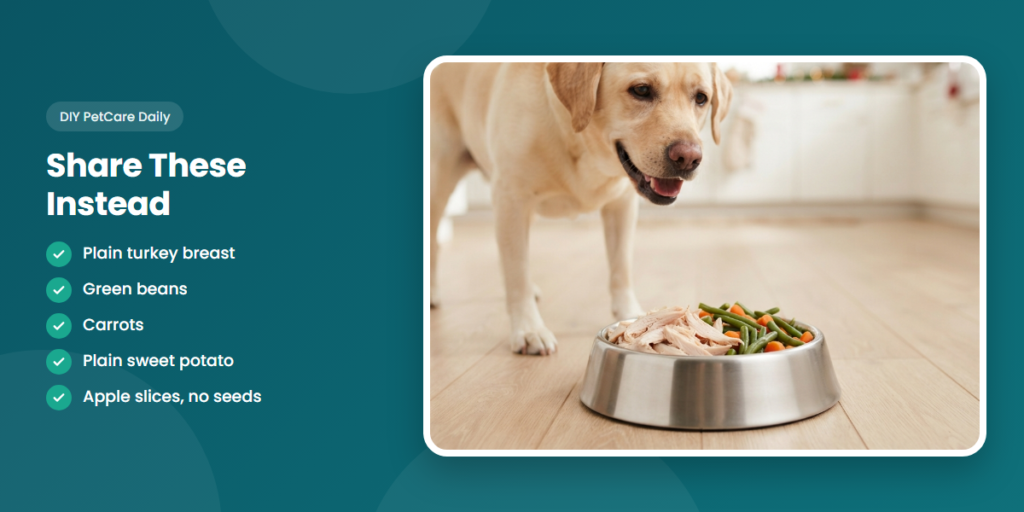
You can still include your dog in the celebration. These are much safer picks from a typical holiday kitchen, as long as they’re plain:
- Plain turkey breast: white meat with no skin, bones, or gravy. Read our full guide on whether dogs can eat turkey for the details.
- Plain cooked chicken breast: a classic for good reason.
- Green beans: steamed or boiled, no butter or salt.
- Carrots: raw or cooked, cut into bite-size pieces.
- Sweet potato: plain baked or boiled, no marshmallows or brown sugar.
- Plain pumpkin: canned pure pumpkin, not pumpkin pie filling.
- Apple slices: no core or seeds. See our list of fruits dogs can eat for more.
Even better, make something just for them. Our Christmas dog treats recipes are made with dog-safe ingredients, so your pup gets a holiday snack without the salt and grease.
Tips to Keep Your Dog Away From the Ham
A lot of ham accidents happen when nobody’s looking. A few simple habits help:
- Ask guests not to feed the dog. Uncle Joe slipping scraps under the table adds up fast.
- Keep the ham away from counter edges. Tall dogs are expert counter surfers.
- Use a dog-proof trash can, or take the trash out right after dinner. Ham bones and fat drippings in the garbage are a common cause of holiday vet visits.
- Give your dog a job during dinner. A stuffed chew toy or a DIY snuffle mat keeps them busy while you eat.
- Crate or gate your dog in a quiet room if they can’t settle when food is out.
The holidays come with other hazards too, like tree water, tinsel, and toxic plants. Our guide to Christmas tree hazards for dogs covers the rest of the house.
Frequently Asked Questions
Can dogs eat ham bones?
No. Cooked ham bones can splinter into sharp pieces or get stuck in the throat, stomach, or intestines. If your dog swallows a ham bone, call your vet right away and don’t try to make them vomit at home.
Can dogs eat ham every day?
No. Ham is too salty and fatty to be a regular part of your dog’s diet. Eating it often raises the risk of stomach upset, pancreatitis, and weight gain. Save it for a rare, tiny taste, or skip it.
Is honey baked ham bad for dogs?
It’s worse than plain ham. Honey baked and glazed hams add sugar on top of the salt and fat, and some glazes include spices or seasonings that don’t agree with dogs. If your dog ate a small piece, just watch them for stomach upset.
Can puppies eat ham?
It’s best not to give puppies ham. Their stomachs are more sensitive, and they need a balanced puppy diet to grow well. Use small pieces of their regular food or plain cooked chicken as treats instead.
Can dogs eat deli ham?
Deli ham and other lunch meats are high in salt and often contain added preservatives. A tiny piece won’t usually hurt a healthy adult dog, but it shouldn’t be used as a treat or to hide pills on a regular basis.