Table of Contents
Quick answer: A DIY cat puzzle feeder makes your cat work for their food, like they would when hunting. Easy versions include a muffin tin with ping pong balls over the cups, paper rolls glued upright in a box, an egg carton with kibble in each cup, and a plastic bottle with holes. Start with easy puzzles, use part of your cat’s daily food, and make sure they’re still eating enough.
In the wild, cats don’t eat two big meals out of a bowl. They hunt many small meals a day, stalking, pouncing, and working for every bite. Indoor cats have it a lot easier. Their food shows up in a bowl, they eat it in a minute, and then there’s nothing much to do.
Food puzzles bring a little of that hunting back. Cat experts and feline vets have encouraged them for years as a simple way to keep indoor cats active and engaged. And you don’t need to buy one. A few household items and five minutes are enough.
Table of Contents
- Benefits of a DIY Cat Puzzle Feeder
- Types of Food Puzzles
- 7 Easy DIY Cat Puzzle Feeders
- Foraging Games Around the House
- Picking the Right Puzzle for Your Cat
- How to Introduce a Puzzle Feeder
- How Much Food to Put in a Puzzle
- Safety Tips
- Frequently Asked Questions
Benefits of a DIY Cat Puzzle Feeder
- Slower eating. Cats who gulp their food sometimes throw it right back up. Puzzles slow them down. If your cat vomits soon after meals, our guide to cat throwing up explains other causes to rule out.
- Weight control. Working for food burns a few calories and helps cats feel full on less. Our guide to obesity in cats explains why extra weight matters.
- Less boredom. Puzzles give indoor cats a job to do.
- Fewer problem behaviors. Bored cats may yowl for food, wake you up early, or knock things over. A puzzle can help keep them busy.
- Mental exercise. Figuring out a puzzle keeps the brain sharp, which is especially good for older cats.
Types of Food Puzzles
| Type | How it works | Best for |
| Stationary | Cat reaches in with a paw to scoop food out | Beginners, senior cats |
| Mobile | Cat rolls or bats it to make food fall out | Active, playful cats |
| Wet food puzzles | Food spread thin so cats lick it slowly | Cats on wet food diets |
| Foraging | Small portions hidden around the house | Curious, energetic cats |
Try a mix to find what your cat likes best.
7 Easy DIY Cat Puzzle Feeders
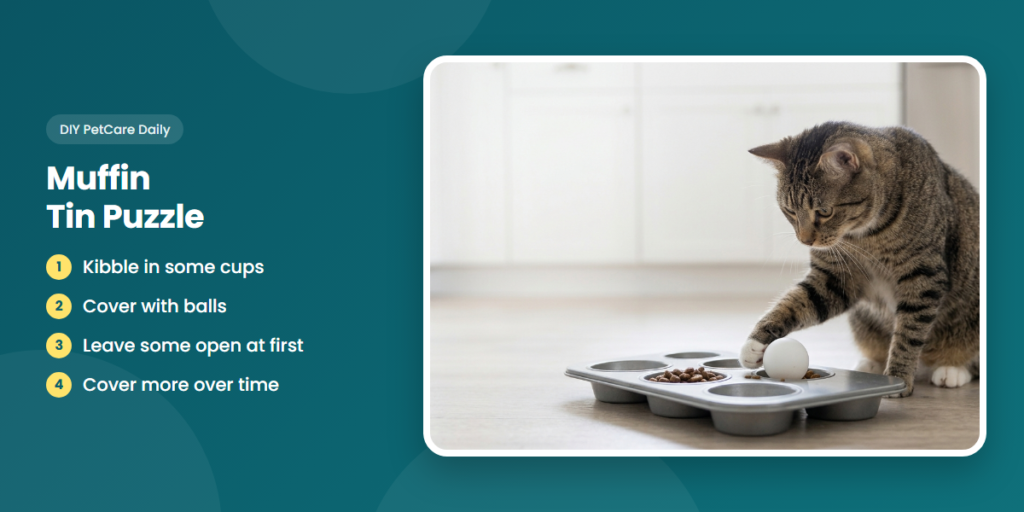
1. Muffin Tin Puzzle (Easy)
You need: a 6 or 12-cup muffin tin and a few ping pong balls or small balls of paper.
How to make it:
- Drop a few pieces of kibble or treats into some of the cups.
- Cover each cup with a ping pong ball.
- Let your cat figure out how to knock the balls away.
Start by leaving some cups uncovered so your cat gets an easy win. Cover more cups as they learn.
2. Egg Carton Puzzle (Easy)
You need: a clean paper egg carton (not foam).
How to make it:
- Put a few pieces of kibble in each cup.
- For beginners, leave the lid off.
- For a harder puzzle, close the lid and cut a few paw-sized holes in the top.
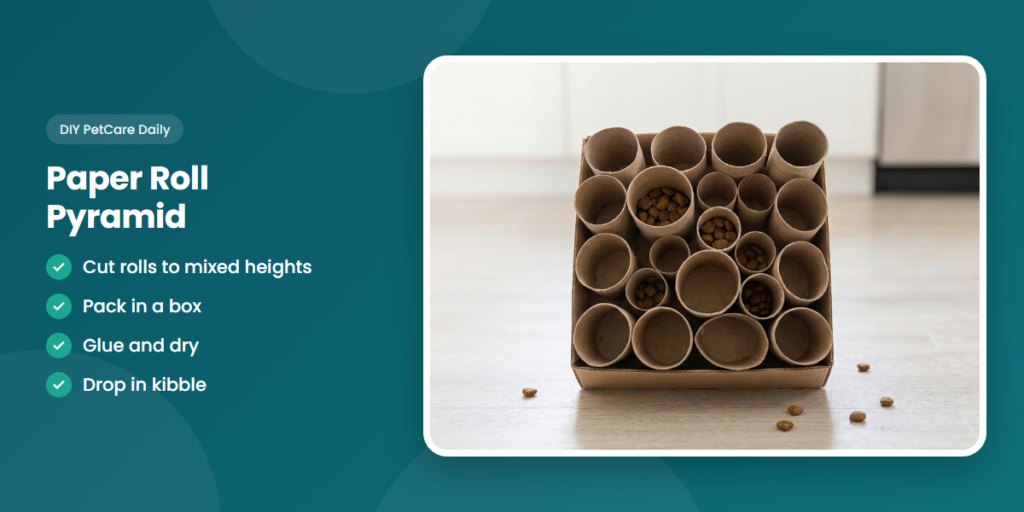
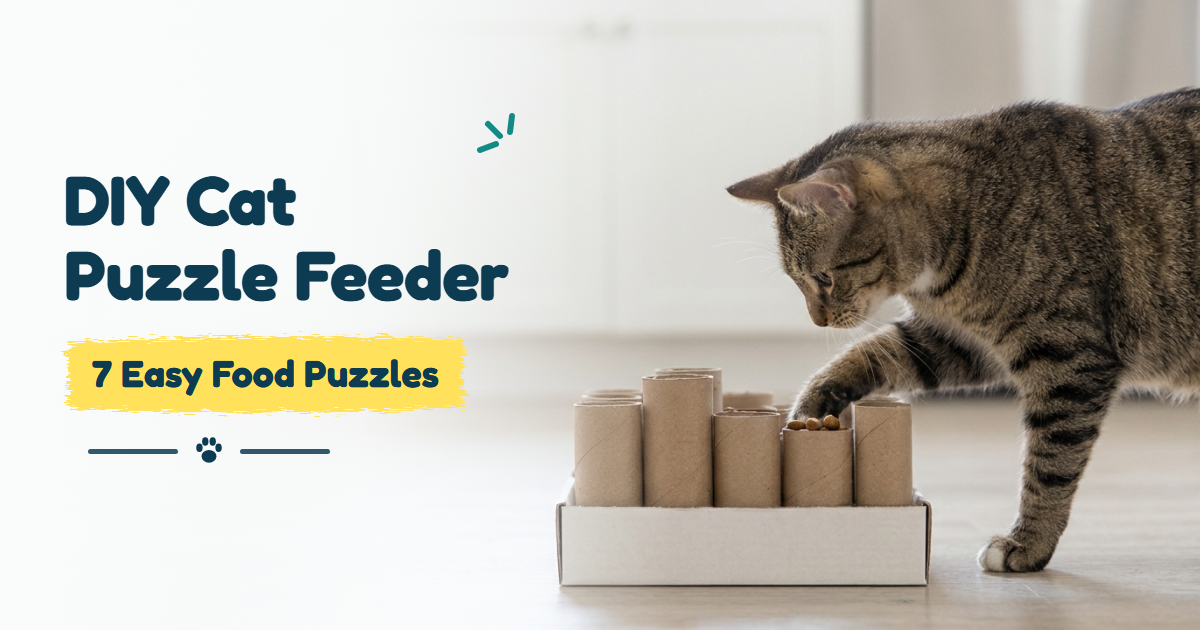
3. Paper Roll Pyramid (Medium)
You need: 10 to 15 empty toilet paper rolls, a shallow box or tray, and non-toxic glue.
How to make it:
- Cut the rolls to different heights, from about 2 to 4 inches.
- Stand them upright in the box, packed tightly together.
- Glue them in place and let them dry fully.
- Drop kibble into the tubes.
Your cat has to fish the food out with their paw, just like reaching into a mouse hole. Shorter tubes are easier; taller ones are harder.
4. Shoebox Paw Puzzle (Medium)
You need: a shoebox with a lid.
How to make it:
- Cut several holes in the lid, just big enough for your cat’s paw (about 2 inches across).
- Tape the lid on.
- Drop kibble through the holes.
Your cat reaches in to fish food out. Add a few toys or crumpled paper inside to make it trickier.
5. Plastic Bottle Treat Roller (Mobile)
You need: a clean, empty plastic water bottle with the label removed.
How to make it:
- Cut 3 or 4 holes in the sides, each a little bigger than a piece of kibble.
- Sand or tape over the edges of each hole so they’re smooth.
- Put a small handful of kibble inside and screw the cap on.
Your cat bats the bottle around, and kibble falls out as it rolls. Throw it out if it cracks or gets chewed.
6. Paper Roll Treat Ball (Mobile)
Cut a toilet paper roll into rings, then slide the rings inside one another to form a ball. Drop a few treats inside. Your cat rolls and swats it until treats spill out. It’s light and easy for kittens to play with.
7. Wet Food Puzzle Plate (Easy)
You need: a silicone ice cube tray or a clean silicone baking mat with ridges.
How to make it:
- Press a small amount of wet food into the sections or spread it thinly across the ridges.
- Serve it as is, or freeze it for 30 minutes to make it last longer.
This slows down wet food eaters without stressing them out.
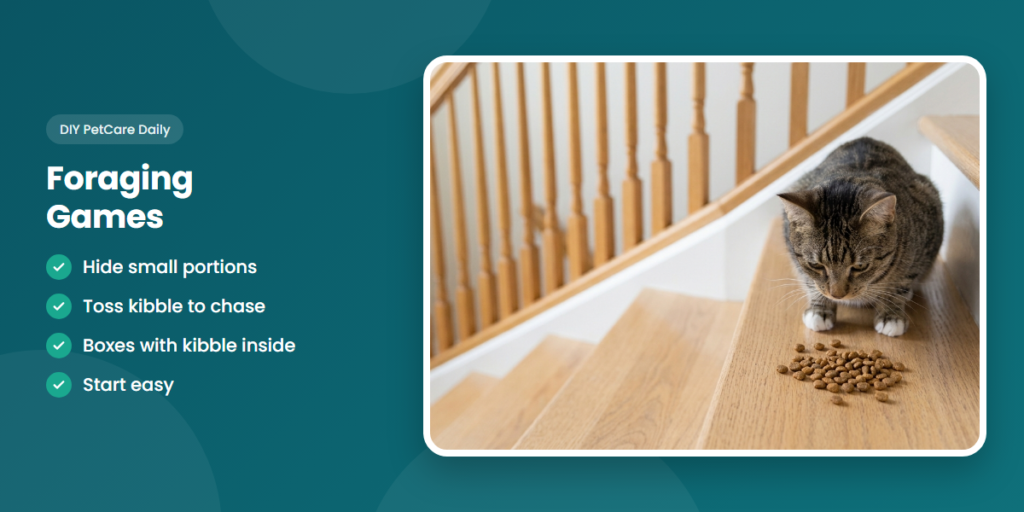
Foraging Games Around the House
You don’t always need a puzzle. Turn mealtime into a hunt:
- Hide small portions of kibble in a few spots around one room: on a step, behind a chair leg, on a cat shelf.
- Toss kibble one piece at a time across the floor for your cat to chase.
- Use cardboard boxes with kibble scattered inside.
Start easy. Show your cat the first few hiding spots, then make them a little harder each week.
Picking the Right Puzzle for Your Cat
Not every puzzle suits every cat. Match the puzzle to your cat’s age, body, and personality.
| Cat | Good puzzle choices | Tips |
| Kittens | Paper roll treat ball, egg carton | Keep it easy and short; kittens tire fast |
| Active adults | Bottle roller, paper roll pyramid, foraging games | Make it harder over time |
| Seniors | Muffin tin, wet food puzzle plate | Low, stable puzzles that don’t need chasing |
| Flat-faced breeds (Persian, Exotic Shorthair) | Shallow trays, egg carton with lid off | Deep tubes are hard for short noses |
| Cats with sore teeth or joints | Wet food puzzle plate, shallow trays | Avoid puzzles that need lots of twisting or reaching |
Watch your cat’s mood while they work. A swishing tail, flattened ears, or walking away usually means the puzzle is too hard. Make it easier and try again another day. A cat who’s relaxed, focused, and keeps coming back is having fun.
How to Introduce a Puzzle Feeder
Cats can get frustrated if a puzzle is too hard. Go slow.
- Start with the easiest version. Leave food visible and easy to reach.
- Use high-value treats for the first few tries.
- Show them how. Tap the puzzle and knock a piece out yourself.
- Keep the regular bowl at first. Offer the puzzle alongside their normal meal.
- Make it harder over time as your cat gets the hang of it.
- Stay nearby the first few times to make sure they’re succeeding.
How Much Food to Put in a Puzzle
Use part of your cat’s daily food, not extra. Measure the day’s total, then split it between the bowl and the puzzles. That way your cat doesn’t gain weight from bonus snacks.
Not sure how much your cat should eat in a day? Our guide on how much to feed your cat has a simple feeding chart. If you’re using puzzles as part of a weight plan, see our guide on how to help a cat lose weight.
Safety Tips
- Make sure your cat is eating. A cat who gives up and skips meals can get sick quickly. Cats should never go without food for more than a day. Keep some food easy to reach until your cat masters the puzzle.
- Check for chewing. Throw out cardboard or plastic puzzles that get chewed up.
- Smooth all edges on cut plastic.
- Clean puzzles often. Wash reusable ones after every use with wet food, and every few days with dry.
- Multi-cat homes: give each cat their own puzzle, in separate spots, so no one gets bullied away.
For more ways to keep your cat busy, try our DIY cat toys guide, or browse the DIY Cat Projects section.
Frequently Asked Questions
Are puzzle feeders good for cats?
Yes. Puzzle feeders slow down fast eaters, help with weight control, reduce boredom, and let indoor cats use their natural hunting skills. Start easy so your cat doesn’t get frustrated.
How do you make a cat food puzzle at home?
Put kibble in a muffin tin and cover the cups with ping pong balls, glue toilet paper rolls upright in a box and drop food inside, or cut holes in a plastic bottle so food falls out as it rolls.
Can I use wet food in a puzzle feeder?
Yes. Spread wet food thinly in a silicone ice cube tray or across a ridged lick mat. Freezing it for 30 minutes makes it last longer.
Why won’t my cat use the puzzle feeder?
The puzzle may be too hard, or your cat may not understand it yet. Go back to an easier version, use tasty treats, show your cat how it works, and keep sessions short and positive.
Can puzzle feeders help my cat lose weight?
They can help. Puzzles slow eating, add a little activity, and stretch meals out so cats feel more satisfied. They work best as part of a plan with measured portions and more play.