Table of Contents
Quick answer: Obesity in cats means carrying enough extra body fat to harm their health, usually a body condition score of 8 or 9 out of 9, or roughly 30% or more above ideal weight. It raises the risk of diabetes, arthritis, skin problems, and a shorter life. The treatment is a slow, vet-guided plan with measured food and more play. Never put a cat on a crash diet.
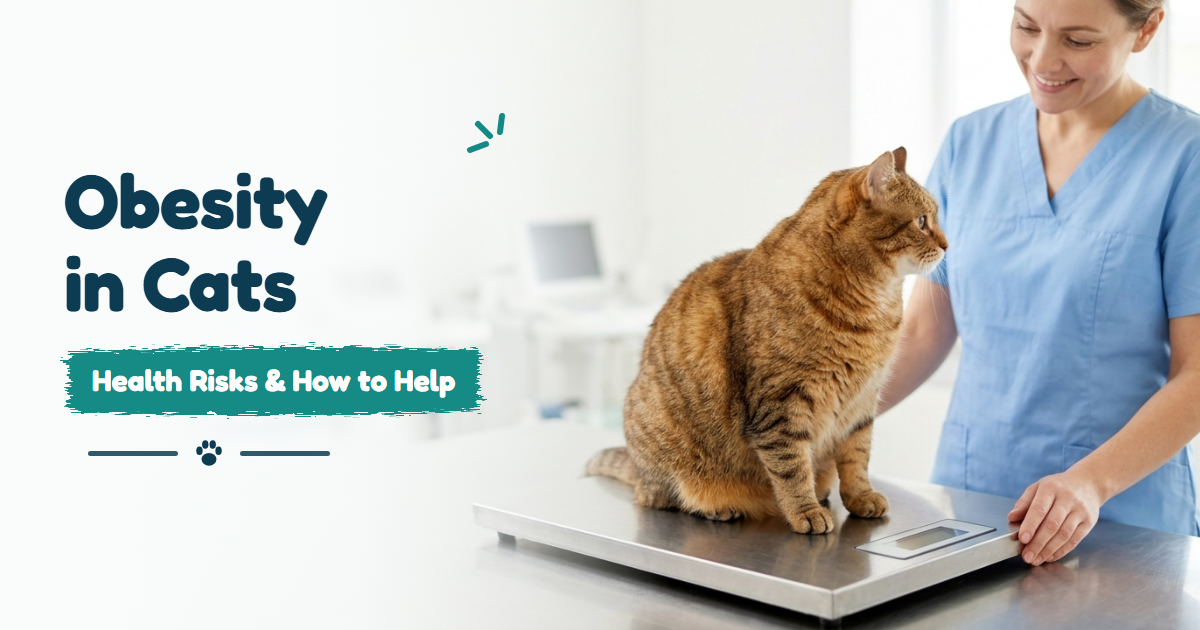
A chubby cat may look cute and cuddly, but those extra pounds can quietly affect how your cat feels every day. Surveys from the Association for Pet Obesity Prevention suggest that around 6 in 10 US cats are overweight or obese, so it’s a very common problem.
It’s also one of the most treatable health problems cats face. You don’t need expensive tools, just patience and a plan. This guide explains what obesity is, why it matters, how vets treat it, and how to keep the weight off.
Table of Contents
- What Is Obesity in Cats?
- Health Risks of Obesity in Cats
- What Causes Obesity in Cats?
- How Vets Treat Obesity in Cats
- How to Help an Obese Cat at Home
- How to Prevent Obesity in Cats
- Frequently Asked Questions
What Is Obesity in Cats?
Obesity is an excess of body fat that affects a cat’s health and quality of life. Vets don’t diagnose it from weight alone, since a healthy cat can be 8 lb or 16 lb, depending on their frame.
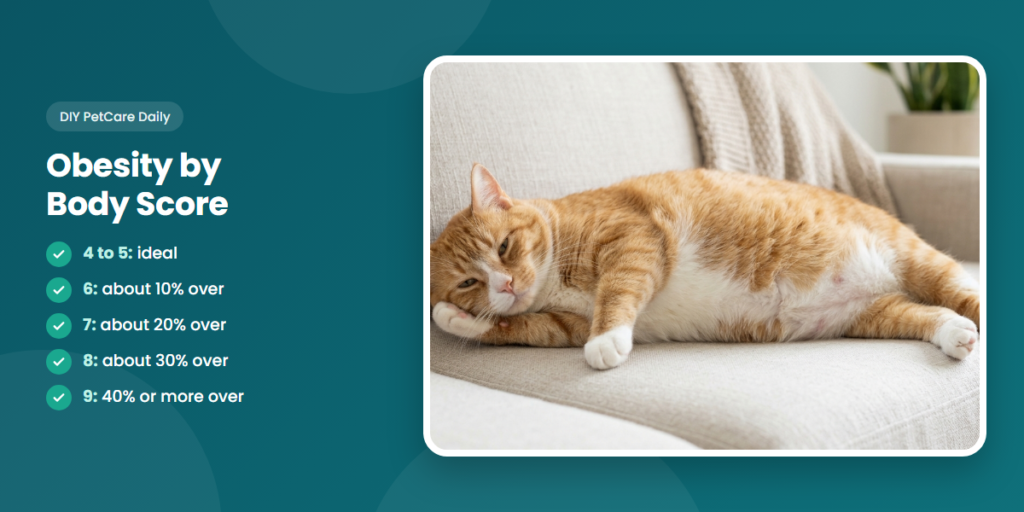
Instead, they use a 9-point body score. A score of 4 or 5 is ideal, and each point above that is about 10% extra weight.
| Body Score | Rating | About How Far Above Ideal |
| 4 to 5 | Ideal | On target |
| 6 | Slightly heavy | About 10% over |
| 7 | Overweight | About 20% over |
| 8 | Heavy | About 30% over |
| 9 | Obese | About 40% or more over |
Different sources draw the line in slightly different places. Most agree that a cat at a score of 8 or 9 is obese and needs a plan. Learn how to rate your own cat in our guide to the cat body condition score, or get a quick estimate from our cat BMI calculator.
Signs of an Obese Cat
- Ribs can’t be felt without firm pressure
- No visible waist from above
- A large, rounded belly with a big fat pad
- Fat over the back, hips, face, and legs
- Trouble jumping or reluctance to climb
- A greasy, flaky, or matted coat along the back
- A dirty rear end, due to trouble cleaning
- Tiring quickly during play
For simple home checks, see our guide on is my cat overweight.
Health Risks of Obesity in Cats
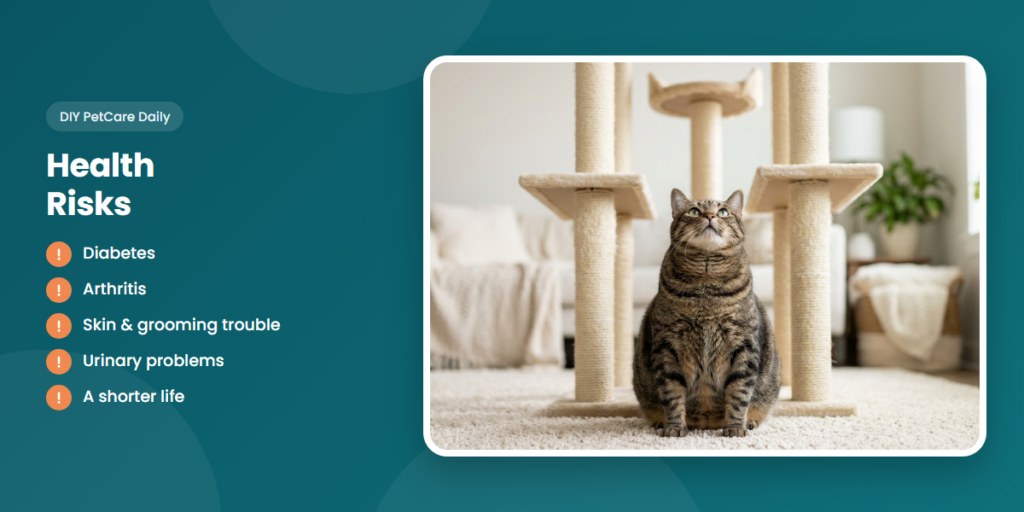
Fat tissue isn’t just extra padding. It’s active tissue that releases hormones and substances that promote inflammation, so it affects the whole body.
| Health Problem | How Extra Weight Plays a Part |
| Diabetes | Obese cats are several times more likely to develop it |
| Arthritis | Extra weight strains joints and adds to pain |
| Lower urinary tract problems | More common in heavy, inactive indoor cats |
| Skin problems | Cats can’t reach some areas, causing dandruff, mats, and sores |
| Hepatic lipidosis | A dangerous liver problem if a heavy cat stops eating |
| Breathing and heat trouble | Extra fat makes breathing harder, especially for flat-faced cats |
| Higher surgery risk | Anesthesia and recovery may be harder |
| Shorter life | Very overweight cats tend to have shorter lives |
Diabetes
This is one of the biggest risks. Fat cells make the body less responsive to insulin, which can lead to diabetes. Signs include more thirst and urine, a big appetite, and weight loss. Some cats go into remission when they lose weight and get proper treatment.
Joint Pain
Cats rarely limp, so arthritis can be hard to see. An obese cat may just seem lazy when they’re really sore. That creates a cycle: pain leads to less activity, which leads to more weight. Weight loss alone can often make cats noticeably more active.
Grooming and Skin Problems
If a cat can’t reach their back or rear end, the coat can get greasy and mats can form. Our guide on how to remove mats from cat fur can help, but mats tend to come back unless the weight comes off.
Hepatic Lipidosis
This is why crash diets are so dangerous. When a heavy cat stops eating or loses weight too quickly, fat moves to the liver faster than the liver can break it down. This can lead to liver failure, sometimes within days. If your cat stops eating, read our guide on cat not eating and call your vet.
What Causes Obesity in Cats?
Weight gain is usually a mix of too many calories and too little activity, but a few factors make it more likely.
- Free feeding: A bowl that’s always full makes it easy to eat out of boredom.
- Calorie-dense dry food: Dry food often has about 400 calories per cup, so a small overfill goes a long way.
- Treats and human food: An extra 20 calories a day is nearly 8% of a typical 10 lb cat’s food.
- Indoor life: Indoor cats are safer, but many don’t move much without daily play.
- Spaying or neutering: Fixed cats usually burn fewer calories, so portions need to change.
- Age: Many cats gain the most weight in middle age, between about 7 and 10 years.
- Multi-cat homes: It’s harder to control portions when cats share bowls.
- Medical problems: Arthritis and some medicines can reduce activity or raise appetite.
How Vets Treat Obesity in Cats
Start with a vet visit, because obese cats can have hidden problems. Your vet may run blood tests to check for diabetes and other conditions before starting a plan. Then, they can help you set a target.
A Safe Pace
A safe goal for most cats is about 0.5% to 1% of body weight per week. It sounds slow, but it’s the safe choice.
| Example: 16 lb Cat With a Goal of 12 lb | Loss Per Week | Estimated Time to Goal |
| 0.5% per week | About 1.3 oz | About 58 weeks |
| 1% per week | About 2.6 oz | About 29 weeks |
Our cat weight calculator can build a timeline for your cat. Many obese cats need a year or more to reach their goal, so don’t be discouraged by slow progress.
A Calorie Plan
A common starting point is 0.8 x RER, based on your cat’s goal weight. Your vet may adjust this. Our cat calorie calculator does the math, and our guide on how many calories a cat needs explains how it works.
The Right Food
If your cat needs much less food, a regular diet can leave them short on nutrients. Your vet may recommend a prescription weight loss food that’s higher in protein, helps them feel full, and stays balanced at lower calories. Wet food is also an option, because it has fewer calories per bite. Read more in our guide to wet vs dry cat food.
Regular Check-Ins
Weigh your cat every 2 weeks at home, using a baby scale if possible. Your vet may want to see them monthly at first. Plans often need small changes along the way.
How to Help an Obese Cat at Home
These steps can work well alongside your vet’s plan. For a complete step-by-step plan, see our guide on how to help a cat lose weight.
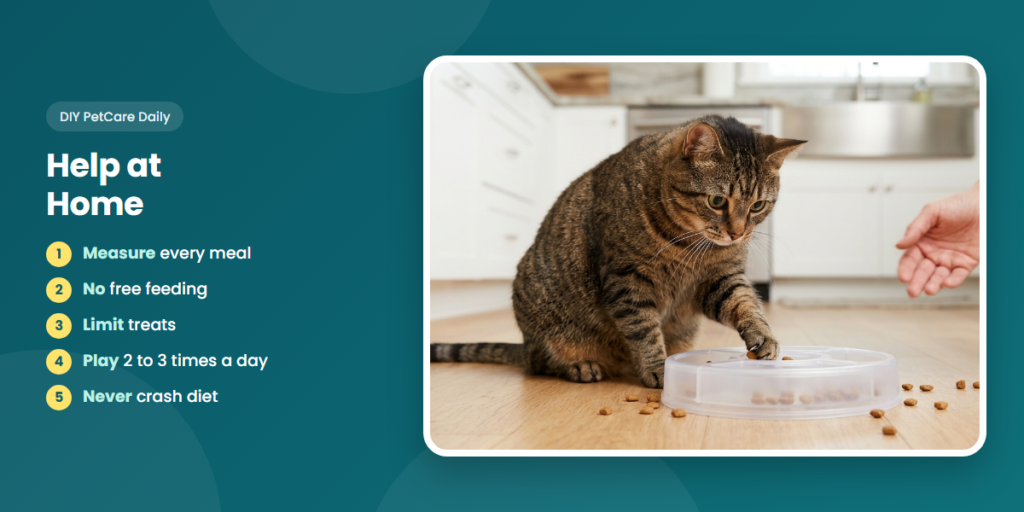
- Measure every meal. A kitchen scale is the most accurate option.
- Stop free feeding. Offer 2 to 4 measured meals a day, or use a timed feeder.
- Limit treats. Keep them under 10% of daily calories.
- Add play. Start with 2 or 3 short sessions with a wand toy, and let your cat “catch” the toy at the end.
- Make food work. Try puzzle feeders, or hide small portions around the house.
- Encourage climbing. Cat trees and window perches can get them moving. Add steps for heavy cats.
- Feed cats separately. Use different rooms or a microchip feeder in multi-cat homes.
- Help with grooming. Brush your cat gently, and clean any messy spots with a damp cloth.
Warning: Never fast your cat or cut food drastically. Call your vet right away if your cat stops eating for more than a day.
How to Prevent Obesity in Cats
It’s much easier to prevent weight gain than to treat it.
- Measure portions from the start. Our guide on how much to feed your cat can help.
- Lower portions after spaying or neutering, then watch your cat’s weight.
- Play every day, starting when they’re kittens.
- Check their body shape every couple of months.
- Weigh them at each vet visit and ask for their body score.
- Be careful with treats and human food. Some are also dangerous, so see our list of what foods are toxic to cats.
For more guides, visit our Cat Health & Wellness section.
Frequently Asked Questions
What is considered obese for a cat?
A cat is usually considered obese at a body score of 8 or 9 out of 9, which is roughly 30% or more above their ideal weight. Your vet can confirm your cat’s score.
Is obesity in cats dangerous?
Yes. It raises the risk of diabetes, arthritis, skin problems, and hepatic lipidosis, and it can shorten a cat’s life. The good news is that slow weight loss can really help.
How can I help my obese cat lose weight safely?
See your vet first, then measure meals and add daily play. Aim for about 0.5% to 1% of body weight per week. Never fast your cat or put them on a crash diet.
How long does it take an obese cat to lose weight?
Often several months to more than a year. A 16 lb cat with a 12 lb goal may need about 29 to 58 weeks at a safe pace.
Can an obese cat go into diabetic remission?
Some diabetic cats go into remission with early treatment, the right diet, and steady weight loss. Your vet will guide you, and insulin should never be stopped or changed without their advice.