Table of Contents
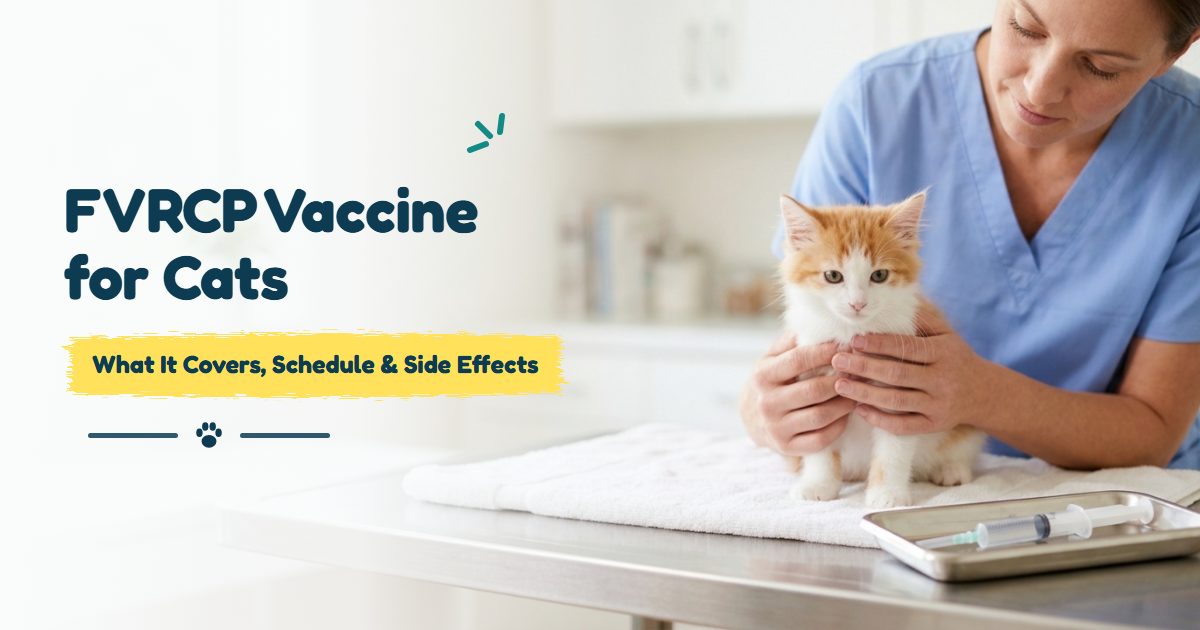
Quick answer: The FVRCP vaccine for cats is a core combination shot that protects against three common, serious viruses: feline viral rhinotracheitis (herpesvirus), calicivirus, and panleukopenia (feline distemper). Kittens get it every 3 to 4 weeks from 6 to 8 weeks old until they are 16 to 20 weeks old, then a booster 6 months to 1 year later. Adult cats usually need a booster every 3 years. Every cat should have it, including indoor-only cats.
If you’ve looked at your cat’s vet records, you’ve probably seen “FVRCP” listed every year or every few years. It’s often called the distemper shot for cats, but it actually protects against three different viruses.
This guide explains what the FVRCP vaccine covers, why even indoor cats need it, the vaccine schedule for kittens and adults, what side effects to watch for, and how much it usually costs in the US.
Table of Contents
- What Does FVRCP Stand For?
- Why the FVRCP Vaccine for Cats Is a Core Vaccine
- Do Indoor Cats Need the FVRCP Vaccine?
- FVRCP Vaccine Schedule
- Types of FVRCP Vaccines
- FVRCP Vaccine Side Effects
- FVRCP Vaccine Cost
- Tips to Make Vaccine Day Easier
- Frequently Asked Questions
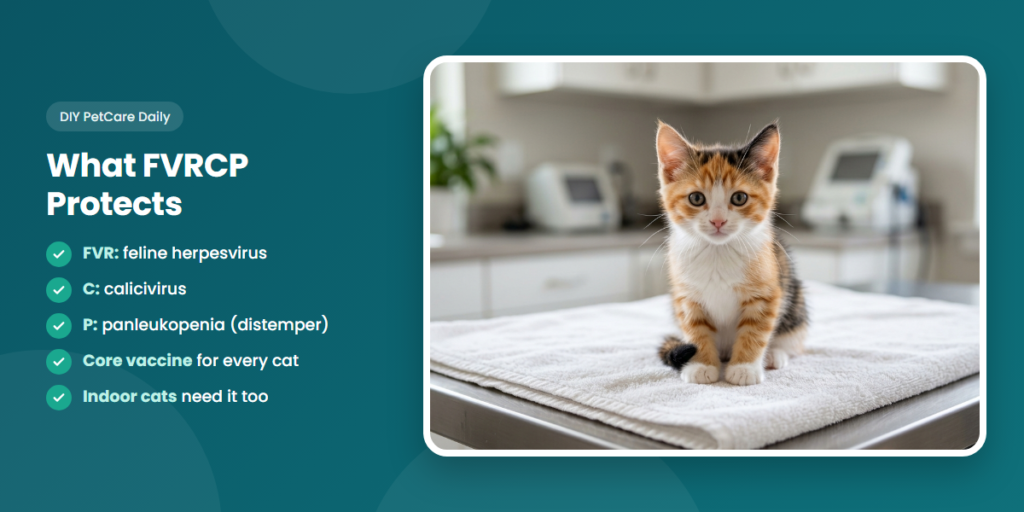
What Does FVRCP Stand For?
FVRCP stands for feline viral rhinotracheitis (FVR), calicivirus (C), and panleukopenia (P). The vaccine is named after the three diseases it protects against:
| Letters | Disease | What It Does |
| FVR | Feline viral rhinotracheitis (feline herpesvirus type 1) | Sneezing, runny nose and eyes, eye ulcers, fever. Many cats carry it for life and have flare-ups during stress |
| C | Feline calicivirus | Mouth and tongue ulcers, sneezing, fever, drooling, sometimes joint pain and limping. Rare strains can be deadly |
| P | Panleukopenia (feline distemper) | Severe vomiting, diarrhea, dehydration, and a crash in white blood cells. Often fatal in kittens |
The first two cause most cat “colds,” also called upper respiratory infections. They spread fast in shelters and multi-cat homes. Panleukopenia is less common now, thanks to vaccines, but it’s very dangerous and still causes outbreaks in shelters and among stray cats.
Why the FVRCP Vaccine for Cats Is a Core Vaccine
Core vaccines are recommended for every cat, no matter their lifestyle. US vet groups like the American Association of Feline Practitioners (AAFP) and the American Animal Hospital Association (AAHA) list FVRCP as core for three reasons:
- The viruses are everywhere. Most cats will be exposed at some point in their life.
- Panleukopenia is very tough. It can survive in the environment for a year or more and resists many common cleaners. You can carry it home on your shoes or clothes.
- The diseases can be severe. Kittens are especially at risk of dying from panleukopenia and of serious complications from herpesvirus and calicivirus.
How Well Does It Work?
The panleukopenia part of the vaccine gives very strong protection, often for many years. The herpesvirus and calicivirus parts work a bit differently. They may not stop your cat from catching the virus, but they make illness much milder and shorter. That still makes a big difference, especially for kittens.
Do Indoor Cats Need the FVRCP Vaccine?
Yes. This is one of the most common questions, and vets agree that indoor cats need it too:
- Panleukopenia can come in on shoes, clothes, bags, or other pets.
- Indoor cats can escape through an open door or window.
- Cats meet other cats at boarding, grooming, and vet visits.
- A new cat or foster kitten can bring a virus into the home.
- Herpesvirus and calicivirus can spread through tiny droplets and on hands.
The good news is that indoor adult cats usually only need an FVRCP booster every 3 years after their first year. Our main guide to cat vaccines explains which other vaccines your cat may or may not need.
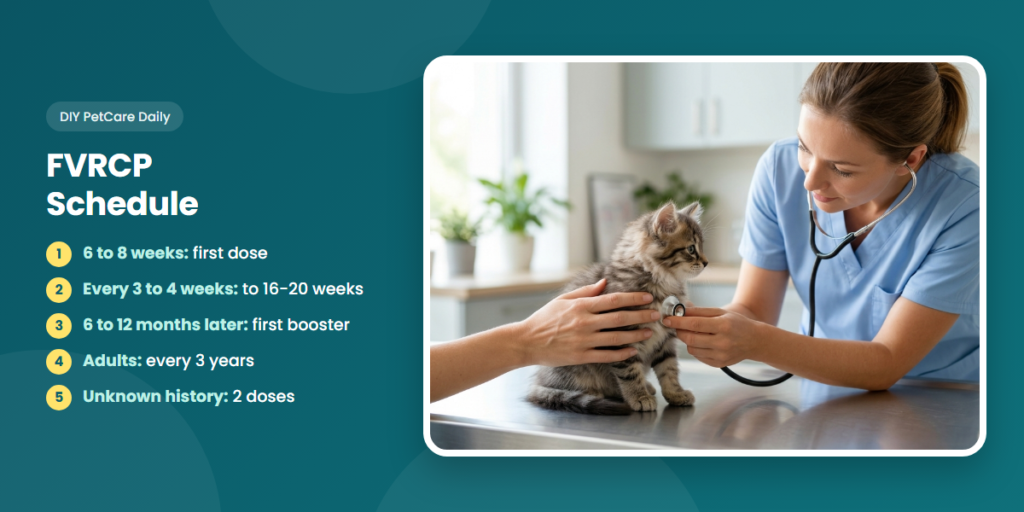
FVRCP Vaccine Schedule
Kittens
Kittens get some protection from their mother’s milk, but it fades between about 6 and 16 weeks old. While those antibodies are still around, they can block the vaccine. That’s why kittens need a series of shots instead of just one.
| Kitten’s Age | FVRCP Dose |
| 6 to 8 weeks | First dose |
| 9 to 12 weeks | Second dose |
| 12 to 16 weeks | Third dose |
| 16 to 20 weeks | Final dose (needed if the series started early) |
| 6 months to 1 year after the last kitten dose | First booster |
The key rule: keep giving FVRCP every 3 to 4 weeks until your kitten is at least 16 to 20 weeks old. Current feline guidelines suggest the first booster about 6 months after the kitten series, but many US clinics give it at the 1-year visit. Your vet will choose the timing.
Adult Cats and the FVRCP Booster
| Situation | FVRCP Schedule |
| Finished kitten series and first booster | Every 3 years |
| Adult with unknown vaccine history | 2 doses, 3 to 4 weeks apart, then every 3 years |
| High-risk cats (shelters, catteries, frequent boarding) | Your vet may suggest more frequent boosters |
| Senior cats | Usually every 3 years; your vet may check antibody levels with a titer test |
Pregnant Cats and Cats With FeLV or FIV
Some FVRCP vaccines use a weakened live virus. These are not given to pregnant cats. For cats with feline leukemia virus (FeLV) or FIV, many vets prefer a killed (inactivated) vaccine. Read more about FeLV in our guide to the feline leukemia vaccine.
Types of FVRCP Vaccines
Your vet may use one of these types:
| Type | How It’s Given | Things to Know |
| Modified live (weakened virus) | Injection under the skin | Works quickly and strongly; not used in pregnant cats |
| Killed (inactivated) | Injection under the skin | Often chosen for pregnant or immune-weakened cats; may need more doses at first |
| Intranasal | Drops in the nose and eyes | Fast protection for herpesvirus and calicivirus; may cause a few days of sneezing; doesn’t replace the injectable for panleukopenia in many protocols |
Vets often give the FVRCP shot low on the right front leg, below the elbow. This placement makes any rare injection site problem easier to treat.
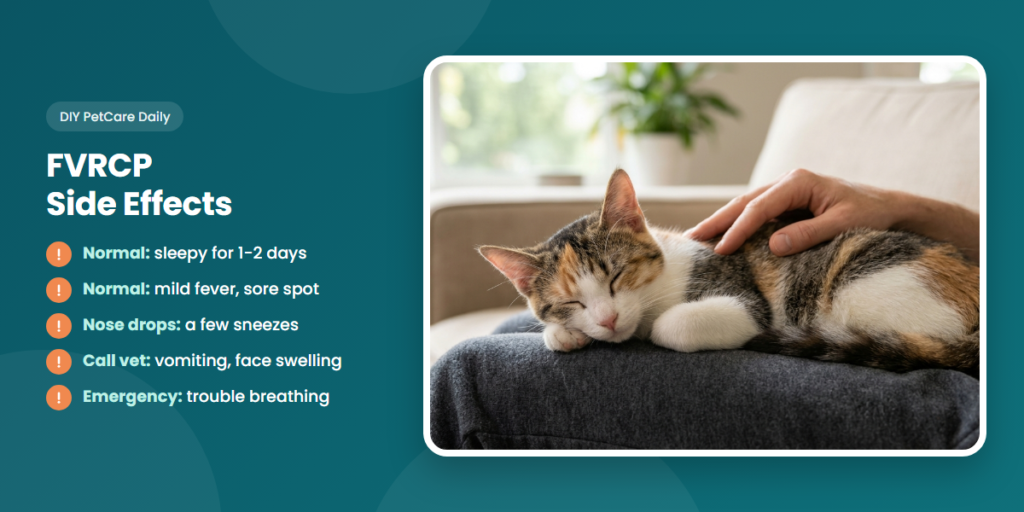
FVRCP Vaccine Side Effects
Most cats have no side effects or only mild ones that go away within 1 to 2 days.
Common, mild side effects:
- Sleepiness or seeming a bit quiet
- Mild fever
- Eating a little less for a day
- Soreness or a small bump where the shot was given
- Sneezing or a runny nose for a few days (mainly after intranasal vaccines)
Rare, serious side effects (call your vet or go to an emergency clinic now):
- Vomiting or diarrhea soon after the shot
- Swelling of the face, lips, or around the eyes
- Hives or itchy skin
- Trouble breathing
- Collapse or extreme weakness
Serious reactions usually happen within minutes to a few hours, so keep an eye on your cat after the visit. If your cat has had a reaction before, tell your vet. They may give an antihistamine first or split vaccines into separate visits.
Injection Site Lumps
A small, firm lump where the shot was given is common and usually goes away within a few weeks. Call your vet if the lump is still there after 3 months, is larger than about 3/4 inch, or keeps growing a month after the shot.
Can the FVRCP Vaccine Make a Cat Sick?
A cat may seem “off” for a day, but the vaccine won’t give a healthy cat the full disease. If your cat stops eating for more than 24 hours after a vaccine, call your vet. Our guide on cat not eating explains why that matters.
FVRCP Vaccine Cost
Prices vary by state and clinic. Typical US ranges:
| Service | Typical Cost |
| FVRCP vaccine (per dose) | $20 to $50 |
| Vet exam | $50 to $90 |
| Full kitten FVRCP series (3 to 4 doses) | $60 to $200, plus exam fees |
| Low-cost clinic FVRCP | $10 to $25 |
Shelters, humane societies, and some pet stores offer low-cost vaccine clinics. Kittens adopted from shelters often come with their first FVRCP dose already given.
Tips to Make Vaccine Day Easier
- Leave the carrier out at home so your cat sees it as a safe spot, not a sign of a vet trip.
- Put a towel that smells like home inside the carrier.
- Cover the carrier in the car and waiting room.
- Ask if your clinic has a cat-only waiting area or quiet appointment times.
- For very nervous cats, ask your vet about a calming medicine before the visit.
- Let your cat rest at home afterward and offer a favorite meal.
Watch for signs that your cat isn’t feeling well in the days after any vaccine. Our guide on how to tell if your cat is sick covers what to look for.
For more guides on keeping your cat healthy, visit our Cat Health & Wellness section.
Frequently Asked Questions
What is the FVRCP vaccine?
The FVRCP vaccine is a combination shot that protects cats against feline viral rhinotracheitis (herpesvirus), calicivirus, and panleukopenia (feline distemper). The first two cause most cat colds, and panleukopenia is a severe, often fatal disease in kittens.
How often do cats need the FVRCP vaccine?
Kittens need FVRCP every 3 to 4 weeks until 16 to 20 weeks of age, then an FVRCP booster 6 months to 1 year later. After that, most adult cats need it every 3 years.
Is the FVRCP vaccine the same as the distemper shot for cats?
Yes. The FVRCP vaccine is often called the distemper shot for cats because the “P” protects against panleukopenia, also known as feline distemper. It also covers herpesvirus and calicivirus. It isn’t required by law like rabies, but most boarding facilities and groomers ask for it.
Can an indoor cat skip the FVRCP vaccine?
No. Indoor cats still need it because panleukopenia can come in on shoes and clothes, and cats can escape or meet other cats at the vet or boarding. Indoor adults usually only need a booster every 3 years.
What are the side effects of the FVRCP vaccine?
Most cats only have mild side effects like sleepiness, mild fever, or a sore spot for a day or two. Rarely, cats can have an allergic reaction with vomiting, facial swelling, or trouble breathing, which needs immediate vet care.