Table of Contents
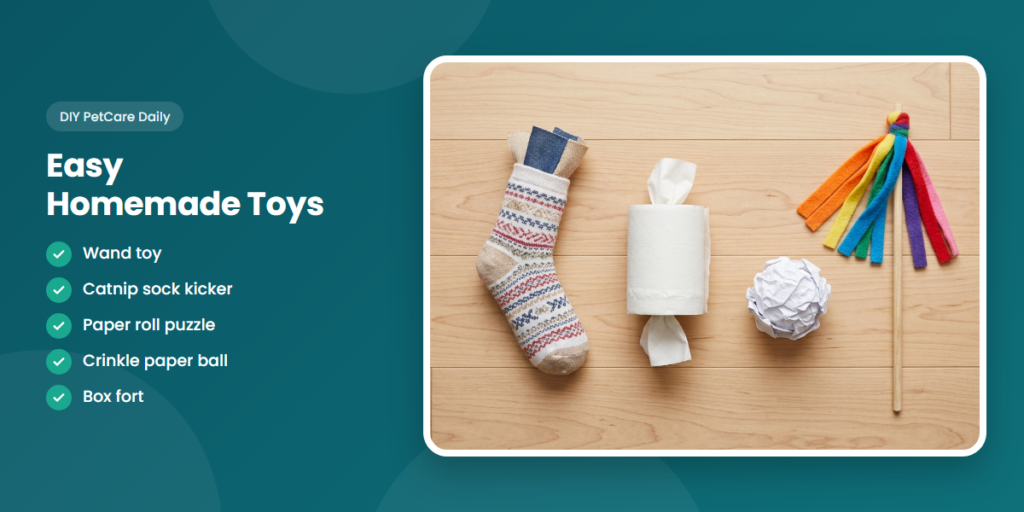
Quick answer: The best DIY cat toys copy how cats hunt: things that flutter, skitter, hide, and can be pounced on. Easy homemade cat toys include a stick-and-fabric wand toy, a catnip sock kicker, a paper roll treat puzzle, crinkle paper balls, and a cardboard box fort. Never leave string, yarn, ribbon, or hair ties out unsupervised, since cats can swallow them.
Cats are famous for ignoring the expensive toy and playing with the box it came in. That’s actually good news. It means the best cat toys are often free, or close to it.
Homemade toys also let you keep things fresh. Cats get bored with the same toy fast. When you can make a new one in five minutes from a sock or an old cardboard roll, you can rotate toys every week without spending a dime.
This guide covers nine easy DIY cat toys, how to use catnip the right way, how to play like a pro, and the safety rules that matter most.
Table of Contents
- Why Play Matters for Cats
- Two Types of Cat Toys
- 9 Easy DIY Cat Toys
- How to Use Catnip the Right Way
- How to Play With Your Cat
- Cat Toy Safety Rules
- Rotate Toys to Keep Them Interesting
- Frequently Asked Questions
Why Play Matters for Cats
Play isn’t just fun. It’s how cats burn energy, stay fit, and act out natural hunting instincts. Indoor cats in particular need play to stay happy.
Regular play can help with:
- Weight control. Active cats are less likely to gain extra pounds. If your cat is already heavy, our guide on how to help a cat lose weight shows how play fits into a plan.
- Boredom and stress. Bored cats may overgroom, yowl at night, or knock things off shelves.
- Biting and pouncing on people. Cats who don’t get enough play often turn hands and ankles into prey. Our guide on why your cat bites you explains this play aggression.
- Bonding. Interactive play builds trust between you and your cat.
Two Types of Cat Toys
| Type | What it is | Examples |
| Interactive | You move the toy; your cat chases | Wand toys, string on a stick, laser (with a final “catch”) |
| Solo | Your cat plays alone | Kickers, balls, puzzles, boxes |
A good toy box has both. Interactive toys give the best workout and the most bonding. Solo toys keep your cat busy while you’re away.
9 Easy DIY Cat Toys
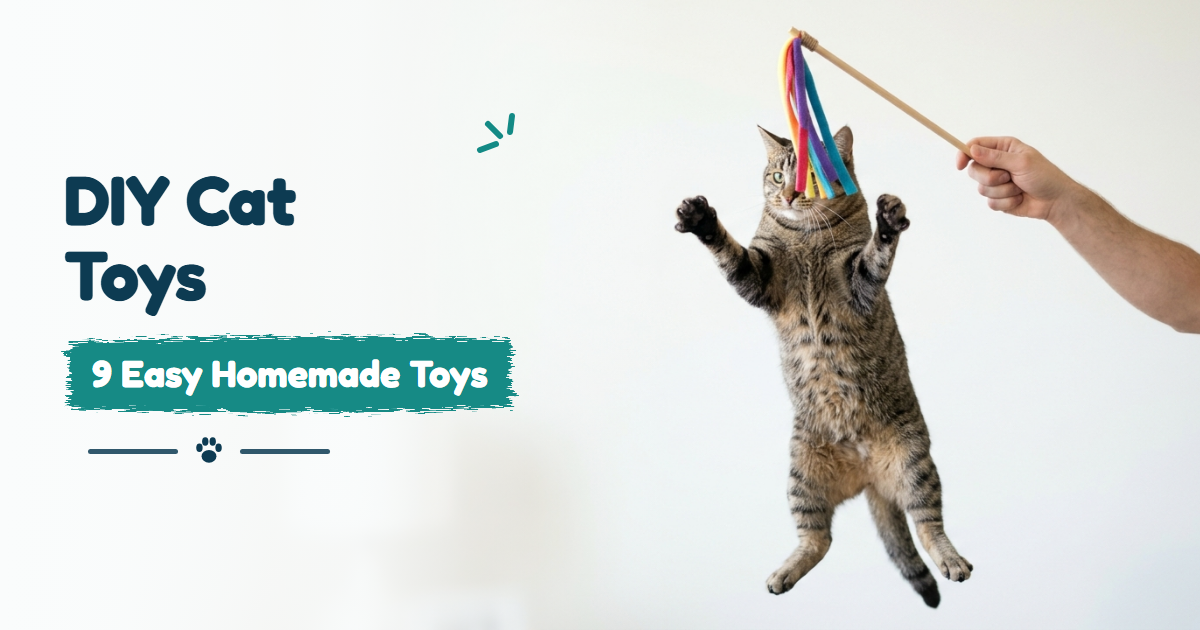
1. Feather or Fabric Wand Toy
This is the number one homemade cat toy. It lets you act like prey, which is what cats love most.
You need: a wooden dowel or chopstick (about 2 to 3 feet), a sturdy string or shoelace, and a few strips of fleece or a feather.
How to make it:
- Tie or glue the string tightly to one end of the dowel.
- Tie fleece strips, a feather, or a small bundle of fabric to the other end of the string.
- Sand the dowel ends smooth.
Store wand toys out of reach when you’re not playing. Unsupervised string is a choking and swallowing hazard. The same goes for tinsel at Christmas. Our cat-proof Christmas tree tips show how to keep it out of reach.
2. Catnip Sock Kicker
Cats love to grab kickers with their front paws and bunny-kick them with their back legs.
You need: a clean, thick sock (no holes), dried catnip, and fiberfill or fabric scraps.
How to make it:
- Put a tablespoon or two of dried catnip in the toe.
- Stuff the rest of the sock with fiberfill or scraps until firm.
- Tie a tight knot at the end, or sew it shut. Trim any loose threads.
3. Paper Roll Treat Puzzle
This toy makes your cat work for snacks, just like hunting.
You need: an empty toilet paper roll and a few dry treats or kibble.
How to make it:
- Fold in one end of the roll.
- Drop in a few treats.
- Fold in the other end.
- Poke a few small holes so the smell gets out.
Your cat will bat, roll, and tear at it until the treats fall out. For more advanced puzzles, see our guide to a DIY cat puzzle feeder.
4. Crinkle Paper Balls
The simplest toy on the list. Crumple a sheet of paper into a tight ball and toss it across a hard floor. The sound and skitter drive many cats wild. Use plain paper, not foil, since foil can tear into sharp, swallowable pieces.
5. Cardboard Box Fort
Cut two or three cat-sized holes (about 6 inches across) in a sturdy box. Add a few toys or treats inside. For a bigger setup, tape two or three boxes together with connecting holes. Cats love to hide, peek, and ambush from inside.
6. Ping Pong Ball Track
Put a ping pong ball in a dry bathtub or an empty shallow box. The ball rolls around but can’t escape, so your cat can bat it for ages. It’s a fun way to keep nighttime zoomies in one room.
7. Paper Bag Hideout
Cut the handles off a paper grocery bag (handles can trap a cat’s head or neck), lay it on its side, and drop a toy inside. Never use plastic bags.
8. T-Shirt Braid Toy
Cut an old T-shirt into three long strips. Knot them together at one end, braid them tightly, and knot the other end. Toss it for solo play or tie it to a wand for interactive play.
9. DIY Catnip Toys: Felt Mouse or Pillow
If you can sew a simple stitch, this one’s easy.
- Cut two small matching shapes from felt or cotton fabric, like a mouse or a 3-inch square.
- Sew around the edges, leaving a small gap.
- Fill with catnip and a bit of fiberfill.
- Sew the gap closed with tight, small stitches.
Skip plastic eyes, buttons, bells, and pom-poms. They can come off and be swallowed.
How to Use Catnip the Right Way
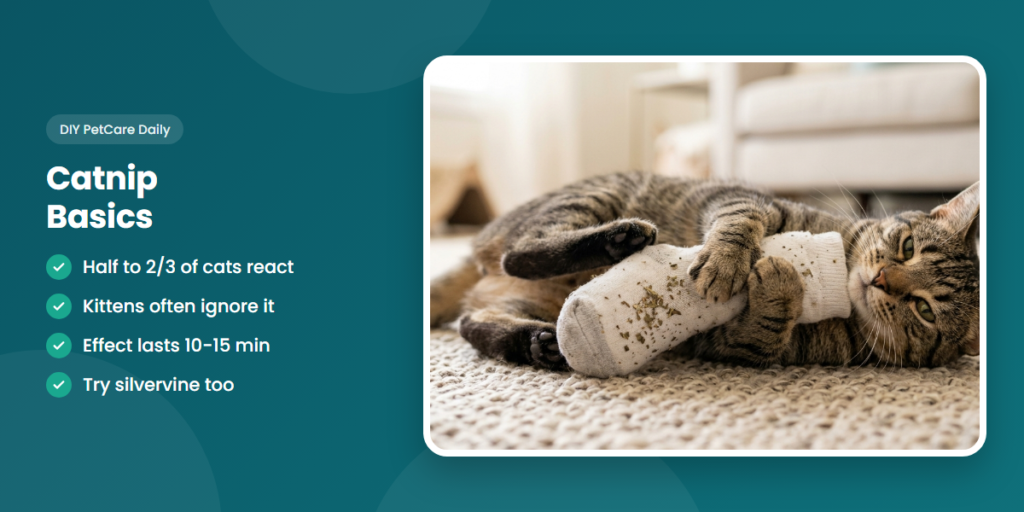
Catnip is a plant in the mint family. A natural oil in it causes a short burst of rolling, rubbing, and playful behavior in many cats.
- Not every cat responds. Roughly half to two-thirds of cats react to catnip. It’s inherited, so some cats never do.
- Kittens often ignore it. Most kittens don’t react until they’re about 6 months old.
- The effect is short. It usually lasts 10 to 15 minutes. After that, most cats can’t feel it again for about half an hour.
- Freshness matters. Store dried catnip in a sealed jar in the freezer. Refresh toys by rubbing new catnip into them.
- Try alternatives. If your cat ignores catnip, try silvervine or valerian root. Many “non-responders” react to these.
Catnip is safe for cats, but eating a lot of it can cause mild vomiting or diarrhea.
How to Play With Your Cat
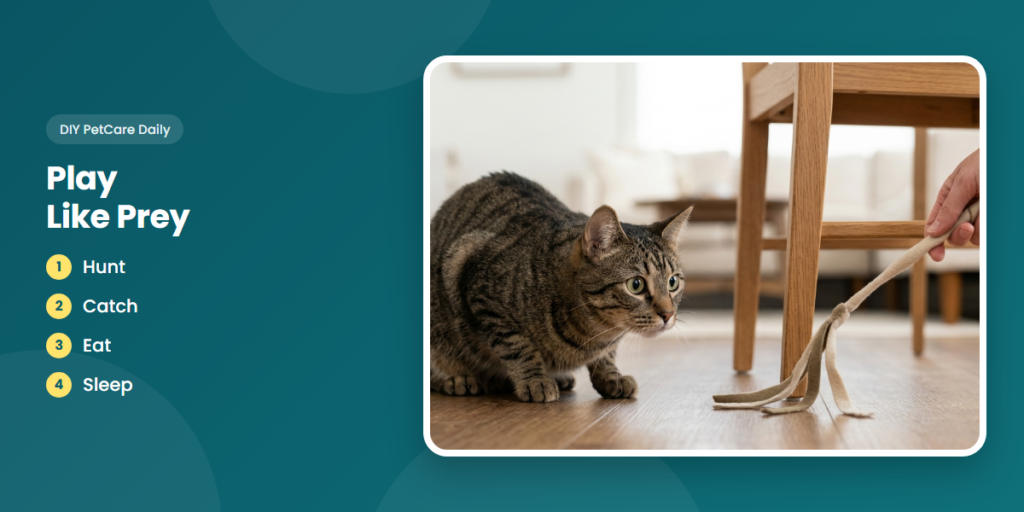
Good play follows a cat’s natural pattern: hunt, catch, eat, sleep.
- Hunt: Move the wand toy like prey. Drag it away from your cat, hide it behind furniture, and let it twitch and pause.
- Catch: Let your cat catch the toy often. Never catching it is frustrating.
- Eat: End the session with a small treat or a meal.
- Sleep: Most cats will groom and nap afterward.
Aim for two or three play sessions of 10 to 15 minutes a day. Kittens and young cats need more. Senior cats may like shorter, gentler sessions.
About laser pointers: Many cats love them, but they never get to catch the red dot. Finish laser play by landing the dot on a toy your cat can grab, or follow it with a wand session.
Cat Toy Safety Rules
Homemade toys are only fun if they’re safe. Keep these in mind:
| Avoid | Why |
| String, yarn, ribbon, thread, tinsel (unsupervised) | Can be swallowed and cause a dangerous intestinal blockage |
| Rubber bands and hair ties | Common swallowing hazard |
| Small parts (buttons, bells, googly eyes) | Choking risk |
| Plastic bags | Suffocation risk |
| Bag handles | Can trap a cat’s head |
| Foil | Sharp pieces can be swallowed |
| Glitter, glue globs, and paint | Can be licked off |
Swallowed string is an emergency. If you see string hanging from your cat’s mouth or bottom, don’t pull it. Call your vet right away. Signs of a blockage include vomiting, not eating, and tiredness. Our guide to cat throwing up explains when vomiting needs urgent care.
Rotate Toys to Keep Them Interesting
Cats lose interest in toys they see every day. Keep most toys in a box and leave just three or four out. Swap them every week. Old toys feel brand new when they come back. Storing fabric toys with a little catnip in a sealed bag keeps them extra tempting.
Want more ideas for keeping your cat busy? A tall DIY cat scratcher pairs well with play sessions, and you’ll find more builds in our DIY Cat Projects section.
Frequently Asked Questions
What household items can I use to make cat toys?
Socks, toilet paper rolls, paper bags (without handles), cardboard boxes, ping pong balls, old T-shirts, wooden dowels, and plain paper all make great cat toys. Add catnip or treats to make them more exciting.
Are homemade cat toys safe?
Yes, if you avoid small parts, loose string, and anything your cat can swallow or get tangled in. Check toys often and throw out any that are falling apart. Put wand toys away after play.
How do I make a catnip toy without sewing?
Fill the toe of a clean sock with a tablespoon of catnip, stuff the rest with fiberfill or fabric scraps, and tie a tight knot at the end. Trim any loose threads.
Why does my cat ignore their toys?
Your cat may be bored with the same toys, or the toy may not move like prey. Rotate toys weekly, use interactive wand toys, and move them in short, quick, darting motions. Some cats also need play when they’re naturally active, often at dawn and dusk.
How much should I play with my cat?
Most cats do well with two or three 10 to 15-minute play sessions a day. Kittens and young, active cats need more. End each session with a small treat so your cat feels the “catch.”