Table of Contents
- Table of Contents
- What Is Feline Leukemia?
- How Does Feline Leukemia Spread?
- The 3 Stages of FeLV Infection
- Feline Leukemia Symptoms
- The FeLV Test: How Cats Are Tested for Feline Leukemia
- Feline Leukemia Life Expectancy
- Is There a Treatment for Feline Leukemia?
- How to Care for an FeLV-Positive Cat
- Can FeLV-Positive Cats Live With Other Cats?
- Frequently Asked Questions
Quick answer: Feline leukemia is a contagious virus (FeLV) that spreads between cats through saliva and close contact. It weakens the immune system and can lead to anemia, repeated infections, and cancers like lymphoma. Many cats show no symptoms at first. Later feline leukemia symptoms include weight loss, pale gums, fever, swollen lymph nodes, gum infections, and frequent illness. A simple blood test at your vet can check for it. Some cats clear the virus, while cats with a progressive infection live an average of about 2 to 3 years after diagnosis, and some live much longer with good care.
Hearing that your cat tested positive for feline leukemia can be scary. For years, an FeLV diagnosis was treated like a death sentence. Today, vets know a lot more. Not every cat who tests positive gets sick, and many FeLV-positive cats enjoy good years at home with the right care.
This guide explains what feline leukemia is, how it spreads, the symptoms to watch for, how the FeLV test works, what to expect for life expectancy, and how to care for an FeLV-positive cat.
Table of Contents
- What Is Feline Leukemia?
- How Does Feline Leukemia Spread?
- The 3 Stages of FeLV Infection
- Feline Leukemia Symptoms
- The FeLV Test: How Cats Are Tested for Feline Leukemia
- Feline Leukemia Life Expectancy
- Is There a Treatment for Feline Leukemia?
- How to Care for an FeLV-Positive Cat
- Can FeLV-Positive Cats Live With Other Cats?
- Frequently Asked Questions
What Is Feline Leukemia?
Feline leukemia virus (FeLV) is a retrovirus that only infects cats. It can’t spread to people, dogs, or other pets. In the US and Canada, roughly 2 to 3 percent of cats tested carry the virus. The rate is higher in outdoor cats, intact males, strays, and cats who are already sick.
The name is a bit misleading. “Leukemia” means cancer of the blood cells, but most FeLV-positive cats never get leukemia. The virus mainly damages the immune system and bone marrow, which makes cats more likely to get infections, anemia, and certain cancers.
How Does Feline Leukemia Spread?
FeLV lives in an infected cat’s saliva, nasal discharge, urine, feces, and milk. It spreads mostly through close, friendly contact over time:
- Grooming each other
- Sharing food and water bowls
- Sharing litter boxes
- Bite wounds during fights
- From a mother cat to her kittens, before birth or through nursing
The virus doesn’t survive long outside a cat’s body. It dies within minutes to hours on surfaces and is killed by regular household cleaners. That means it doesn’t usually travel on shoes or clothes the way some other cat viruses do.
Kittens are at much higher risk than adults. Their immune systems are still developing, so they’re more likely to become permanently infected after exposure. That’s why vets recommend the feline leukemia vaccine for all kittens.
The 3 Stages of FeLV Infection
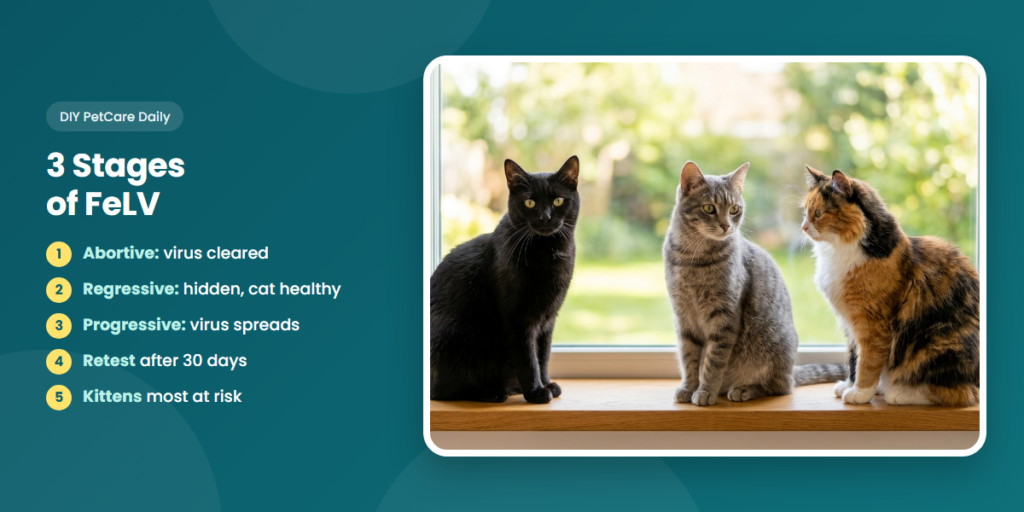
After a cat is exposed, the outcome depends mostly on their immune system. Vets describe three main types of infection.
| Type of Infection | What Happens | What It Means for Your Cat |
| Abortive | The immune system fights off the virus completely | Your cat stays healthy and tests negative |
| Regressive | The immune system controls the virus, but some stays hidden in the bone marrow | Most cats stay healthy and don’t spread it, but the virus can come back during stress or illness |
| Progressive | The virus spreads through the body and the bone marrow | Your cat can spread FeLV and is likely to develop FeLV-related illness |
A cat’s infection type can sometimes change, especially in the first few months after exposure. That’s one reason retesting is so important.
Feline Leukemia Symptoms
Many cats with FeLV show no signs for months or even years. When feline leukemia symptoms do appear, they often come from a weak immune system, so they can look like many other illnesses.
Early Feline Leukemia Symptoms
Soon after infection, some cats show mild, short-lived signs:
- Mild fever
- Low energy for a few days
- Swollen lymph nodes (small lumps under the jaw, in front of the shoulders, or behind the knees)
- Eating less for a short time
These early signs are easy to miss, and they often go away on their own.
Later Feline Leukemia Symptoms
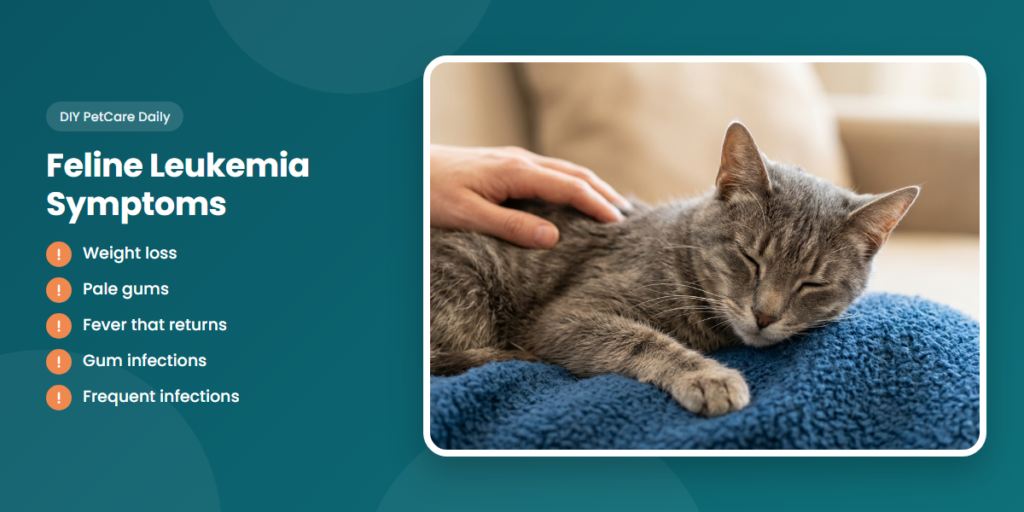
As the infection progresses, you may see:
- Weight loss and loss of muscle
- Poor appetite. If your cat stops eating for 24 hours, call your vet. Our guide on cat not eating explains why this matters.
- Pale gums from anemia (low red blood cells)
- Fever that keeps coming back
- Gum and mouth infections, with red, swollen gums, drooling, or bad breath. See signs of dental disease in cats.
- Repeated infections of the skin, bladder, or upper airways that are slow to heal
- Diarrhea that comes and goes
- A poor, unkempt coat
- Eye changes, such as one pupil bigger than the other, cloudy eyes, or redness inside the eye
- Low energy and hiding more
- Breathing trouble, sometimes from lymphoma in the chest
- Wobbly walking, behavior changes, or seizures in some cats
- Reproductive problems in females, such as miscarriages or kittens who fade and die young
Many of these signs overlap with other illnesses. Our guide on how to tell if your cat is sick can help you spot changes early.
Diseases Linked to FeLV
| Condition | What It Is |
| Anemia | The bone marrow can’t make enough red blood cells, causing pale gums and weakness |
| Lymphoma | A cancer of the lymph tissue; FeLV-positive cats are many times more likely to develop it |
| Leukemia | Cancer of the blood-forming cells in the bone marrow |
| Immune suppression | Frequent and long-lasting infections |
| Stomatitis | Painful inflammation of the gums and mouth |
The FeLV Test: How Cats Are Tested for Feline Leukemia
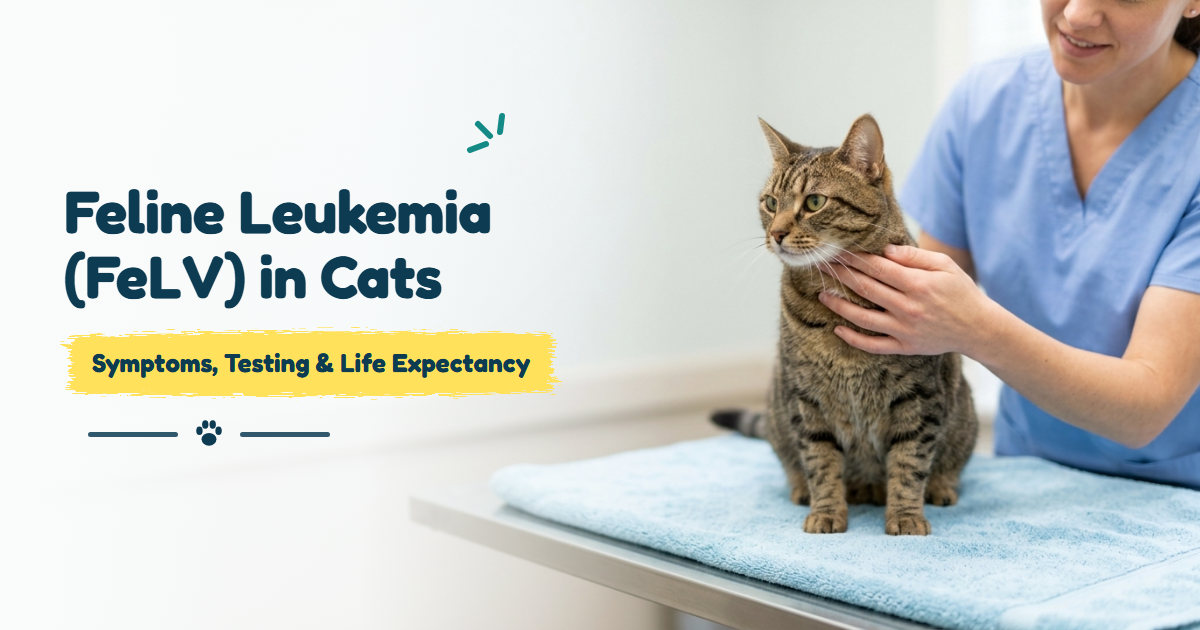
The FeLV test is a quick and simple way to check your cat’s status. Vets in the US recommend testing:
- All new cats and kittens before they join your home
- Strays and rescues
- Cats with unknown history
- Sick cats, even if they tested negative before
- Cats who may have been exposed, such as after a fight with an unknown cat
- Before giving the FeLV vaccine for the first time
Types of FeLV Tests
| Test | How It Works | What It Tells You |
| In-clinic antigen test (often a combo FeLV/FIV test) | A few drops of blood; results in about 10 minutes | Finds a virus protein in the blood. The usual first test |
| IFA test (sent to a lab) | Looks for the virus inside white blood cells | A positive usually means the bone marrow is infected (progressive) |
| PCR test (sent to a lab) | Looks for the virus’s genetic material | Can find regressive infections and help confirm unclear results |
What Do the FeLV Test Results Mean?
- Negative: your cat most likely doesn’t have FeLV. If they were exposed recently, retest at least 30 days after the last possible exposure, because the test can miss very early infections.
- Positive: your vet will usually confirm it with a second test, especially if your cat looks healthy or comes from a low-risk home, since false positives can happen.
- Positive, then negative later: some cats, especially adults, fight off the virus over the following weeks or months. Your vet may suggest retesting in 1 to 3 months.
Unlike the FIV test, the FeLV test works at any age, even in young kittens, because mother’s antibodies don’t affect it.
How Much Does an FeLV Test Cost?
| Test | Typical US Cost |
| In-clinic FeLV/FIV combo test | $40 to $75 |
| Lab confirmation test (IFA or PCR) | $75 to $200 |
| Shelter or low-cost clinic test | Often $20 to $40, or included with adoption |
Feline Leukemia Life Expectancy
Life expectancy depends on the type of infection and the care your cat receives.
| Infection Type | Typical Life Expectancy |
| Abortive | Normal life span |
| Regressive | Usually near-normal life span |
| Progressive | On average about 2 to 3 years after diagnosis, though some cats live much longer |
These numbers are averages, and many come from older studies of cats who lived outdoors or in shelters. Indoor cats who get regular vet care often do better. Some FeLV-positive cats live happily for 5 years or more.
Cats who develop lymphoma or severe anemia usually have a shorter outlook, but treatment can still give many of them good months or longer. If your cat’s health is declining, our guide on signs your cat is dying can help you understand what to look for and how to keep them comfortable.
Is There a Treatment for Feline Leukemia?
There’s no cure for FeLV, but many of its effects can be treated or managed. Your vet may recommend:
- Antibiotics for bacterial infections
- Treatment for anemia, including blood transfusions in severe cases
- Chemotherapy for lymphoma, which many cats handle well
- Dental care for gum and mouth infections
- Immune-support medicine in some cases, which your vet can explain
- Fluids, appetite medicine, and nutrition support for cats who are eating poorly
The key is catching problems early. FeLV-positive cats can get sick quickly, so any change deserves a call to your vet.
How to Care for an FeLV-Positive Cat
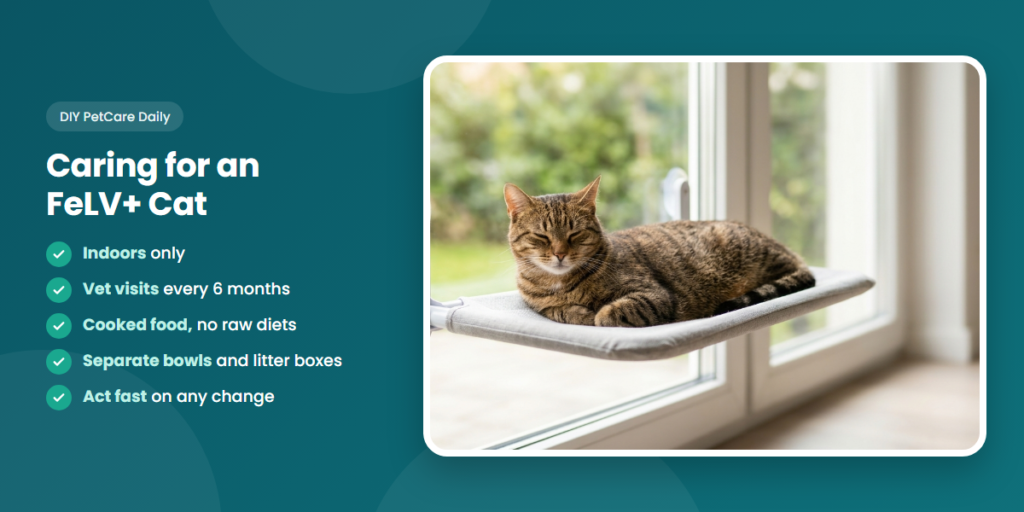
- Keep your cat indoors. This protects them from infections and protects other cats from FeLV.
- See the vet every 6 months. Ask about bloodwork to watch for anemia and other changes.
- Feed a complete, cooked diet. Avoid raw food and unpasteurized dairy, which can carry germs a weak immune system can’t fight.
- Keep up with parasite control for fleas, ticks, and worms.
- Stay on top of dental care, since mouth infections are common.
- Keep vaccines current. Your vet will likely recommend core vaccines such as the FVRCP vaccine for cats and rabies, often using killed vaccines. See our guide to cat vaccines for the full schedule.
- Spay or neuter to lower stress and roaming.
- Keep life calm. Stress can make illness more likely, so stick to a steady routine.
- Act quickly on any change, like not eating, hiding, or a fever.
Can FeLV-Positive Cats Live With Other Cats?
The safest choice is to keep FeLV-positive cats in a home with no FeLV-negative cats, or with other FeLV-positive cats only. If that’s not possible:
- Vaccinate the negative cats (the vaccine helps a lot but isn’t 100 percent)
- Use separate food and water bowls
- Use separate litter boxes; our guide on how many litter boxes per cat covers how many you need
- Prevent fighting and rough play
- Retest the negative cats each year, or sooner if they get sick
FeLV vs FIV: What’s the Difference?
| FeLV (Feline Leukemia Virus) | FIV (Feline Immunodeficiency Virus) | |
| Main way it spreads | Close friendly contact, grooming, sharing bowls | Deep bite wounds |
| Risk in shared homes | Higher | Low in calm homes without fighting |
| Vaccine in the US | Yes | No longer available |
| Typical outlook | Shorter for progressive infections | Many cats live a normal or near-normal life |
For more guides on keeping your cat healthy, visit our Cat Health & Wellness section.
Frequently Asked Questions
What are the first symptoms of feline leukemia?
Many cats show no symptoms at first. When early feline leukemia symptoms do appear, they may include a mild fever, low energy, swollen lymph nodes, and eating less for a few days. Later signs include weight loss, pale gums, repeated infections, and gum problems.
How long can a cat live with feline leukemia?
It depends on the type of infection. Cats who clear the virus or keep it controlled often live a normal life span. Cats with a progressive infection live an average of 2 to 3 years after diagnosis, but many indoor cats with good vet care live longer.
How accurate is the FeLV test?
The in-clinic FeLV test is very good at finding infected cats, but it can miss infections in the first 30 days after exposure, and false positives sometimes happen. That’s why vets retest negative cats after recent exposure and confirm positive results with a lab test.
Can humans get feline leukemia?
No. Feline leukemia virus only infects cats. It can’t spread to people, dogs, or other animals.
Can a cat recover from feline leukemia?
Some can. Many adult cats fight off the virus completely or keep it under control. Cats with a progressive infection can’t be cured, but their symptoms and related illnesses can often be treated so they stay comfortable.