Table of Contents
- Table of Contents
- What Cat Kneading Looks Like
- Why Do Cats Knead? 7 Real Reasons
- Cat Kneading Meaning: What Your Cat Is Telling You
- Why Does My Cat Knead Me?
- Why Do Cats Knead Blankets?
- Why Do Cats Knead and Purr?
- Is It Normal for a Cat to Drool While Kneading?
- When Kneading Hurts: How to Handle Sharp Claws
- When Kneading Could Mean a Problem
- Frequently Asked Questions
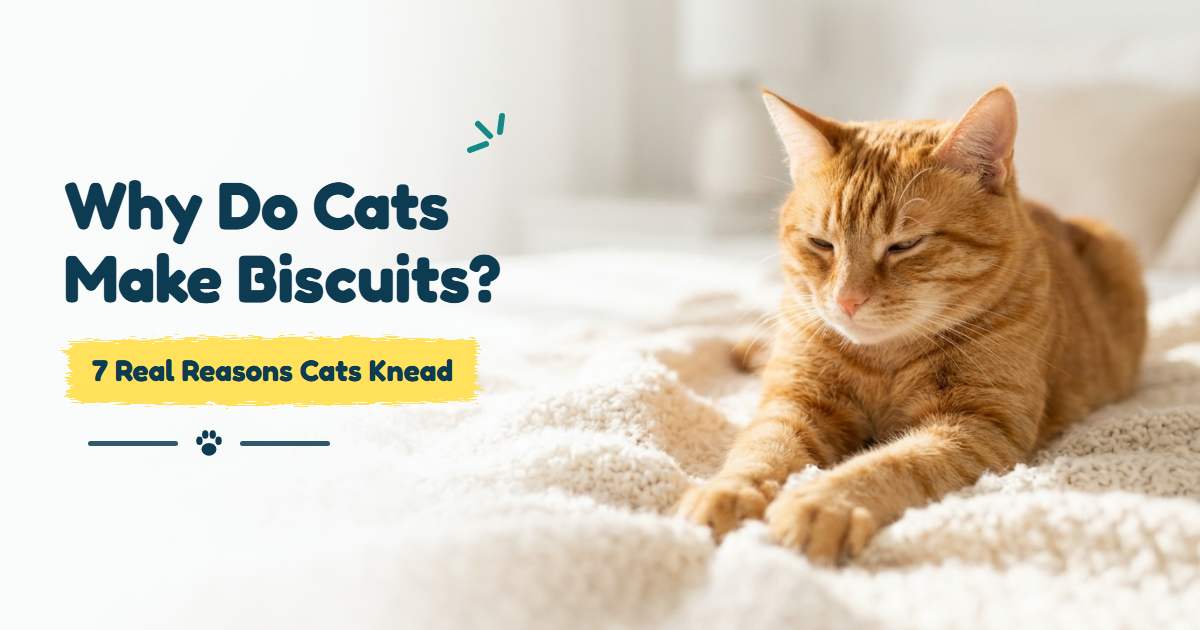
Quick answer: Why do cats make biscuits? It starts in kittenhood, when kittens knead their mother’s belly to help the milk flow. Adult cats keep doing it because it feels comforting, marks things with scent from glands in their paws, and stretches their muscles. In most cases, kneading is a sign of a relaxed, content cat.
Your cat hops onto your lap, purrs, and starts pushing their front paws into your legs, left, right, left, right, like a baker working dough. That’s why people call it “making biscuits.” It’s one of the sweetest things cats do, and one of the most puzzling.
Why do cats knead at all? Is it love, instinct, or something else? The answer is a bit of all three. This guide walks through what scientists and vets know, what’s still a guess, and what to do when those little paws come with sharp claws.
Table of Contents
- What Cat Kneading Looks Like
- Why Do Cats Knead? 7 Real Reasons
- Cat Kneading Meaning: What Your Cat Is Telling You
- Why Does My Cat Knead Me?
- Why Do Cats Knead Blankets?
- Why Do Cats Knead and Purr?
- Is It Normal for a Cat to Drool While Kneading?
- When Kneading Hurts: How to Handle Sharp Claws
- When Kneading Could Mean a Problem
- Frequently Asked Questions
What Cat Kneading Looks Like
Cat kneading is a rhythmic pressing motion with the front paws. Your cat pushes one paw down, then the other, often while purring. Many cats spread their toes and push their claws out and in as they go. Some also:
- Close their eyes or look half asleep
- Drool a little
- Suck or nibble on fabric
- Knead with all four paws (less common)
- Purr loudly the whole time
Each cat has their own style. Some knead for a few seconds before lying down. Others go for several minutes, almost in a trance.
Why Do Cats Knead? 7 Real Reasons
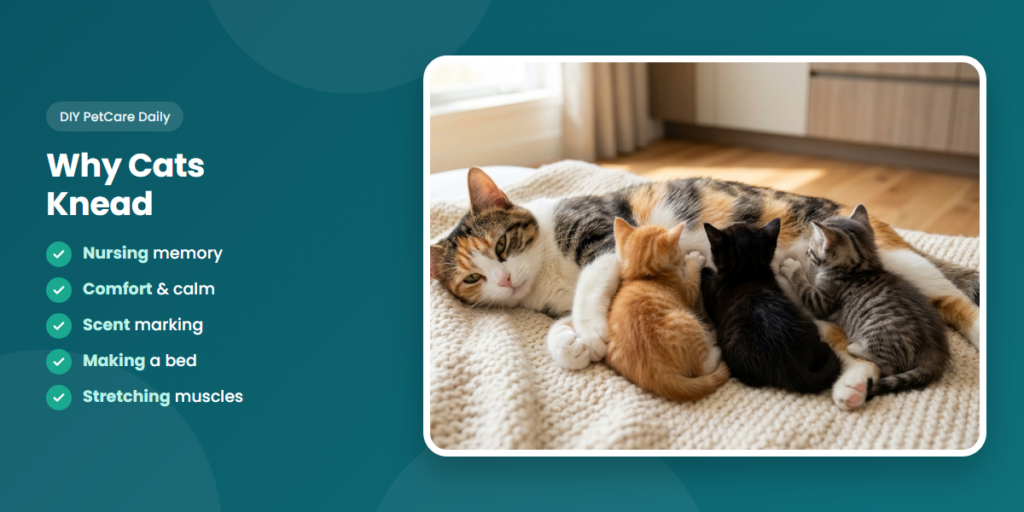
1. It Starts With Nursing
Newborn kittens knead their mother’s belly while they nurse. This pressing helps stimulate milk flow. Kittens do this even before their eyes are open, so it’s a built-in behavior, not something they learn by watching.
For a kitten, kneading is linked with food, warmth, and safety. That strong link stays with many cats for life.
2. Comfort and Relaxation
Adult cats often knead when they’re calm and happy, like when they settle on a soft blanket or a warm lap. Many experts think kneading brings back the comforting feelings of nursing. It’s a way for your cat to relax, a bit like a person humming or rocking.
3. Scent Marking
Cats have scent glands in their paw pads. When they press their paws into something, they leave a little of their scent behind. That scent tells other cats, “this is mine” or “this is a safe place.”
So when your cat kneads you, they may be marking you as part of their territory. Vets consider this a likely reason, though it’s less proven than the nursing link.
4. Making a Comfy Bed
Wild cats and their ancestors pressed down grass and leaves to make a soft, safe spot to sleep or give birth. Your cat’s habit of kneading a blanket before lying down may come from this nesting instinct.
5. Stretching
Kneading flexes the muscles in the paws, legs, and shoulders. A good knead after a nap may feel like a nice stretch, similar to how you stretch after waking up.
6. Showing Affection
Many cats only knead people they trust. If your cat makes biscuits on your lap, it’s usually a sign they feel safe and bonded with you.
7. Heat in Female Cats
Female cats that haven’t been spayed sometimes knead more when they’re in heat, along with rolling, yowling, and rubbing against things. This is often a sign they’re looking for a mate.
Cat Kneading Meaning: What Your Cat Is Telling You
Here’s a quick way to read what’s going on when your cat kneads.
| What You See | What It Usually Means |
| Kneading on your lap while purring | Contentment and trust |
| Kneading a blanket, then lying down | Making a comfy bed |
| Kneading with eyes half closed and drooling | Deep relaxation, often tied to kitten memories |
| Kneading plus sucking on fabric | Self-soothing; common in cats weaned early |
| Kneading while rolling and yowling | Possible heat in an unspayed female |
| Kneading that seems frantic or nonstop | Possible stress; watch for other changes |
Why Does My Cat Knead Me?
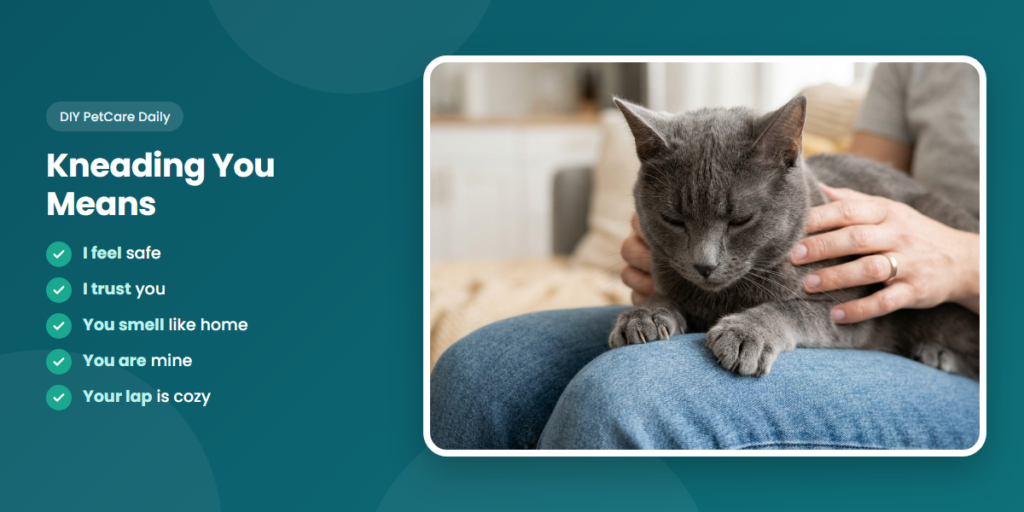
When your cat kneads you, they’re mixing several of the reasons above. Your lap is warm and soft like their mother’s belly. You smell familiar. And by pressing their paws into you, they leave their own scent behind.
Most cats knead people when they feel safe and content. Think of it as a compliment. It’s also why some cats knead more in the evening, when the house gets quiet and they settle in for a cuddle.
Some cats knead one family member but not others. That’s normal. They usually pick the person whose lap feels most comfortable, or the one they’re most bonded to.
Why Do Cats Knead Blankets?
Blankets, pillows, and fluffy sweaters feel a lot like a mother cat’s soft belly. Cats knead blankets for comfort, to make a cozy bed, and to leave their scent on a favorite spot.
Some cats also suck or nibble on the blanket while kneading. This is more common in cats that were weaned early or taken from their mother too young. In most cases, it’s a harmless way to self-soothe. But if your cat chews and swallows fabric, talk to your vet. Eating fabric can cause a dangerous blockage in the intestines.
Why Do Cats Knead and Purr?
Kneading and purring often go together because both are linked to nursing. Kittens purr while they nurse, and the mother cat purrs too. For most adult cats, kneading and purring together means “I’m relaxed and happy.”
Keep in mind that purring doesn’t always mean a cat is content. Cats also purr when they’re hurt or scared, as a way to calm themselves. If your cat purrs and kneads while also hiding, eating less, or acting strange, check our guide to signs of pain in cats.
Is It Normal for a Cat to Drool While Kneading?
Yes, for many cats it is. Some cats get so relaxed while kneading that they drool a little, often with half-closed eyes and a loud purr. This also goes back to nursing: a kitten’s mouth waters when it expects milk, and the relaxed feeling of kneading can bring that response back.
A few drops on your lap or blanket are nothing to worry about. Heavy drooling at other times is different. If your cat drools when they’re not kneading, paws at their mouth, or has bad breath, it could point to a dental problem. Our guide on why your cat’s breath smells explains the most common mouth problems in cats and when to see your vet.
When Kneading Hurts: How to Handle Sharp Claws
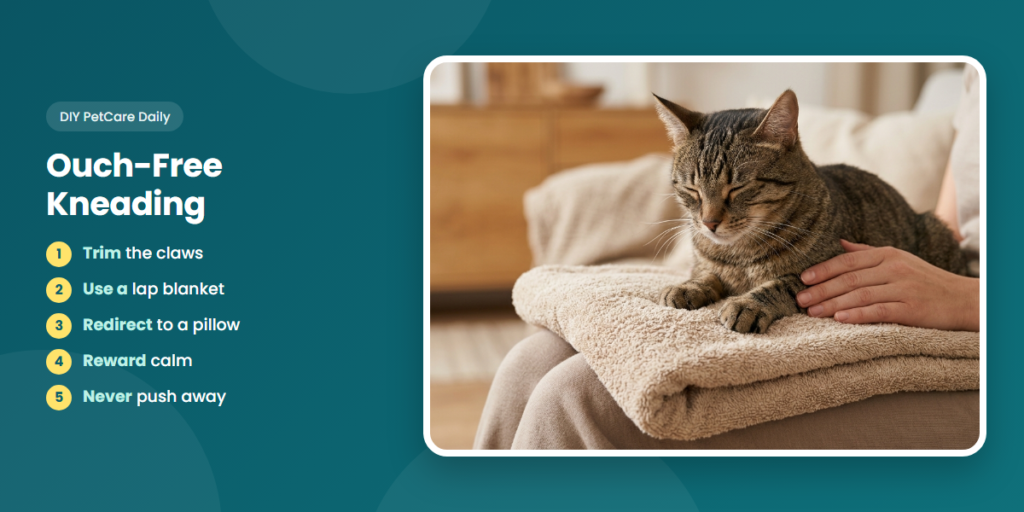
Cat making biscuits on bare legs can be painful. Many cats push their claws out while kneading. Never punish your cat for it, since kneading comes from a happy, safe place. Instead, try these:
- Keep claws trimmed. Short claws take the sting out of kneading. Our guide on how to trim cat nails walks you through it step by step.
- Use a thick blanket. Keep a folded towel or blanket on your lap for your cat to knead.
- Redirect gently. Lift your cat’s paws onto a pillow or blanket next to you.
- Reward calm lap time. Pet your cat when they settle down without kneading.
- Don’t push them away. A sudden push can scare your cat and make them less likely to come back to your lap.
Don’t declaw your cat to stop kneading. Declawing removes part of each toe bone and can cause long-term pain and behavior problems. Many vets and animal welfare groups strongly oppose it, and some US states and cities have banned it.
When Kneading Could Mean a Problem
Kneading is almost always normal. But talk to your vet if you notice:
- Kneading that suddenly becomes constant or frantic
- Kneading combined with hiding, aggression, or loss of appetite
- Chewing and swallowing fabric
- Kneading plus signs of heat in a cat you thought was spayed
Changes like these can point to stress, pain, or a medical problem. Our guide on how to tell if your cat is sick lists other signs to watch for. To learn what your cat’s tail, ears, and eyes are saying while they knead, read our cat body language guide.
Frequently Asked Questions
Do all cats make biscuits?
No. Many cats knead, but some never do, and that’s perfectly normal. A cat that doesn’t knead isn’t unhappy or less attached to you. They just show affection in other ways, like head bumps or slow blinks.
Is kneading a sign of love?
Often, yes. Cats usually knead when they feel safe and relaxed. If your cat kneads you, it’s a good sign they trust you and feel comfortable in your company.
Why does my cat bite while kneading?
Some cats nibble gently when they’re very relaxed, much like a kitten nursing. If the bites get harder, your cat may be overstimulated. Our guide on why your cat bites you explains the difference.
Do male cats knead too?
Yes. Both male and female cats knead. The habit starts in kittenhood, when all kittens knead while nursing, so it isn’t linked to sex. Unspayed females may knead more when in heat.
Should I stop my cat from kneading?
There’s no need to stop it. Kneading is a natural, comforting behavior. If it hurts, trim your cat’s nails and place a thick blanket on your lap instead of trying to stop the kneading itself.