Table of Contents
Quick answer: How long do cats live? Most cats live about 12 to 18 years, and many indoor cats reach their late teens or even their 20s. Outdoor cats usually have shorter lives because of traffic, fights, and infections. Breed, weight, dental care, and regular vet visits all make a difference.
Cats have a reputation for being survivors, and it’s easy to see why. Plenty of them live longer than their owners expect, and it’s not unusual to meet a sharp, healthy cat who’s 18 years old.
Still, how long your own cat lives depends on a lot more than luck. Lifestyle is one of the biggest factors, and it’s something you can control. This guide covers typical lifespans for indoor and outdoor cats, how breed fits in, and the simple habits that help cats stay healthy for longer.
Table of Contents
- How Long Do Cats Live on Average?
- Indoor vs Outdoor Cat Lifespan
- Cat Lifespan by Breed
- What Affects How Long a Cat Lives?
- How to Help Your Cat Live Longer
- Knowing When Your Cat Is Getting Older
- Signs an Older Cat Needs a Vet
- Frequently Asked Questions
How Long Do Cats Live on Average?
Most pet cats live around 12 to 18 years. Many sources put the average near the middle of that range, at about 13 to 15 years. With good care, it’s quite possible for cats to reach their 20s.
This makes cats longer-lived than most dogs, and they don’t have the huge size differences that dogs have. So while a Great Dane and a Chihuahua have very different life expectancies, most cats fall within a similar range.
The record holder is Creme Puff, a Texas cat who lived to 38 years and 3 days, according to Guinness World Records. That’s extremely rare, but it shows how long cats can live with luck and care.
If you’re curious how your own cat’s age compares, our cat age calculator converts it into human years and shows their life stage.
Indoor vs Outdoor Cat Lifespan
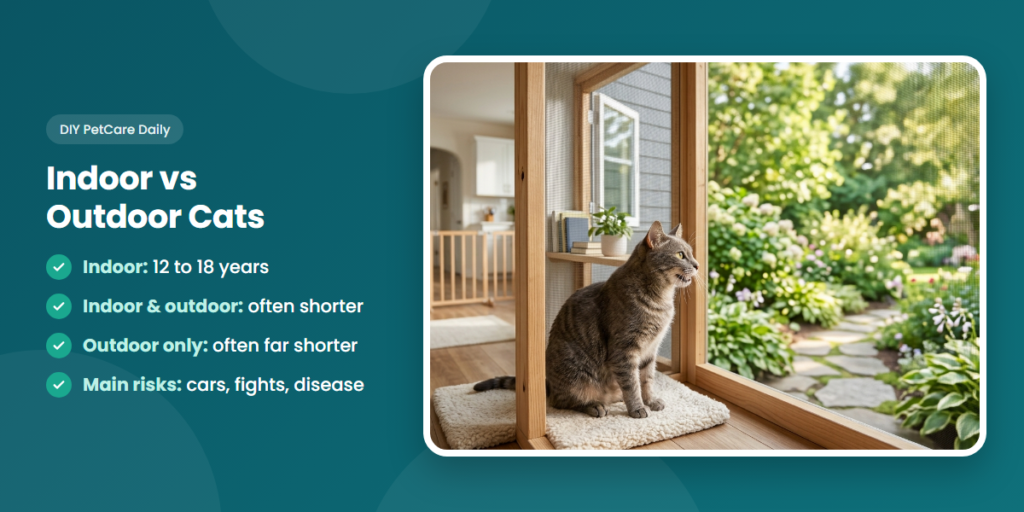
How your cat lives is one of the biggest factors in how long they live. Exact numbers are hard to pin down, since outdoor cats are hard to study, but the general pattern is clear.
| Lifestyle | Typical Lifespan | Main Risks |
| Indoor only | 12 to 18 years, sometimes 20 or more | Weight gain, boredom, dental disease |
| Indoor and outdoor | Often somewhat shorter than indoor cats | Traffic, fights, infections, parasites, toxins |
| Outdoor only or feral | Often far shorter; a few years is common | Traffic, predators, disease, poor food, harsh weather |
Why Indoor Cats Live Longer
Indoor cats avoid most of the things that can take a cat’s life suddenly:
- Cars and other accidents: These are a major cause of early death in outdoor cats.
- Fights: Bite wounds can cause abscesses and spread disease.
- Infections: Feline leukemia, FIV, and other viruses spread between cats. Read our guide to feline leukemia to learn more.
- Predators: Coyotes, dogs, and large birds can all be a threat in some areas.
- Poisons: Antifreeze, rodent bait, lawn chemicals, and toxic plants are all easier to run into outside.
- Parasites: Outdoor cats pick up more fleas, ticks, and worms.
How to Give Your Cat Safe Outdoor Time
Plenty of cats enjoy the outdoors, and you don’t have to choose between safety and fresh air. Try these options:
- A screened porch or “catio”
- Leash and harness walks, started slowly
- A fenced yard with cat-proof rollers, always supervised
- A window perch with a bird feeder outside
Indoor cats still need plenty to do. Daily play, climbing spots, and scratching posts help keep them fit and happy.

Cat Lifespan by Breed
Breed has some effect on lifespan, but it matters less for cats than for dogs. Most pet cats in the US are domestic shorthairs or longhairs, which are mixed-breed cats. These ranges are general estimates.
| Breed | Typical Lifespan |
| Domestic shorthair or longhair | 12 to 18 years |
| Siamese | 12 to 20 years |
| Russian Blue | 12 to 18 years |
| Burmese | 12 to 18 years |
| British Shorthair | 12 to 17 years |
| Ragdoll | 12 to 17 years |
| Persian | 12 to 17 years |
| Bengal | 12 to 16 years |
| Abyssinian | 10 to 15 years |
| Maine Coon | 10 to 15 years |
| Sphynx | 8 to 14 years |
Do Some Breeds Have Health Risks?
Yes. Knowing about your cat’s breed helps you and your vet stay alert for problems:
- Maine Coons and Ragdolls: More prone to a heart condition called hypertrophic cardiomyopathy
- Persians: More prone to polycystic kidney disease and breathing problems
- Sphynx: More prone to heart disease and skin problems
- Siamese: More prone to some dental and breathing problems
Mixed-breed cats often have fewer inherited problems, which is one reason they can do so well.
What Affects How Long a Cat Lives?
You can’t change your cat’s genes, but you can change a lot of other things.
Weight
Extra pounds raise the risk of diabetes, joint pain, and skin problems. A single extra pound on a 10 lb cat is 10% of their body weight. Our cat BMI calculator can help you check, and our guide to obesity in cats explains why it matters so much.
Dental Health
Dental disease is very common in adult cats, and it can make eating painful. Brushing helps, and so do regular dental checkups. Our guides on how to brush cat teeth and the signs of dental disease in cats can get you started.
Vaccines and Parasite Control
Vaccines protect against several serious diseases, even for indoor cats. See our guide to cat vaccines for a typical schedule. Your vet can also recommend the right flea, tick, and worm prevention.
Spaying and Neutering
Fixed cats tend to live longer. Spaying lowers the risk of uterine infections and mammary cancer, while neutering cuts down on roaming and fighting.
Nutrition
A complete and balanced food suited to your cat’s life stage is a strong start. Water matters too, especially for older cats. Read our guides on how much to feed your cat and wet vs dry cat food to find what works best.
Regular Vet Care
Cats are great at hiding illness. A vet exam can pick up kidney disease, thyroid problems, and dental disease long before you see any symptoms.

How to Help Your Cat Live Longer
These simple habits work well for most cats:
- Keep them indoors or supervised outside. This is one of the biggest things you can do.
- Keep them at a healthy weight. Measure meals, and don’t leave a full bowl out all day.
- Book regular vet visits. Once a year for adults and about every 6 months for older cats is a good plan.
- Take care of their teeth. Brushing even a few times a week helps.
- Keep up with vaccines and parasite prevention. Ask your vet what fits your cat’s lifestyle.
- Encourage drinking. Try a fountain, more water bowls, or wet food.
- Keep your cat moving. Short play sessions a couple of times a day help both body and mind.
- Keep toxic items out of reach. Lilies, certain medicines, and many household foods can be deadly. Read our list of what foods are toxic to cats.
- Keep litter boxes clean. Changes in the box are often the first sign of a problem. It’s easy to overlook them if the box isn’t kept clean.
Knowing When Your Cat Is Getting Older
Cats age slowly enough that it’s easy to miss the shift. Under the 2021 AAHA/AAFP guidelines, cats are considered seniors when they’re over 10 years old. Our guide on when a cat is considered a senior covers the signs, and our senior cat care checklist has simple ways to keep them comfortable.
If you don’t know how old your cat is, here’s how to tell how old a cat is from their teeth, eyes, and coat.
Signs an Older Cat Needs a Vet
Don’t write off changes as old age. Call your vet if you notice:
- Weight loss, even when your cat is eating well; see why a cat may be losing weight
- More thirst or peeing
- Hiding, or a change in personality
- Vomiting more often
- Trouble jumping or using the litter box
- Bad breath or dropping food
Go to a vet right away if your cat isn’t eating for more than a day, has trouble breathing, or can’t pee. Our guide on how to tell if your cat is sick lists other signs to watch for.
For more guides on keeping cats healthy, visit our Cat Health & Wellness section.
Frequently Asked Questions
How long do indoor cats live?
Most indoor cats live about 12 to 18 years, and many reach their 20s. They usually live longer than outdoor cats because they avoid traffic, fights, and many infections.
How long do outdoor cats live?
Outdoor cats usually have much shorter lives, though numbers vary a lot. Feral and outdoor-only cats may live only a few years, since they face traffic, disease, and harsh weather.
Do male or female cats live longer?
Female cats tend to live a little longer on average, though the difference is small. Spaying or neutering, indoor living, and good vet care matter more than sex.
What is the longest a cat has lived?
The record holder is Creme Puff, a cat from Texas who lived to 38 years and 3 days, according to Guinness World Records.
Is 15 old for a cat?
Yes, but it’s not unusual. A 15-year-old cat is about 76 in human years and is well into their senior years. Many cats live happily for years beyond this age.