Table of Contents
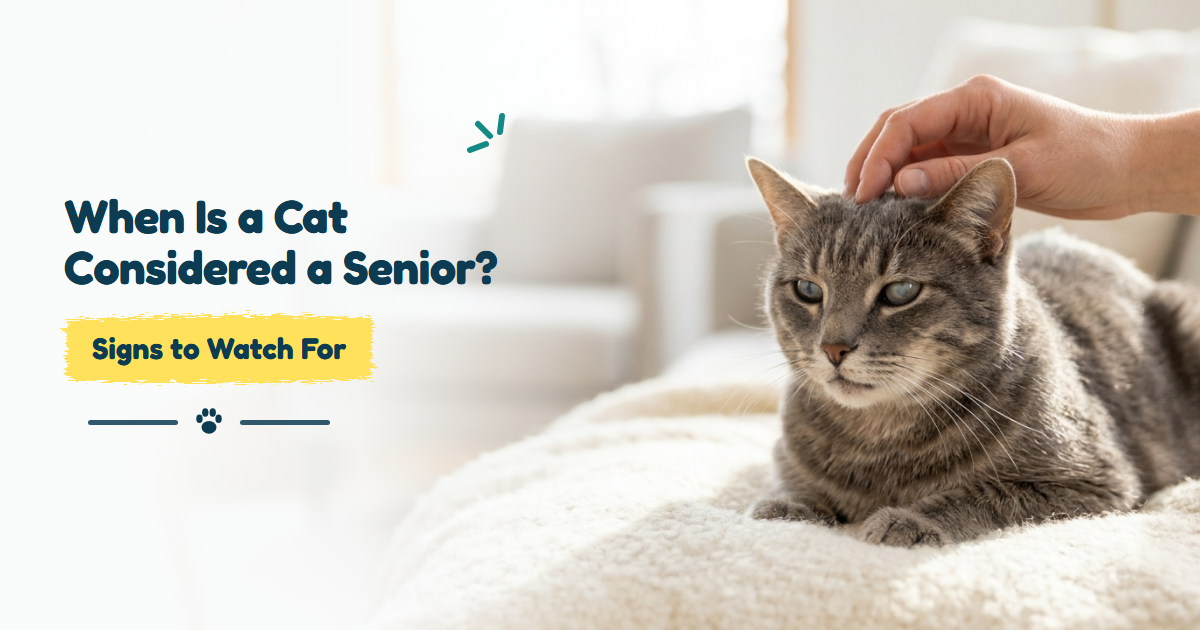
Quick answer: When is a cat considered a senior? Under the 2021 AAHA/AAFP Feline Life Stage Guidelines, a cat is considered a senior when they are over 10 years old. In human years, that’s about 60. Many cats still look young at this age, so watch for small changes in weight, thirst, litter box use, and how easily they jump.
Cats are masters of hiding their age. Your 12-year-old may still chase a laser pointer like a kitten and curl up in the same spot they’ve always loved. That can make it hard to know when to start thinking about senior care.
Knowing when your cat becomes a senior matters, because many of the health problems that affect older cats are easier to manage when caught early. This guide explains the age cutoffs, what signs to look for, and what should change once your cat reaches this stage.
Table of Contents
- When Is a Cat Considered a Senior by Age?
- Does Becoming a Senior Mean Your Cat Is Sick?
- Signs Your Cat Is Getting Older
- Common Health Problems in Older Cats
- What Changes When Your Cat Becomes a Senior
- When to Call the Vet
- Frequently Asked Questions
When Is a Cat Considered a Senior by Age?
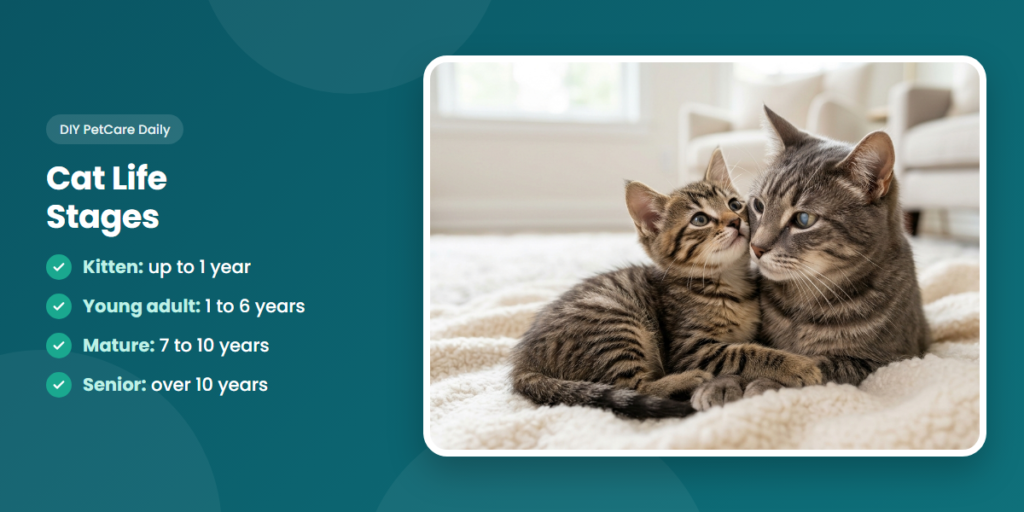
Most cats are considered seniors once they’re over 10 years old. Current guidelines put cats in four life stages. A cat can also enter an end-of-life stage at any age if they have a terminal illness.
| Life Stage | Cat’s Age | About This Many Human Years | Vet Visits |
| Kitten | Birth to 1 year | Up to 15 | Every 3 to 4 weeks until shots finish |
| Young adult | 1 to 6 years | 15 to 40 | At least once a year |
| Mature adult | 7 to 10 years | 44 to 56 | At least once a year |
| Senior | Over 10 years | 60 and up | Every 6 months is a good goal |
Older references may put seniors at 11 to 14 years and call cats 15 or older “geriatric” or “super senior.” You may still hear these terms at your vet’s office. They all point to the same idea: older cats need closer attention.
Unlike dogs, cats don’t vary much in size, so this one timeline works for most cats. Larger breeds like Maine Coons may age a little sooner, though there isn’t a separate official cutoff for them.
To see your cat’s human-year age, use our cat age calculator. If you adopted your cat as an adult, our guide on how to tell how old a cat is can help you make an estimate.
Does Becoming a Senior Mean Your Cat Is Sick?
No. Being a senior is about age, not illness. Plenty of 12-year-old cats are healthy, playful, and happy. The label is simply a reminder that the odds of certain health problems go up from here, and that it’s a good time to start looking for them more closely.
Think of it as a chance to get ahead of problems. A kidney issue found on a routine blood test can often be managed for a long time, while one found only after a cat stops eating is much harder to treat.
Signs Your Cat Is Getting Older
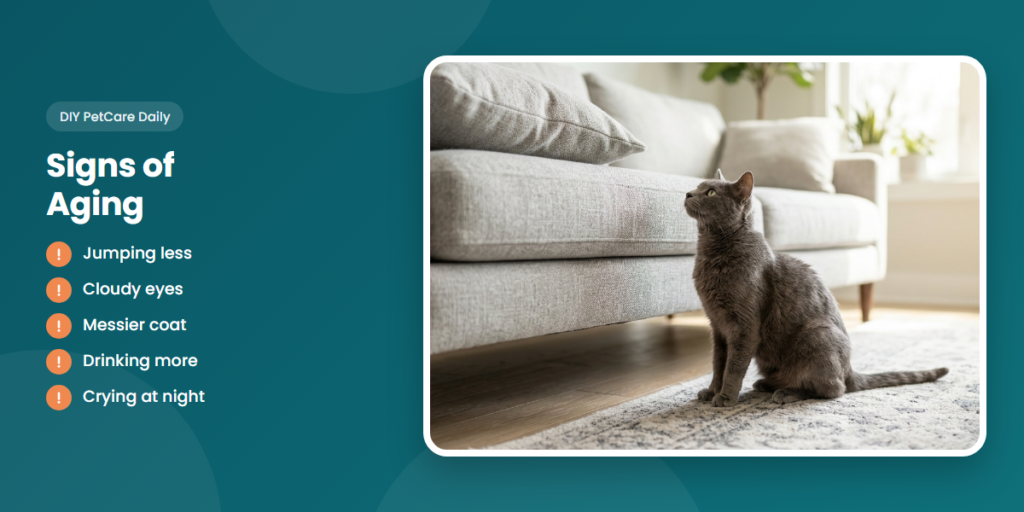
Age often shows up in small ways first. Many of these changes happen slowly, so it can help to keep notes or take pictures.
Body Changes
- Cloudy or hazy eyes, or lacy patterns in the colored part of the eye
- A thinner, rougher, or clumpier coat
- Gray hairs, especially on dark cats
- A bonier spine or hips
- Weight gain in the mature years, then weight loss in the later years
- Thicker, more brittle nails that may catch on things
- Bad breath or brown tartar on the teeth
Movement Changes
Arthritis is very common in older cats, but they rarely limp the way dogs do. Instead, they might:
- Jump less often or to lower spots
- Hesitate before jumping up or down
- Use stairs slowly, one at a time
- Skip climbing on favorite furniture
- Have trouble getting into a high-sided litter box
- Stop grooming their lower back and hind end
Behavior Changes
- Sleeping more, or sleeping in new spots
- Crying loudly at night
- Seeming confused or staring at walls
- Wanting more attention, or hiding more than before
- Playing less
- Becoming grumpy when touched in certain areas
Food, Water, and Litter Box Changes
- Drinking more water
- Bigger clumps in the litter box
- Accidents outside the box
- A change in appetite, whether more or less
- Vomiting more often
Don’t assume these are normal. Changes like these may look like aging, but they can point to kidney disease, thyroid disease, diabetes, arthritis, or dental pain. Many of these can be managed well if found early.
Common Health Problems in Older Cats
Knowing what’s common can help you spot trouble sooner.
| Condition | What You May Notice |
| Chronic kidney disease | More thirst and urine, weight loss, poor appetite, vomiting |
| Hyperthyroidism | Weight loss despite a big appetite, restlessness, vomiting, yowling |
| Diabetes | More thirst and urine, weight loss, walking on the hocks |
| Arthritis | Jumping less, stiffness, a messy coat, litter box accidents |
| Dental disease | Bad breath, dropping food, chewing on one side |
| High blood pressure | Sudden blindness, dilated pupils, confusion |
| Cancer | Lumps, weight loss, low energy, poor appetite |
| Cognitive dysfunction | Confusion, night crying, accidents, changes in social habits |
For a closer look at these signs, read our guides on how to tell if your cat is sick and the signs of dental disease in cats. You can also use the feline grimace scale to check for signs of pain in your cat’s face.
What Changes When Your Cat Becomes a Senior
You don’t need to change everything at once. A few small adjustments can make a big difference.
More Vet Visits
Exams about every 6 months are a smart goal. A lot can change in 6 months for an older cat. Your vet may recommend:
- Blood work and a urine test
- A blood pressure check
- A thyroid test
- A dental exam
- A check of joints and weight
These visits give your vet a baseline, so even small changes will stand out.
Regular Weigh-Ins at Home
Losing weight is often one of the first signs that an older cat is ill.. A baby scale makes it easy to get an accurate number. Check at least once a month, and call your vet if there’s any steady drop. Our guide on why a cat may be losing weight explains why this matters.
Food and Water
Older cats may need a food that’s easier to digest, softer to chew, or suited to a health condition. Not every older cat needs a “senior” food. Your vet can help you decide. Our guide on how much to feed your cat explains portions by weight and age. Some older cats gain weight while others struggle to keep it on, so check their body shape with our cat BMI calculator and update portions with our cat calorie calculator. For a full guide, see how many calories a cat needs.
Water is important too. Wet food, fountains, and more water bowls can all help. Read more in our guide on how much water a cat should drink.
Easier Access Around the House
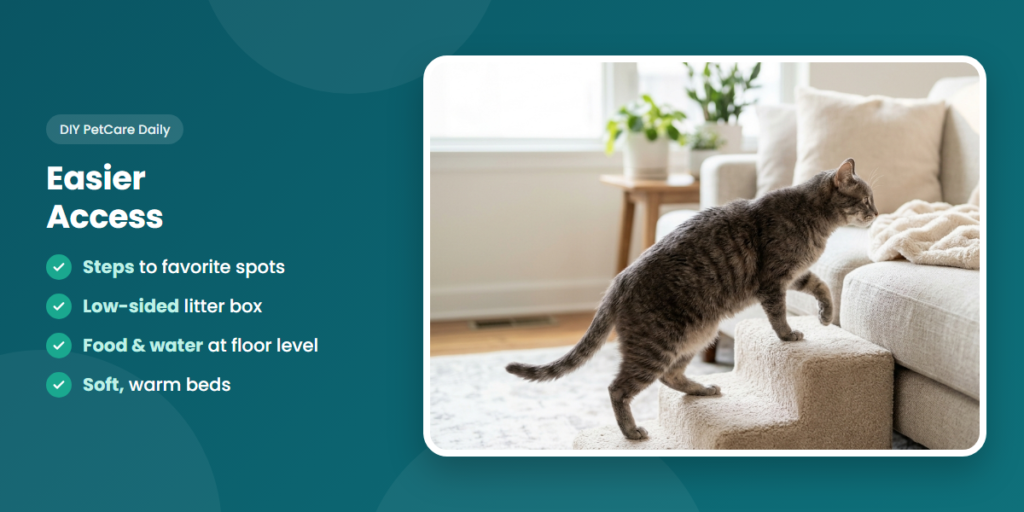
Make everyday things easier to reach:
- Add steps or a ramp to favorite perches and beds
- Use a low-sided litter box, and keep one on every floor; see how many litter boxes per cat
- Place food and water bowls where your cat doesn’t have to jump
- Offer soft, warm beds away from drafts
More Help With Grooming
Older cats often can’t reach every spot, so mats may form along the back. Gentle, regular brushing helps, and it’s a good time to check for lumps. If mats have already formed, our guide on how to remove mats from cat fur can help. Nails may also need more frequent trims since older cats scratch less.
For a complete list of home care ideas, see our senior cat care checklist.
When to Call the Vet
Go to a vet right away if your older cat:
- Has trouble breathing
- Can’t pee, or strains in the litter box
- Hasn’t eaten for more than a day
- Suddenly can’t walk, or their back legs seem weak or cold
- Suddenly seems blind
- Has seizures or collapses
Book a visit soon if your cat:
- Is losing weight
- Is drinking or peeing more
- Is throwing up more often
- Has stopped jumping or grooming
- Has any new changes in behavior or litter box habits
If your cat seems to be declining, our guide to signs your cat is dying offers support for keeping them comfortable.
For more guides on older cats, visit our Cat Health & Wellness section.
Frequently Asked Questions
What age is a senior cat?
Under the 2021 AAHA/AAFP guidelines, cats are seniors once they’re over 10 years old. Older references may use 11 years, or call cats 15 and older “geriatric.”
Is an 8-year-old cat a senior?
No. An 8-year-old cat is a mature adult, or about 48 in human years. It’s still a good time to get baseline blood work and watch for early changes.
How often should a senior cat go to the vet?
About every 6 months is a good goal for older cats. Cats with ongoing health problems may need more frequent visits.
Do senior cats sleep more?
Yes. Many older cats sleep more, but big changes aren’t always normal. Pain, illness, or thyroid problems can also change sleep, so mention them to your vet.
Should I switch my cat to senior food?
Not automatically. If your older cat is healthy and doing well on their food, they may not need a change. Ask your vet, especially if they have kidney disease or weight changes.