Table of Contents
Quick answer: Why is my cat so skinny? Common causes include hyperthyroidism, kidney disease, diabetes, dental pain, parasites, stress, and muscle loss from aging. Some cats are also naturally slim. If your cat’s spine, ribs, and hips feel sharp, or they’ve gotten thinner over time, it’s a good idea to book a vet visit, since cats often hide illness.
Maybe you’ve picked up your cat and felt more bones than usual. Maybe your long-haired cat looks normal until bath time. Or maybe you’ve adopted a thin stray and aren’t sure how worried to be.
Thin doesn’t always mean sick. Some cats are simply lean. Still, a thin body can be one of the first signs of a health problem, and cats are very good at hiding those. This guide helps you figure out if your cat is really too thin, what might be behind it, and how to help them gain weight safely.
Table of Contents
- Is Your Cat Actually Too Skinny?
- Why Is My Cat So Skinny? Common Causes
- Skinny vs Losing Weight: Why the Difference Matters
- How to Help a Skinny Cat Gain Weight
- When to Worry and Call the Vet
- Frequently Asked Questions

Is Your Cat Actually Too Skinny?
Start with your hands. Fur can hide a lot, and a slim cat can look bigger than they are. Here’s how a healthy lean cat compares with one who’s too thin.
| What You Notice | Healthy but Lean | Too Thin |
| Ribs | Easy to feel, with a thin fat layer | Sharp, with no fat you can feel |
| Spine and hips | Easy to feel, with some muscle | Stick out, and may be visible |
| Waist | Clear waist behind the ribs | Extreme, hollow-looking waist |
| Belly | A small, soft pad | No fat pad, sunken belly |
| Muscle | Firm back and thighs | Thin back legs, bony head |
| Coat | Sleek and clean | Dull, greasy, or flaky |
| Energy | Normal for their age | Tired, weak, or very restless |
Try comparing with your own hand. Healthy ribs feel like the back of your hand, while too-thin ribs feel more like your knuckles. For a fuller check, use the cat body condition score. Scores of 1 to 3 are below ideal. Our cat BMI calculator can also help.
Some Cats Are Naturally Slim
Slender breeds such as Siamese, Oriental Shorthairs, and Abyssinians are built to look long and lean. Young cats also go through a lanky stage before they fill out. If your cat is active, eating well, has a healthy coat, and has always looked this way, they may just be built that way. Our guide on average cat weight has typical ranges by breed.
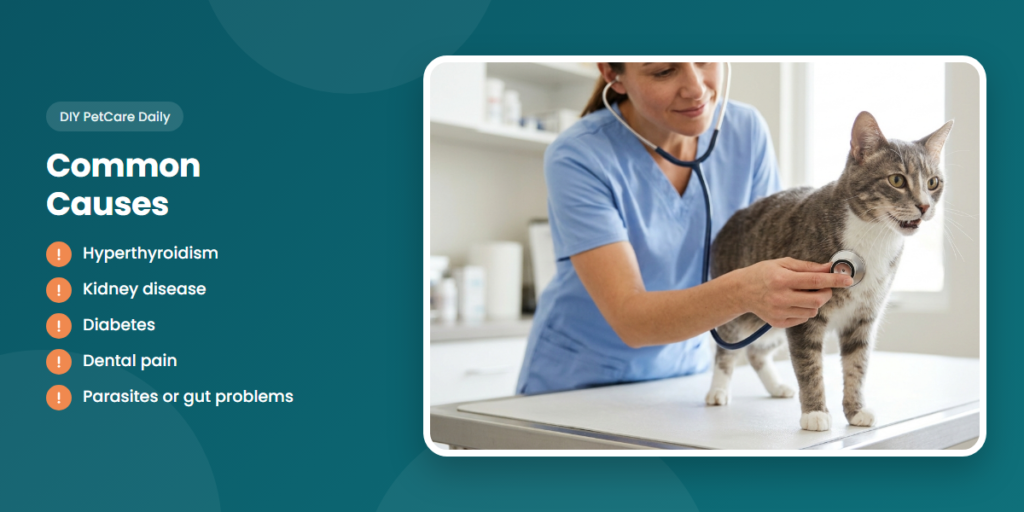
Why Is My Cat So Skinny? Common Causes
Hyperthyroidism
This is one of the most common reasons an older cat gets thin. An overactive thyroid speeds up the body, so cats burn through energy. A classic sign is a big appetite with weight loss. Your cat may also be restless, vomit, drink more, or yowl at night. It’s most common in cats over about 10, and it’s treatable.
Chronic Kidney Disease
Kidney disease is very common in older cats. Watch for more thirst and urine, a poor appetite, vomiting, and a bad smell on the breath. Early diet changes and treatment can help many cats feel better for a long time.
Diabetes
Diabetic cats can’t use sugar from their food properly, so they lose weight even while eating well. They often drink and pee a lot more than usual. Some cats also walk on their hocks, with the back of the leg touching the ground. It can be managed with treatment, and in some cats it can go into remission.
Dental Pain
A sore mouth can make eating painful, even when your cat is hungry. Watch for bad breath, drooling, dropping food, or chewing on one side. Our guide to the signs of dental disease in cats shows what to look for.
Parasites
Worms and other parasites can steal nutrients, especially in kittens and outdoor or newly adopted cats. Fleas can also cause problems, including anemia in small kittens. A stool test and the right treatment usually solve the problem.
Gut Problems
Inflammatory bowel disease and intestinal lymphoma can both prevent your cat from absorbing their food. Signs include frequent vomiting, diarrhea, and weight loss, often with a normal or big appetite. If your cat throws up more than occasionally, see our guide on cat throwing up.
Infections
Viruses like feline leukemia and FIV can weaken the immune system and cause weight loss over time. Read our guide to feline leukemia if your cat has never been tested, especially if they’ve spent time outdoors.
Cancer
Cats with cancer may lose weight even when they’re eating. Other signs include new lumps, low energy, or a poor appetite. Many cats do better than owners expect once treatment or comfort care begins.
Stress and Competition for Food
A new home, a new pet, or a change in routine can put a cat off their food. In a multi-cat home, a shy cat may lose out at mealtime. Bullying can also keep them from reaching food and water. Watch how much each cat is really eating, and feed them in separate spots if needed.
Not Enough Calories
Sometimes it’s simply a food issue. Your cat may be eating a low-calorie food, or simply not eating enough of it. Kittens and active young cats need far more than adults. Our cat calorie calculator can give you a starting point, and our guide on how many calories a cat needs explains the numbers.
Aging and Muscle Loss
Many older cats lose muscle and fat, and they may have trouble digesting food as well as they once did. It can be normal, but don’t assume it is. Our senior cat care checklist has tips for older cats, and your vet can check for treatable problems.
Skinny vs Losing Weight: Why the Difference Matters
A cat who has always been slim is usually less worrying than a cat who’s getting thinner. If you’ve noticed a drop, read our guide on cat losing weight. On a small animal, a pound is a big change. For a 10 lb cat, 1 pound is 10% of their body weight.
Weigh your cat now, and write it down. A baby scale is more accurate than a bathroom scale, and it gives your vet a good place to start.
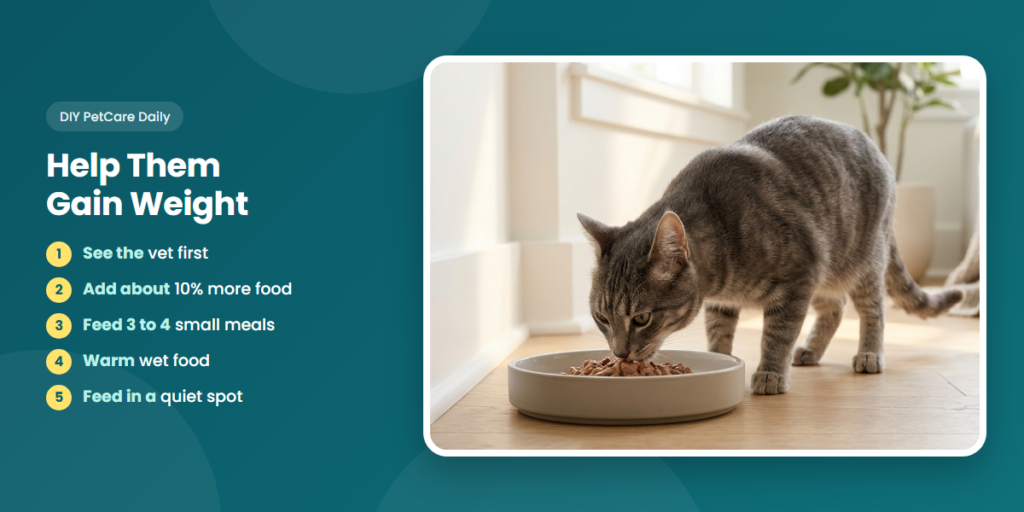
How to Help a Skinny Cat Gain Weight
See your vet first, because extra food won’t solve an illness. Once your vet has ruled out medical problems, try these steps.
- Set a goal. Ask your vet, or get an estimate from our cat weight calculator.
- Add calories gradually. Increase daily food by about 10%, then adjust after 1 to 2 weeks.
- Feed smaller, more frequent meals. Offer 3 to 4 small meals, or use a timed feeder.
- Choose a calorie-dense food. Kitten food or a recovery diet may work, if your vet agrees.
- Warm up wet food. A few seconds in the microwave, stirred well, helps release the smell.
- Add safe extras. A little plain cooked chicken or the water from unsalted canned tuna can tempt a picky cat. Keep the extras small so the diet stays balanced.
- Find a quiet spot. Feed away from other pets, dogs, kids, and noisy appliances.
- Try wide, shallow dishes. Some cats dislike whisker contact with the sides of the bowl.
- Weigh weekly. Look for slow, steady gains.
Change foods slowly over 7 to 10 days if you’re switching brands. If you’re unsure how much to offer, see our guide on how much to feed your cat.
What Not to Do
- Don’t feed foods from our list of what foods are toxic to cats, including onions, garlic, grapes, and chocolate.
- Don’t give milk or cream. Many cats are lactose intolerant, so it can cause diarrhea.
- Don’t give human appetite boosters or medicines. Many are dangerous for cats.
- Don’t feed only tuna or other human food. Your cat needs a complete and balanced diet.
- Don’t wait it out if your cat stops eating.
When to Worry and Call the Vet
Call your vet soon if your cat:
- Is skinny but always hungry
- Keeps getting thinner
- Is drinking or peeing more than usual
- Has frequent vomiting or diarrhea
- Has a greasy or matted coat
- Has bad breath or trouble eating
- Is over 10 and has gotten thinner at all
Go to a vet right away if your cat:
- Hasn’t eaten for 24 hours or more
- Is weak, collapsed, or hiding and won’t come out
- Is having trouble breathing
- Has yellow gums or eyes
- Is straining in the litter box
Don’t wait if your cat stops eating. Cats who go without food can develop hepatic lipidosis, a serious liver problem. Our guide on cat not eating has more on what to do.
For more guides, visit our Cat Health & Wellness section.
Frequently Asked Questions
Why is my cat so skinny but eats a lot?
The most common reasons are hyperthyroidism, diabetes, gut problems, and parasites. A cat who eats well but stays thin should see a vet, especially if they’re older.
Is it normal to feel my cat’s spine?
Yes, you should be able to feel it, but it shouldn’t feel sharp. If the bones stand out with very little covering, your cat may be too thin or losing muscle.
Why is my older cat so skinny?
Older cats often lose muscle, but thyroid disease, kidney disease, diabetes, and cancer are also common. Have your vet check any older cat who’s getting thinner.
What can I feed my skinny cat to gain weight?
Start with more of their complete and balanced food, or switch to a calorie-dense one, such as kitten food, if your vet agrees. Small, frequent meals usually work best.
Can worms make a cat skinny?
Yes. Intestinal parasites steal nutrients, which can lead to weight loss, a dull coat, and a pot belly, especially in kittens. Your vet can test a stool sample and recommend the right treatment.