Table of Contents
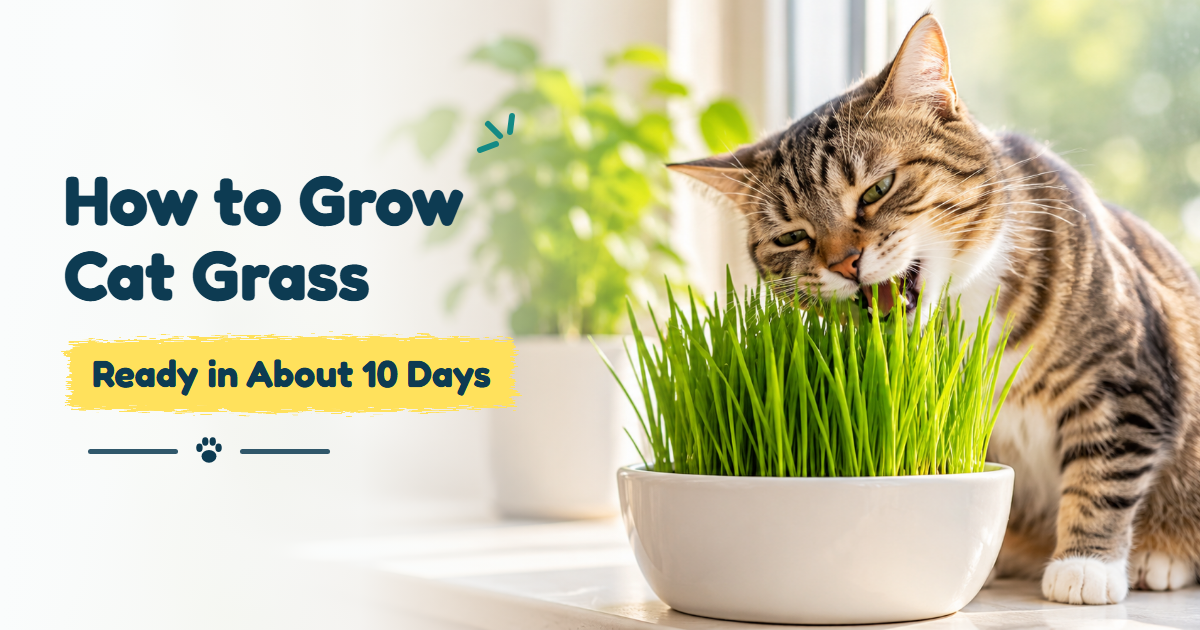
Quick answer: Here is how to grow cat grass: soak wheat, oat, or barley seeds in water for 8 to 12 hours, spread them thickly over moist potting soil, and cover lightly. Keep the soil damp and the pot in bright, indirect light. Sprouts appear in 3 to 5 days, and the grass is ready for your cat in 10 to 14 days, once it’s 3 to 4 inches tall.
If your cat chews on your houseplants, nibbles the fronds of your fake ficus, or rushes to eat grass the moment they get outside, they might enjoy a pot of their own. Cat grass is cheap, safe, and one of the easiest plants you’ll ever grow. You don’t need a green thumb or a garden. A sunny windowsill is enough.
This guide covers the best seeds, two ways to plant them, how to avoid mold, and how to keep a steady supply going.
Table of Contents
- What Is Cat Grass?
- Why Do Cats Eat Grass?
- What You’ll Need
- How to Grow Cat Grass in Soil, Step by Step
- How to Grow Cat Grass Without Soil
- Cat Grass Growing Timeline
- How to Stop Cat Grass From Molding
- Keep a Fresh Supply Growing
- Is Cat Grass Safe for Cats?
- Frequently Asked Questions
What Is Cat Grass?
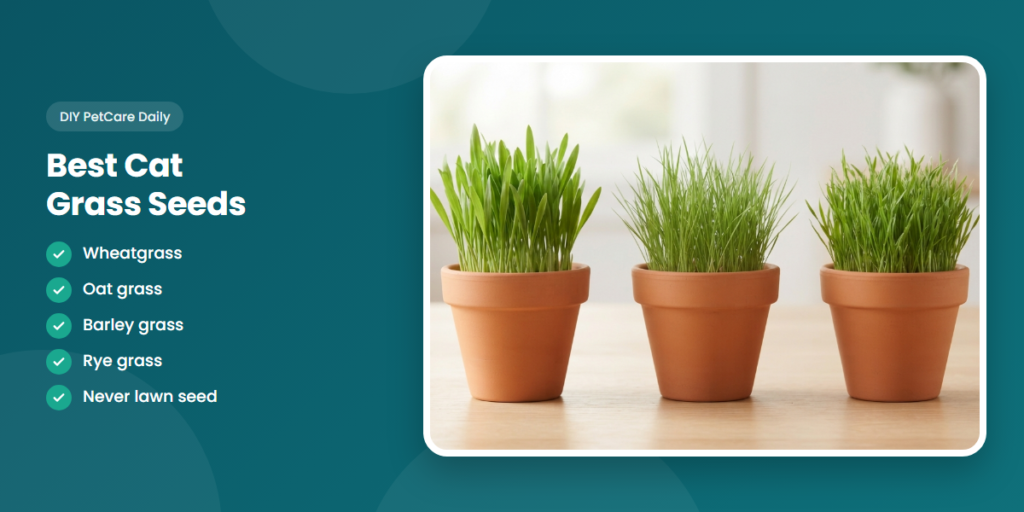
Cat grass isn’t one specific plant. It’s a name for young cereal grass sprouts that are safe for cats to chew. The most common types are:
- Wheatgrass: the most popular choice; fast-growing and tender
- Oat grass: soft, sweet blades that many cats prefer
- Barley grass: sturdy and quick to sprout
- Rye grass: hardier, a little tougher to chew
Most store-bought “cat grass kits” use one or a mix of these.
Cat Grass vs Catnip
People mix these up all the time, but they’re very different plants.
| Cat grass | Catnip | |
| Plant family | Cereal grasses (wheat, oat, barley) | Mint family |
| What cats do | Chew and eat it | Sniff, roll, rub, and play |
| Effect | None; just a snack | A short “high” in about half of cats |
| Safe to eat? | Yes, in normal amounts | Yes, in small amounts |
Cats can enjoy both, but only cat grass is meant as a chewing plant.
Why Do Cats Eat Grass?
Nobody knows for sure, but there are a few popular ideas:
- Fiber: grass may help move food and hair through the gut.
- Hairballs: some cats vomit after eating grass, which may help bring up fur.
- Nutrients: young grass has small amounts of folic acid and other vitamins.
- Instinct: wild cats eat plant matter from their prey and nibble grass too.
- Texture: some cats simply like the feel of chewing on something crunchy.
If hairballs are a regular issue, our guide on how to prevent hairballs in cats covers grooming and diet tips that help more than grass alone.
What You’ll Need
- Cat grass seeds (wheat, oat, barley, or a mix), about 1/4 to 1/2 cup per pot
- A shallow pot or tray with drainage holes, 4 to 6 inches across
- Organic potting soil with no added fertilizer or pesticides
- A spray bottle
- Plastic wrap or a clear plastic lid (optional)
- A bowl for soaking
Look for seeds sold as cat grass, sprouting seeds, or untreated “wheat berries” from a grocery store. Never use lawn grass seed. It’s often coated with chemicals.
Pick a heavy pot. Cats like to tug at the grass, and a light plastic pot tips over easily. Ceramic works well.
How to Grow Cat Grass in Soil, Step by Step
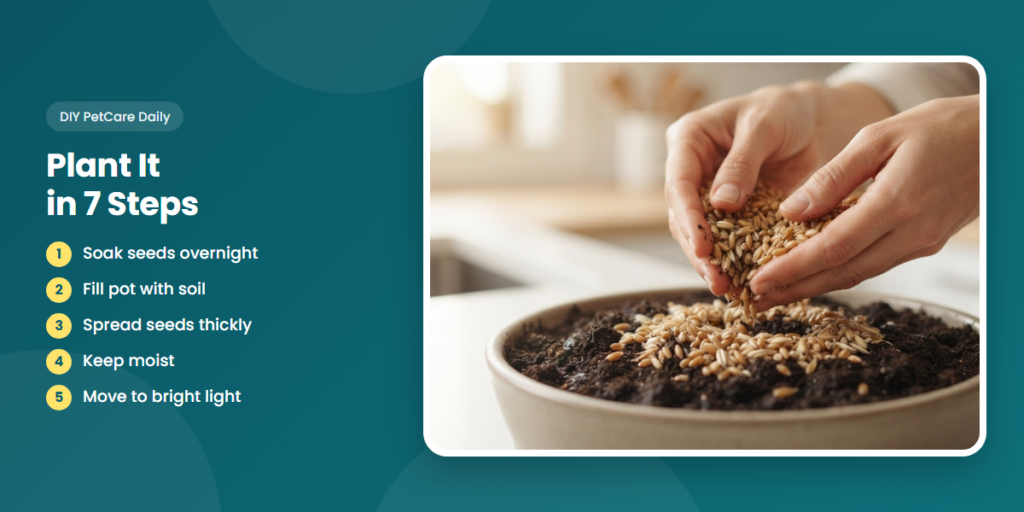
Step 1: Soak the Seeds
Put the seeds in a bowl and cover them with room-temperature water. Let them soak for 8 to 12 hours, or overnight. This softens the seed coat and speeds up sprouting. Drain and rinse before planting.
Step 2: Fill the Pot
Fill your pot with potting soil, leaving about 1 inch of space at the top. Water the soil until it’s evenly damp, not soggy.
Step 3: Spread the Seeds Thickly
Scatter the seeds over the soil so they’re close together, almost touching. A thick layer grows into a dense, lush patch that holds up better when your cat chews it.
Step 4: Cover Lightly
Sprinkle a thin layer of soil over the seeds, about 1/4 inch. Press down gently.
Step 5: Keep It Moist
Cover the pot loosely with plastic wrap to hold in moisture. Place it somewhere warm, between about 65°F and 75°F. Mist the soil once or twice a day so it never dries out.
Step 6: Move It to the Light
When sprouts appear, usually in 3 to 5 days, remove the plastic. Move the pot to a spot with bright, indirect light, like a few feet from a sunny window. Too much direct sun can scorch young blades.
Step 7: Offer It to Your Cat
After 10 to 14 days, the grass will be about 3 to 4 inches tall. That’s the perfect time to set it down for your cat. Keep watering when the top of the soil feels dry.
How to Grow Cat Grass Without Soil
Don’t want dirt in your kitchen? You can grow cat grass in water alone.
- Soak the seeds overnight, as above.
- Line a shallow tray with a damp paper towel, coconut coir mat, or sprouting pad.
- Spread the seeds in a single, thick layer.
- Mist twice a day so the bed stays damp.
- Once the roots form a mat (about 4 to 5 days), add a little water to the tray each day.
- Rinse the tray with fresh water every day or two to stop mold.
Soil-free grass grows just as fast, but it doesn’t last quite as long. Expect about one to two weeks of good grass.
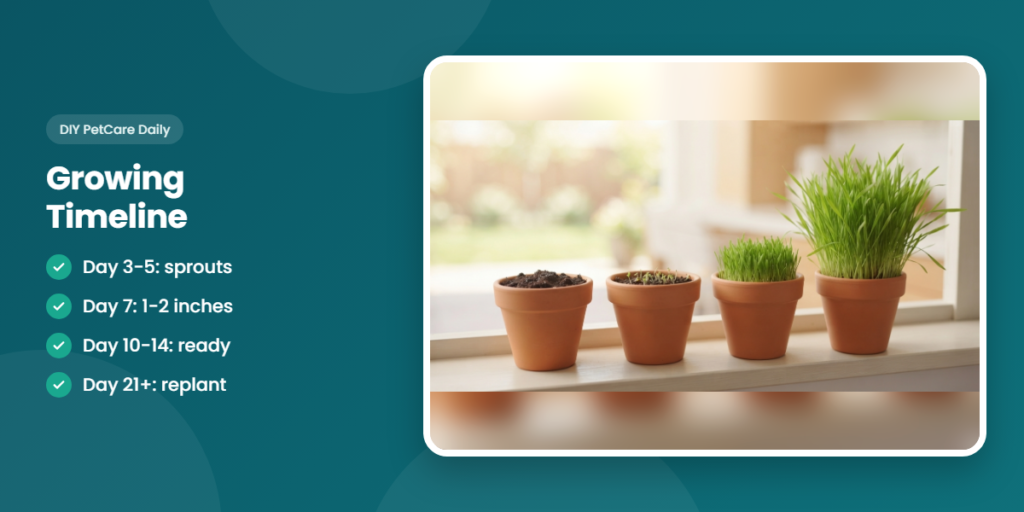
Cat Grass Growing Timeline
| Day | What happens |
| 0 | Soak seeds overnight |
| 1 | Plant in moist soil and cover |
| 3 to 5 | First sprouts appear; remove cover, move to light |
| 7 | Grass is 1 to 2 inches tall |
| 10 to 14 | Grass is 3 to 4 inches; ready for your cat |
| 21 to 28 | Blades start to yellow and flop; time for a new pot |
How to Stop Cat Grass From Molding
Mold is the most common problem. It usually comes from too much water and too little air.
Is it mold or root hairs? In the first few days, you might see white fuzz on the seeds and roots. Often these are tiny root hairs, which are normal. Root hairs disappear when you mist them. Mold is fuzzy and spreads, sometimes with a gray, blue, or green color and a musty smell.
To prevent mold:
- Don’t overwater; the soil should feel damp, not wet.
- Remove the plastic cover as soon as sprouts appear.
- Give the pot good airflow.
- Use a pot with drainage holes.
- Rinse seeds well after soaking.
If you see real mold, throw out the batch and start fresh. Don’t let your cat eat moldy grass.
Keep a Fresh Supply Growing
A single pot lasts about two to three weeks before it starts to wilt. For nonstop grass, plant a new pot every 7 to 10 days. With two or three pots on rotation, your cat always has fresh greens.
You can also trim tall grass with scissors to keep it neat. Some blades will grow back once or twice, but the second growth is usually thinner.
Is Cat Grass Safe for Cats?
Yes, cat grass is safe for healthy cats. A few things to know:
- A little vomiting is common. Some cats throw up a bit of grass after eating it. If it happens now and then and your cat acts normal, it’s usually fine.
- Watch for frequent vomiting. If your cat vomits often, seems tired, or stops eating, call your vet. Our guide to cat throwing up explains what’s normal and what isn’t.
- Long blades can get stuck. Rarely, a long blade can get caught in the back of the throat or nose. Offer young, short grass and replace old, tough blades.
- Don’t let cats graze outside on lawns. Outdoor grass may be treated with fertilizer, weed killer, or pest sprays.
Houseplants Cats Should Never Chew
Growing cat grass can also steer your cat away from your other plants, which is a big plus. Many common houseplants are toxic to cats. Lilies are the most dangerous. Every part of the plant, even the pollen and the water in the vase, can cause kidney failure in cats. Pothos, philodendron, dieffenbachia, and sago palm are also harmful.
Safe plants include spider plants, Boston ferns, and parlor palms. See our full list of foods toxic to cats for other things to keep away from curious cats.
For more fun projects, see our DIY Cat Projects section. If your cat enjoys outdoor time, a DIY catio is a great place to keep a few pots of grass.
Frequently Asked Questions
How long does it take to grow cat grass?
Cat grass sprouts in 3 to 5 days and is ready to eat in about 10 to 14 days, when it reaches 3 to 4 inches tall. Soaking the seeds overnight first speeds things up.
What is the best seed for cat grass?
Wheat, oat, and barley are the most popular. Wheatgrass grows fastest, and oat grass is softer, which many cats like. A mix gives your cat some variety. Never use lawn grass seed.
How often should I water cat grass?
Keep the soil damp but not soggy. Mist once or twice a day until it sprouts, then water whenever the top of the soil feels dry, usually every one to two days.
Why is my cat grass turning yellow?
Cat grass naturally yellows after two to three weeks. Too much direct sun, too little water, or overwatering can also cause yellowing. Start a fresh pot every 7 to 10 days so you always have green grass ready.
Can cats eat too much cat grass?
Yes. Too much can cause vomiting or loose stools. Most cats nibble a little and walk away. If your cat eats large amounts or vomits often, limit access to short sessions and talk to your vet.