Table of Contents
- Table of Contents
- First, Rule Out Treatable Problems
- Is My Cat Sick or Dying?
- 12 Signs Your Cat Is Dying
- Timeline: What the Final Weeks, Days, and Hours May Look Like
- When a Cat Stops Eating, How Long Before They Die?
- Cat Quality of Life Scale: How to Judge When It’s Time
- How to Keep a Dying Cat Comfortable at Home
- When to Put a Cat Down: Is Euthanasia the Kindest Choice?
- After Your Cat Passes
- Frequently Asked Questions
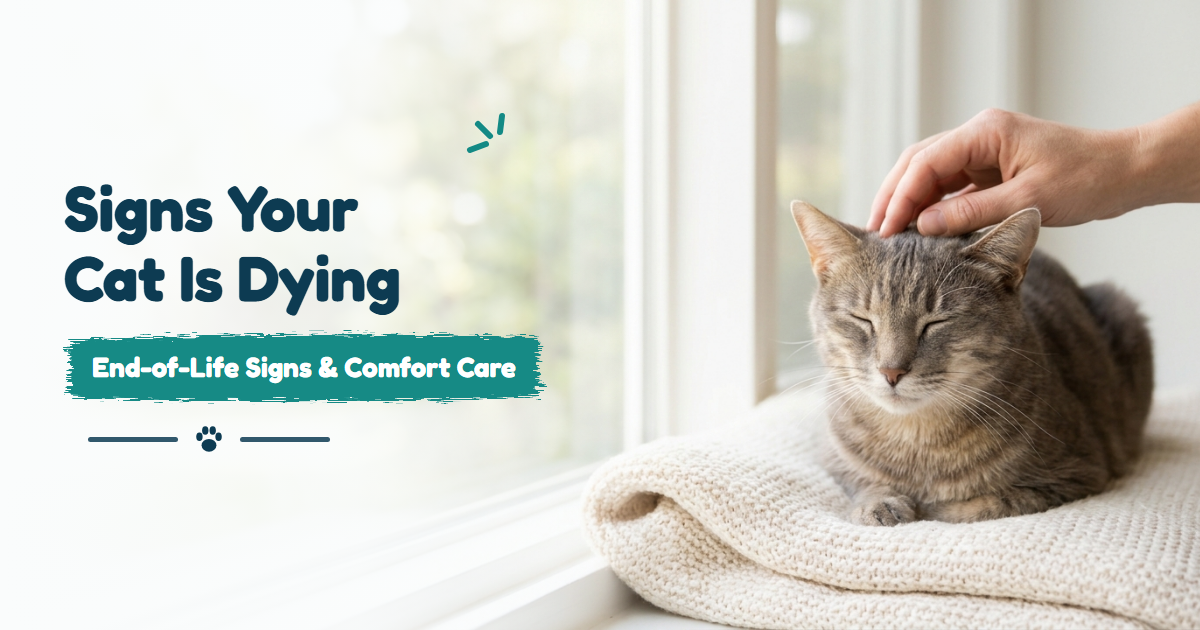
Quick answer: Common signs your cat is dying include not eating or drinking, major weight and muscle loss, extreme weakness, hiding or seeking quiet places, no longer grooming, a low body temperature with cold paws and ears, changes in breathing, a strange odor, and losing control of the bladder or bowels. Many of these signs can also come from illnesses that can be treated, so always talk to your vet first. If your cat is in their final stage, your vet can help you keep them comfortable and talk through options like hospice care and euthanasia.
Losing a cat is one of the hardest parts of loving one. If you’re reading this, you may be watching your cat slow down and wondering what’s happening and what comes next.
This guide explains how to tell if your cat is dying, the most common signs a cat is dying, how to tell if your cat is just sick or nearing the end, what happens when a cat stops eating, what the final weeks, days, and hours may look like, how to judge your cat’s quality of life, and how to keep them as comfortable as possible. It’s written to help you feel prepared, not to replace your vet, who knows your cat and can guide you through this time.
Table of Contents
- First, Rule Out Treatable Problems
- Is My Cat Sick or Dying?
- 12 Signs Your Cat Is Dying
- Timeline: What the Final Weeks, Days, and Hours May Look Like
- When a Cat Stops Eating, How Long Before They Die?
- Cat Quality of Life Scale: How to Judge When It’s Time
- How to Keep a Dying Cat Comfortable at Home
- When to Put a Cat Down: Is Euthanasia the Kindest Choice?
- After Your Cat Passes
- Frequently Asked Questions
First, Rule Out Treatable Problems
Many signs that look like the end of life can actually come from problems your vet can treat, sometimes easily. A cat who stops eating, hides, and seems very weak might have:
- A urinary blockage
- Severe dehydration
- A treatable infection
- Dental pain bad enough to stop eating
- Diabetes or thyroid disease
- A reaction to a toxin
- Pain from arthritis that can be managed
Sudden weakness, trouble breathing, or crying in pain are emergencies, not a normal part of aging. Please call your vet or an emergency clinic first. Our guide on how to tell if your cat is sick can help you understand what you’re seeing.
Is My Cat Sick or Dying?
This is often the hardest question, because the early signs look the same. A sick cat and a dying cat can both stop eating, hide, and sleep more. The difference usually shows in how fast things change, how your cat responds to care, and whether there’s a known long-term illness.
| More likely sick (treatable) | More likely near the end of life | |
| How it started | Suddenly, over a day or two | Slow decline over weeks or months |
| Eating | Eats less but still shows some interest | Refuses even favorite foods and treats |
| Response to treatment | Improves with fluids, medicine, or pain relief | Keeps declining even with treatment |
| Energy | Tired but still gets up, walks, uses the litter box | Can barely stand, stays in one spot |
| Body temperature | Normal or fever | Below normal, cool ears and paws |
| Health history | Young or otherwise healthy | Senior cat, or known kidney disease, cancer, or heart disease |
This table is only a general guide. Only your vet can tell for sure, often with a physical exam and blood work. Many cats who look like they’re dying recover once a hidden problem like dehydration, infection, or a blockage is treated. That’s why a vet visit comes first, even for an older cat. If your cat is older, our guide on when a cat is considered a senior explains what changes to expect with age.

12 Signs Your Cat Is Dying
Every cat is different. Some show many of these signs over weeks, while others decline quickly. Most cats near the end show several of these at once.
1. Not Eating or Drinking
Losing interest in food and water is one of the most common end-of-life signs. Your cat may turn away from even their favorite treats. Read more in our guide on cat not eating.
2. Severe Weight Loss and Muscle Wasting
You may feel the spine, hips, and shoulder blades more clearly. The face may look thinner, and the back legs may lose muscle.
3. Extreme Weakness or Low Energy
A dying cat may sleep most of the day, have trouble standing, walk unsteadily, or stop jumping entirely. Some cats lie in one spot for hours.
4. Hiding or Seeking Solitude
Many cats look for quiet, dark, or cool places like closets, under beds, or bathroom floors. Others become more clingy and want to stay close to their favorite person.
5. No Longer Grooming
Cats who feel very unwell often stop grooming. Their coat may look greasy, matted, or unkempt. You may notice a smell from not cleaning themselves.
6. Low Body Temperature
As the body slows down, a cat’s temperature drops. Their ears and paws may feel cool to the touch. A normal temperature is about 100.4°F to 102.5°F. Below 99°F in a weak cat is a serious sign.
7. Changes in Breathing
Breathing may become fast, slow, shallow, or labored. In the final hours, some cats have pauses between breaths or take deep, gasping breaths. Open-mouth breathing in cats is always a reason to call your vet.
8. Unusual Odor
Cats with kidney failure, which is common in older cats, may have breath that smells like ammonia or urine. Cats with other organ failure or untreated infections can also develop a strong smell. Read more in why does my cat’s breath smell.
9. Loss of Bladder or Bowel Control
A very weak cat may not make it to the litter box or may pee and poop where they lie.
10. Changes in Behavior or Personality
A friendly cat may become irritable, or a shy cat may seek more attention. Some seem confused, stare at walls, or yowl, especially at night.
11. Dull Eyes and Less Response
Your cat’s eyes may look dull or sunken. They may not respond to their name, toys, or people the way they used to.
12. Seizures or Collapse
Some cats have seizures or collapse near the end, depending on the illness. These need immediate vet care.
Timeline: What the Final Weeks, Days, and Hours May Look Like
Cat dying symptoms often build in stages. There’s no fixed timeline, and some cats move through these stages much faster. This is a general guide.
| Stage | What You May See |
| Weeks before | Weight loss, eating less, sleeping more, less grooming, less interest in play, hiding more |
| Days before | Little or no eating or drinking, extreme weakness, trouble standing, cool paws and ears, accidents outside the litter box |
| Hours before | Very shallow or irregular breathing, little or no response, not moving, very low body temperature, sometimes a few gasping breaths or muscle twitches |
If your cat has a long-term illness like kidney disease, heart disease, or cancer, ask your vet what signs to expect for that condition. This helps you plan ahead.
When a Cat Stops Eating, How Long Before They Die?
There’s no exact answer, because it depends on the cause, your cat’s age and body condition, and whether they’re still drinking. As a general guide:
- A cat who stops eating but still drinks may live for days to a couple of weeks, but they get weaker each day.
- A cat who stops both eating and drinking at the end of life usually passes within a few days, since cats can’t go long without water.
- A cat in the final stage of a terminal illness often stops eating in the last days, and the body shuts down gradually from there.
There’s one very important point. A cat who stops eating is not necessarily dying. Cats are very sensitive to going without food. After just a few days with no food, a cat’s body starts moving fat into the liver faster than the liver can handle. This causes a serious liver disease called hepatic lipidosis (fatty liver), which can be fatal on its own, even in a cat who was otherwise fine. It’s more likely in overweight cats.
So if your cat stops eating for more than 24 hours, call your vet, whatever their age. Many cats recover with treatment. Our guide on why a cat stops eating covers the common causes and how long is too long.
If your vet has confirmed your cat is in their final stage, refusing food is a natural part of the body shutting down. At that point, the goal is comfort. Don’t force-feed a dying cat. Talk to your vet about keeping them comfortable and about when to say goodbye.

Cat Quality of Life Scale: How to Judge When It’s Time
It’s hard to know when “enough” is enough. Many vets use a quality-of-life scale to help owners think it through. One common tool is the HHHHHMM scale, created by veterinary oncologist Dr. Alice Villalobos. Score each area from 0 (very poor) to 10 (excellent).
| Category | Questions to Ask |
| Hurt | Is my cat’s pain under control? Is breathing easy? |
| Hunger | Is my cat eating enough, even with help? |
| Hydration | Is my cat drinking enough, or do they need fluids? |
| Hygiene | Can my cat keep themselves clean? Are there sores or messes? |
| Happiness | Does my cat still enjoy things, like sunbeams, people, or treats? |
| Mobility | Can my cat get up, move around, and use the litter box? |
| More good days than bad | Are the bad days starting to outnumber the good ones? |
A total score above 35 out of 70 is usually considered an acceptable quality of life. If the score keeps dropping, or bad days outnumber good days, it’s time to talk with your vet about next steps.
A simple tip: mark each day on a calendar as a good day or a bad day. Seeing it written down can make the pattern clearer.
How to Keep a Dying Cat Comfortable at Home
- Ask your vet about pain medicine. Cats hide pain well, so even if your cat seems calm, they may need pain relief. Our guide on signs of pain in cats can help you spot it. Never give human pain medicine, which can be deadly to cats.
- Create a cozy, quiet spot. A soft, padded bed in a calm room, away from noise and other pets. Add a soft blanket that smells like you.
- Keep them warm. Older and sick cats lose heat easily. A pet-safe heating pad on low, covered with a blanket, or a warm spot near a sunny window can help. Make sure your cat can move off it.
- Put essentials close by. Food, water, and a low-sided litter box should be within a few steps.
- Offer tempting food. Warmed wet food, plain cooked chicken, or other favorites. Your vet may prescribe an appetite stimulant or anti-nausea medicine.
- Help with hydration. Your vet can show you how to give fluids under the skin at home if that’s right for your cat.
- Keep them clean. Gently wipe their face, eyes, and back end with a soft, damp cloth. Use puppy pads under their bed if they have accidents.
- Help with grooming. Light brushing can feel soothing. If mats form, see how to remove mats from cat fur for gentle methods.
- Handle gently. Support the chest and back end when lifting, and avoid pressure on sore spots.
- Just be there. Sit with your cat, talk softly, and offer gentle pets if they enjoy it.
When to Put a Cat Down: Is Euthanasia the Kindest Choice?
Choosing euthanasia is one of the hardest decisions a pet owner ever makes. Many vets describe it as giving a peaceful end before suffering becomes too much. It may be time to consider it when your cat:
- Is in pain that medicine can’t control
- Can’t eat or drink, even with help
- Has trouble breathing
- Can no longer stand, walk, or use the litter box
- Has more bad days than good days
What Happens During Cat Euthanasia
Your vet will usually give a sedative first, so your cat becomes relaxed and sleepy. Then they’ll give a final injection, often into a vein, which stops the heart quickly and painlessly. The whole process is calm, and you can usually stay with your cat the entire time.
Whether you stay is a personal choice, and there’s no wrong answer. Many owners choose to stay because their familiar voice and touch can comfort their cat. If you can’t, your vet team will handle your cat with care and gentleness.
Afterward, your cat’s eyes may stay open, and you may see a few muscle twitches or a final breath. These are normal reflexes, not signs of pain.
In-Home Euthanasia
Many areas in the US have vets who come to your home. This lets your cat stay in a familiar, calm place, surrounded by family. It may cost more than a clinic visit, but many owners find it gentler.
After Your Cat Passes
- Aftercare options: your vet can help with private cremation (ashes returned), communal cremation, or home burial. Check your city and county rules before burying a pet at home.
- Other pets: other cats and dogs may notice the loss. Some owners let other pets see and smell the body, which may help them understand.
- Your grief: it’s normal to feel deep sadness, guilt, or even relief. Many vet schools and pet organizations in the US run free pet loss support hotlines, and your vet can often point you to one.
For more guides on caring for your cat at every age, visit our Cat Health & Wellness section.
Frequently Asked Questions
What are the signs your cat is dying?
The most common signs your cat is dying are not eating or drinking, severe weight loss, extreme weakness, hiding, no longer grooming, cool paws and ears, changes in breathing, a strong odor, and accidents outside the litter box. Since many of these can also come from treatable illnesses, see your vet first.
What do cats do before they die?
In their last days, many cats stop eating and drinking, sleep almost all the time, and look for a quiet place to lie down. Their breathing may change, their body may feel cool, and they may stop grooming or using the litter box. Some cats become more withdrawn, while others want to stay close to their people.
Do cats hide when they are dying?
Many do. Cats often look for a quiet, safe, out-of-the-way spot when they feel very weak or sick. This is an instinct to protect themselves. Some cats do the opposite and stay very close to their owners.
How long does it take for a cat to die?
It varies a lot. Some cats decline over several weeks, while others pass within a few days or hours after the final stage begins. A natural death can involve pain or distress, so talk to your vet about comfort care and euthanasia options.
How do I know if my cat is suffering?
Signs of suffering include hiding, a hunched posture, squinting, fast or labored breathing, not eating, crying or growling when touched, and being unable to get comfortable. A quality-of-life scale can help you and your vet decide what’s best.