Table of Contents
Quick answer: A small amount of mucus in dog poop is normal, because the colon makes mucus to help stool pass. A thick, jelly-like coating or lots of mucus usually means the colon is irritated (colitis). Common causes are stress, a sudden food change, eating garbage, parasites, and food allergies. If your dog is acting normal, it often clears up in a day or two with a bland diet. Call your vet if it lasts more than 2 days, comes with blood, vomiting, or diarrhea, or your dog seems unwell.
You pick up after your dog and notice the poop is covered in a slimy, jelly-like coating. It’s not pretty, and it’s natural to wonder if something is wrong.
Most of the time, mucus in dog poop is a sign of mild gut irritation that passes quickly. But sometimes it points to parasites, food problems, or other conditions that need a vet. This guide explains what’s normal, what causes it, what you can do at home, and when to get help.
Table of Contents
- Is Mucus in Dog Poop Normal?
- What Does Dog Poop With Mucus Look Like?
- Common Causes of Mucus in Dog Poop
- What to Do at Home for Mild Cases
- When to Call the Vet
- What Your Vet May Do
- How to Prevent Mucus in Your Dog’s Poop
- Frequently Asked Questions
Is Mucus in Dog Poop Normal?
Yes, in small amounts. The lining of your dog’s large intestine (colon) makes mucus to keep things moving smoothly. Most of the time, you won’t notice it, or you’ll see a thin, clear film on the stool now and then.
It becomes a concern when:
- There’s a thick, jelly-like coating on the poop
- The poop is mostly mucus
- Mucus shows up in several poops in a row
- It comes with blood, diarrhea, vomiting, or straining
- Your dog seems tired, isn’t eating, or is losing weight
What Does Dog Poop With Mucus Look Like?
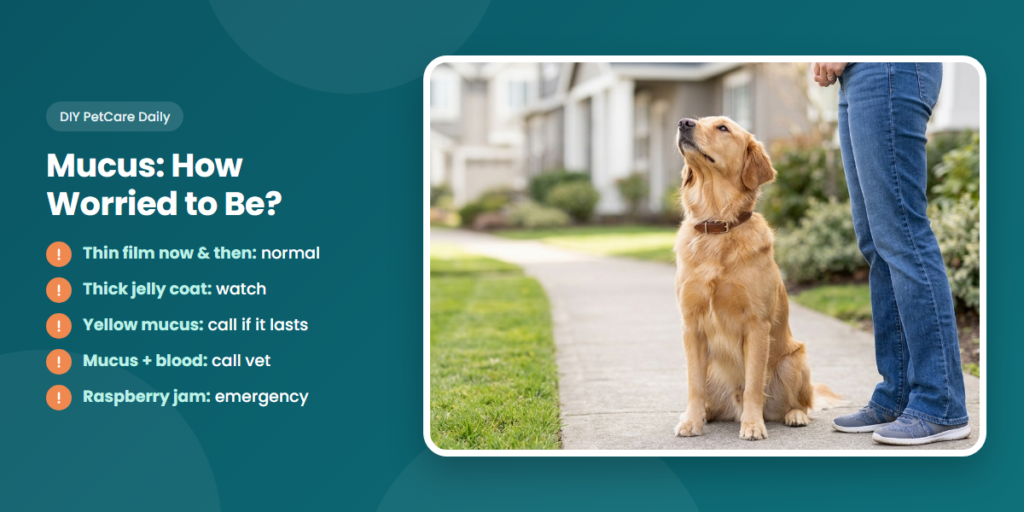
| What You See | What It May Mean | How Worried to Be |
| Thin, clear film now and then | Normal colon lubrication | Not a worry |
| Thick, clear, or white jelly coating | Colon irritation (colitis) | Mild; watch for 1 to 2 days |
| Yellow mucus | Gut irritation, often with fast-moving stool or a food intolerance | Mild to moderate; call your vet if it continues |
| Mucus with red streaks | Colitis with some bleeding from the lower gut | Call your vet the same day |
| Mucus with diarrhea | Gut upset, infection, or parasites | Call your vet if it lasts more than 24 to 48 hours |
| Mucus with vomiting or lethargy | More serious illness | See a vet today |
| Jelly-like red stool, like raspberry jam | Possible serious gut illness | Emergency, go now |
Yellow Mucus in Dog Poop
Yellow mucus in dog poop usually means food moved through the gut quickly, often with a food change or mild intolerance. If it lasts more than 2 days, or your dog also has diarrhea or vomiting, call your vet.
Clear Mucus in Dog Poop
Clear mucus in dog poop is the most common type. A thin film now and then is normal. A thick, clear jelly coating usually points to mild colon irritation that settles in a day or two.
If you see blood, read our guide on blood in dog stool to understand what different types mean.
Common Causes of Mucus in Dog Poop
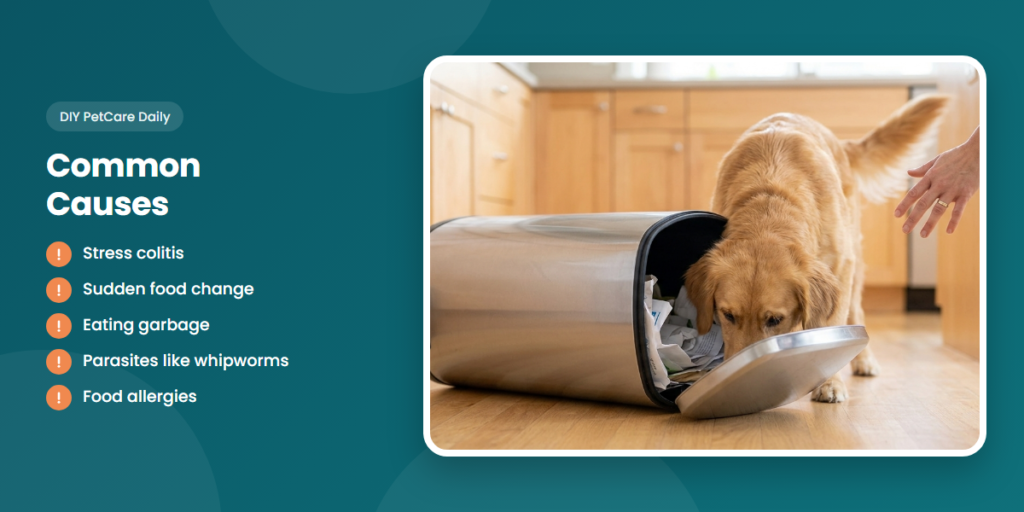
Colitis
Colitis means inflammation of the colon, and it’s the most common reason for extra mucus. Dogs with colitis often:
- Poop more often, in smaller amounts
- Strain or seem urgent to go
- Pass soft stool with mucus, sometimes with a little bright red blood
Colitis can be short-term (acute) or long-lasting (chronic), and it can be triggered by many of the causes below. If your dog is pooping mucus with very little stool and straining, colitis is the most likely reason. Mucus in dog stool after a stressful event is a classic example. Our full guide to colitis in dogs covers symptoms and treatment.
Stress
Boarding, travel, a move, a new pet, visitors, fireworks, or a change in routine can all upset a dog’s gut. Stress colitis usually shows up within a day or two of the stressful event and clears up within a few days.
Sudden Diet Changes
Switching food too fast is a very common cause. The gut needs time to adjust. Our guide on how to switch dog food shows a gentle 10-day plan.
Eating Things They Shouldn’t
Garbage, table scraps, fatty foods, sticks, grass, or anything found on a walk can irritate the colon. Some foods are also toxic. Stick to safe treats; our guide on what fruits can dogs eat lists healthy options.
Parasites
Several parasites irritate the colon and cause mucus:
- Whipworms, a common cause of mucus and blood in adult dogs
- Giardia, which often causes soft, greasy, smelly stool with mucus
- Coccidia, common in puppies
- Hookworms and roundworms
A stool test at your vet is the best way to check. Some parasites shed eggs only now and then, so your vet may test more than once.
Food Allergies or Intolerances
Some dogs react to proteins like chicken or beef, or other ingredients. Signs can include soft stool with mucus, gas, itchy skin, and ear infections. Your vet may suggest an 8 to 12 week diet trial.
Inflammatory Bowel Disease (IBD)
IBD is long-term inflammation of the gut. Dogs may have repeated bouts of mucus, soft stool, vomiting, and weight loss. It needs a vet’s diagnosis but can usually be managed with diet and medicine.
Infections
Bacterial infections, such as Clostridium or Salmonella, and some viruses can cause mucus and diarrhea. Puppies who aren’t fully vaccinated are at risk for parvovirus, which causes severe bloody diarrhea. Keep your puppy on track with our dog vaccination schedule.
Other Causes
- Swallowed objects that irritate or block the gut
- Polyps or tumors in the colon, more common in older dogs
- Anal gland problems
- Some medicines, like antibiotics
What to Do at Home for Mild Cases
These steps are for an adult dog who has mucus in their poop but is otherwise acting normal: bright, eating, drinking, and playing.
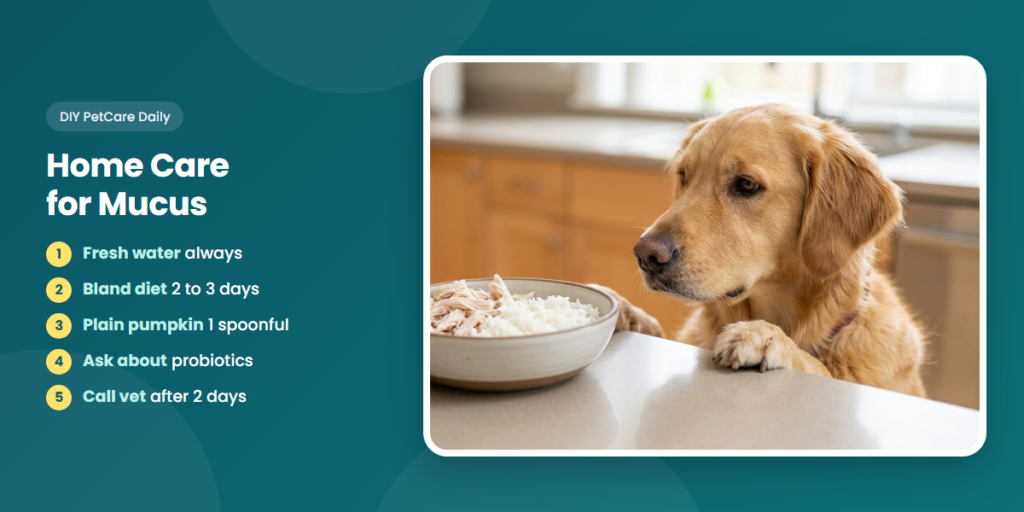
- Keep fresh water available. Make sure your dog stays hydrated.
- Feed a bland diet for 2 to 3 days. Small meals of plain boiled chicken (no skin, bones, or seasoning) and white rice are easy on the gut. See what to give dog for diarrhea for portion sizes.
- Add a spoonful of plain canned pumpkin. The fiber can help firm up stool. Use plain pumpkin puree, not pie filling.
- Ask your vet about a dog probiotic. It may help the gut recover faster.
- Skip treats, chews, and table scraps until the poop is back to normal.
- Reduce stress. Keep routines calm and steady.
- Go back to regular food slowly over a few days by mixing it with the bland diet.
- Watch the poop. If mucus continues past 2 days or other signs show up, call your vet.
Don’t give human medicine like Pepto-Bismol or anti-diarrhea drugs without your vet’s okay. Some are unsafe for dogs or can hide important signs.
When to Call the Vet
Go to a vet right away if your dog has:
- Large amounts of blood, or stool that looks like raspberry jam
- Mucus with repeated vomiting
- Weakness, collapse, or pale gums
- Possible poison or toxin exposure
- A puppy who isn’t fully vaccinated and has diarrhea
Call your vet the same day or book a visit if:
- Mucus lasts more than 2 days
- You see mucus with blood more than once
- Your dog has diarrhea for more than 24 to 48 hours
- Your dog isn’t eating or seems tired
- It keeps coming back every few weeks
- Your dog is losing weight
Bring a fresh poop sample (within 12 hours, kept cool in a sealed bag). It helps your vet check for parasites and infection.
What Your Vet May Do
- A physical exam
- A stool test for parasites (sometimes repeated)
- Deworming, even if the test is negative, because some worms are hard to find
- Blood tests
- A diet trial for food allergies
- X-rays or ultrasound for older dogs or ongoing cases
- Medicines to calm the colon or treat infection
How to Prevent Mucus in Your Dog’s Poop
- Change foods slowly over 7 to 10 days
- Keep trash cans closed and avoid fatty table scraps
- Stay on a regular deworming schedule and get yearly stool tests
- Pick up after your dog to lower parasite risk
- Keep stress low during travel and boarding
- Feed a complete, balanced diet in measured portions
- Learn what normal looks like with our dog poop color chart
For more guides on keeping your dog healthy, visit our Dog Health & Wellness section.
Frequently Asked Questions
Why is my dog pooping mucus?
The most common cause is colitis, an irritated colon, from stress, a sudden food change, or eating something they shouldn’t. Parasites, food allergies, infections, and inflammatory bowel disease can also cause it. A small amount now and then can be normal.
Is mucus in dog poop serious?
Usually not, if your dog is acting normal and it clears up in a day or two. It’s more serious if it lasts more than 2 days, comes with blood, vomiting, or diarrhea, or your dog seems unwell. Then call your vet.
What should I feed my dog with mucus in their poop?
Feed a bland diet of plain boiled chicken and white rice in small meals for 2 to 3 days, with plenty of water. A spoonful of plain pumpkin may help. Then mix their regular food back in slowly.
Can worms cause mucus in dog poop?
Yes. Whipworms, Giardia, coccidia, and other parasites often cause mucus, sometimes with blood. A stool test at your vet can find them, and most are easy to treat.
Why does my dog’s poop look like jelly?
A jelly-like coating is usually extra mucus from an irritated colon. It often happens after stress or a diet change. If the jelly is red, like raspberry jam, or your dog is vomiting or weak, see a vet right away.