Table of Contents
Quick answer: A cat losing weight without a diet usually has a reason that needs a vet’s attention. Common causes are hyperthyroidism, kidney disease, diabetes, dental pain, gut problems, cancer, and stress. Weight loss with a big appetite is a classic warning sign. Since cats hide illness so well, book a vet visit even if your cat seems fine.
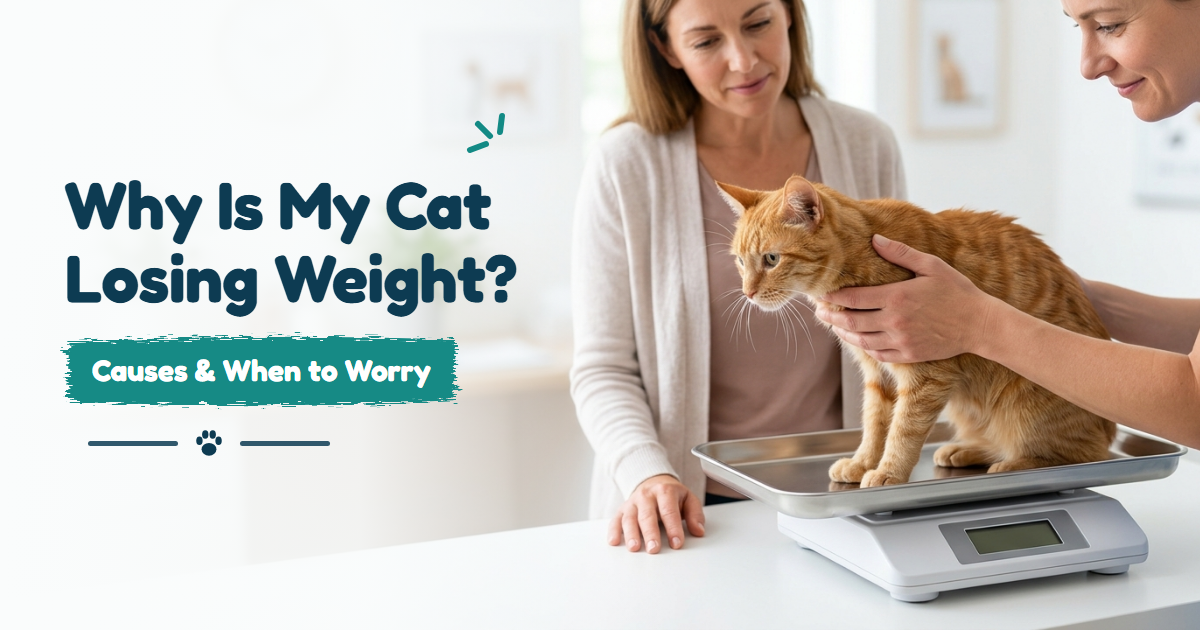
Cats are small, and their fur hides a lot. You may not notice a change until you pick your cat up and feel their spine, or the vet’s scale shows a lower number. By then, the loss may have been going on for months.
That’s why it’s a good idea to take weight loss seriously, even if your cat seems happy and still eats well. Many of the conditions behind it are very treatable, especially when found early. This guide explains the common causes, how to read the clues, and how quickly your cat needs to be seen.
Table of Contents
- How Much Weight Loss Is Too Much?
- Is Your Cat Losing Weight While Eating Normally?
- Common Causes of Weight Loss in Cats
- What to Do If Your Cat Is Losing Weight
- How to Support Your Cat at Home
- When to Worry and Call the Vet
- Frequently Asked Questions
How Much Weight Loss Is Too Much?
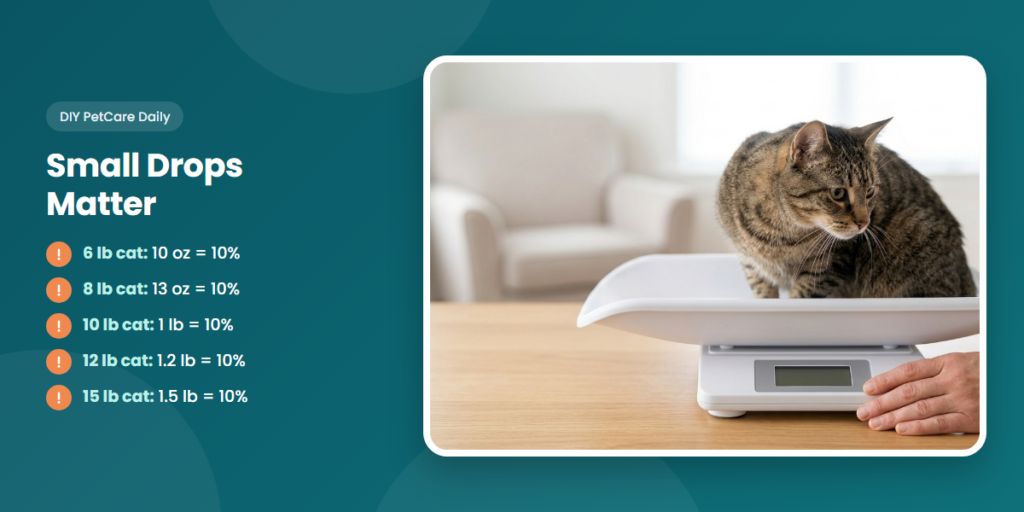
For a cat, a little goes a long way. Many vets consider a loss of 10% of body weight to be significant, but with a cat, it’s worth checking sooner. Small drops can be the first clue to an illness.
| Normal Weight | 5% Loss | 10% Loss |
| 6 lb | About 5 oz | About 10 oz |
| 8 lb | About 6 oz | About 13 oz |
| 10 lb | 8 oz | 1 lb |
| 12 lb | About 10 oz | About 1.2 lb |
| 15 lb | 12 oz | 1.5 lb |
To put it in perspective, losing 1 pound on a 10 lb cat is like a 150 lb person losing 15 pounds. And unless you weigh your cat regularly, you probably wouldn’t see it.
Get a current number with a baby scale or by weighing yourself holding your cat and subtracting your own weight. Our cat BMI calculator can help you see where your cat stands now. If your cat has always been slim but isn’t dropping weight, our guide on why a cat may be so skinny may be more helpful.
Is Your Cat Losing Weight While Eating Normally?
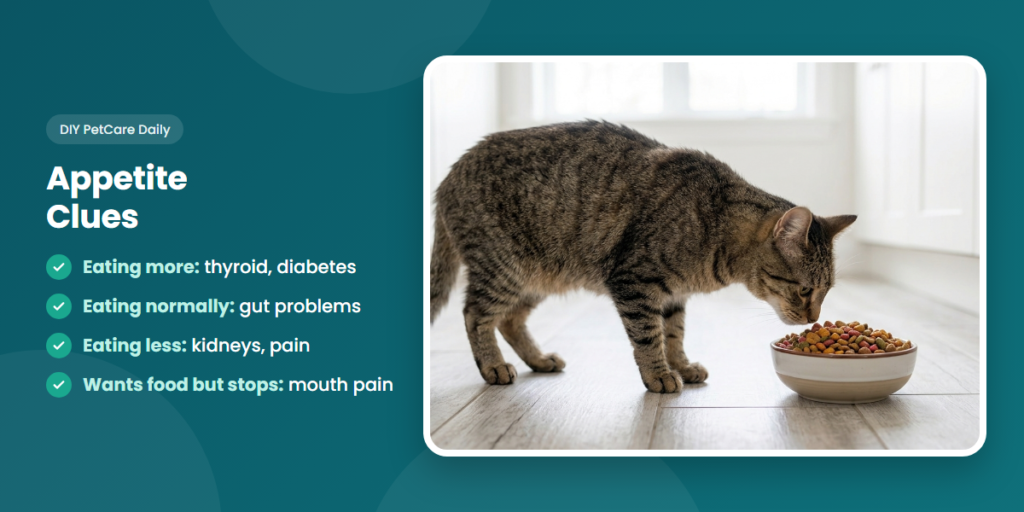
Appetite is one of the most useful clues. It’s the first thing your vet will ask about, so try to work out which group your cat fits.
| Appetite | Common Causes |
| Eating more than usual | Hyperthyroidism, diabetes, parasites, gut problems |
| Eating normally | Early hyperthyroidism, gut problems, early cancer, not enough calories |
| Eating less or refusing food | Kidney disease, dental pain, nausea, cancer, stress, pain |
| Wants to eat but stops | Mouth pain, a stuck object, trouble swallowing |
Watch your cat at a meal. Do they rush over and eat everything? Do they walk up, sniff, and leave? Do they start eating, then back away, or eat on one side? These details can really help your vet.
Common Causes of Weight Loss in Cats
Hyperthyroidism
This is a very common cause in cats over about 10. An overactive thyroid speeds up the body, so cats burn through energy. Signs include a big appetite, restlessness, more drinking and peeing, vomiting, and yowling at night. Many owners think their older cat looks great because they’re so active and hungry. It’s treatable with medicine, diet, or other options.
Chronic Kidney Disease
Kidney disease is also very common in older cats. Watch for more thirst, bigger clumps in the box, a poor appetite, vomiting, and bad breath. There’s no cure, but early diet changes and treatment can help many cats feel better for a long time. Our guide on how much water a cat should drink can help you track thirst.
Diabetes
Diabetic cats can’t use sugar from their food properly, so they lose weight even while eating a lot. They often drink and pee much more than usual. Some walk with their hocks low to the ground. It’s manageable, and some cats even go into remission with early treatment and the right diet.
Dental Disease
A sore mouth can make eating painful. Cats may eat more slowly, drop food, chew on one side, or go to the bowl and walk away. Bad breath is another clue. Our guides to the signs of dental disease in cats and why a cat’s breath may smell explain what to look for.
Gut Problems
Inflammatory bowel disease and intestinal lymphoma can stop your cat from absorbing nutrients. Signs include frequent vomiting, diarrhea, and weight loss. Vomiting is not normal in cats, even when they do it often. Our guide on cat throwing up explains when to worry.
Parasites
Worms and other parasites take nutrients from your cat’s food. They’re especially common in kittens, outdoor cats, and new rescues. You may notice a dull coat, a pot belly, or loose stool. Bring a stool sample to your vet.
Cancer
Older cats can lose weight because of cancer, and it may be the first sign you notice. Look for new lumps, low energy, or a poor appetite. Some cancers respond well to treatment, and your vet can help you weigh your options.
Infections
Viruses like feline leukemia and FIV can weaken the immune system and lead to weight loss. Our guide on feline leukemia explains testing, which is especially important for cats who go outdoors.
Stress and Household Changes
A move, a new pet, a new baby, or the loss of a companion can put a cat off their food. In multi-cat homes, a bully can block a shy cat from the bowl. Stress can be the whole answer, but it’s best to rule out medical causes first.
Not Enough Food
Your cat may simply not be getting enough. This can happen with a food change, a new diet, or an automatic feeder that isn’t working. Use our cat calorie calculator to check, and read our guide on how many calories a cat needs.
Aging and Muscle Loss
Many older cats lose muscle, and some don’t digest food as well. Their spine and hips may start to feel bonier, even if the number on the scale stays close. It’s common but not something to ignore, so ask your vet about it. Our senior cat care checklist can help you support an aging cat.
What to Do If Your Cat Is Losing Weight
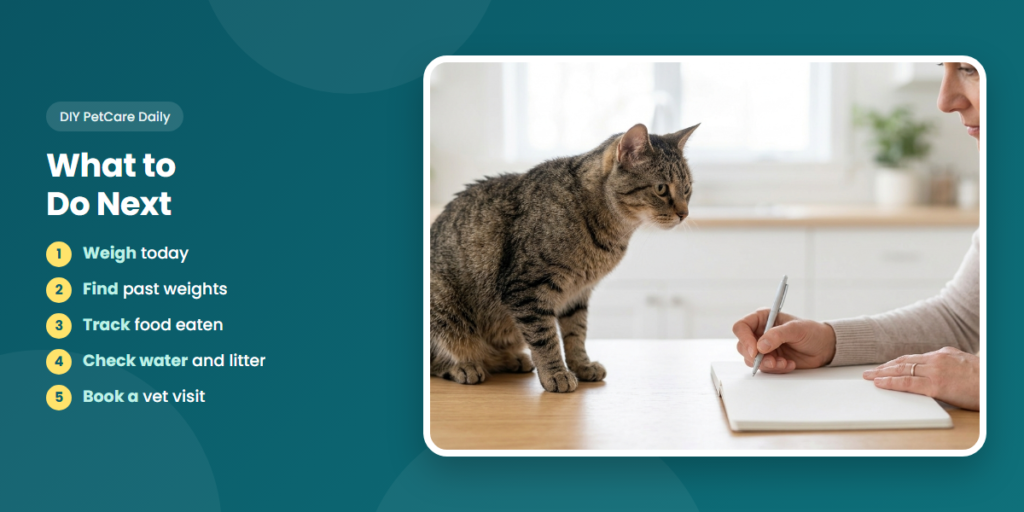
These simple steps will give your vet useful information.
- Weigh your cat today. Write down the date and number.
- Find past weights. Check old vet records, or ask the clinic.
- Check their body. Feel the ribs, spine, and hips, and use our guide to the cat body condition score.
- Track their food. Write down what they eat for a few days, and watch whether other cats are stealing it.
- Check the water bowl and litter box. Note any change in thirst, clumps, or stool.
- Look at their mouth, if your cat is comfortable with it.
- Film anything unusual, such as odd eating, coughing, or walking.
- Book a vet visit. Bring a fresh stool sample if you can.
What Your Vet May Do
Your vet will look at your cat’s weight history and do a physical exam, which includes checking the mouth and feeling the neck and belly. Common tests include:
- Blood work, including a thyroid test
- A urine test
- A stool test for parasites
- Blood pressure
- Tests for feline leukemia and FIV
- X-rays or an ultrasound
Finding the cause is the most important step, since extra food won’t fix an illness.
How to Support Your Cat at Home
Once you’ve talked to your vet, these steps can help:
- Offer small, frequent meals. Try 3 or 4 small meals a day.
- Warm wet food. A few seconds in the microwave, stirred well, brings out the smell.
- Try a different texture. Pâté may be easier for cats with sore mouths.
- Use wide, shallow dishes. Some cats dislike whisker contact.
- Feed in a quiet spot. Separate your cat from other pets and noisy appliances.
- Keep water available. Sick cats can get dehydrated quickly.
- Weigh weekly. Track progress on your phone.
Change foods slowly over 7 to 10 days, unless your vet says otherwise. Don’t give any human medicines, since many are dangerous for cats.
If your vet confirms your cat needs more calories, our cat weight calculator can help you set a realistic target.
When to Worry and Call the Vet
Call your vet this week if your cat:
- Is losing weight, even if they seem happy
- Has a bigger appetite with weight loss
- Is drinking or peeing more than usual
- Is vomiting often or has diarrhea
- Has bad breath or trouble eating
- Has a greasy or unkempt coat
- Is over 10 and has lost any weight
Go to a vet right away if your cat:
- Hasn’t eaten for 24 hours or more
- Is hiding and won’t come out, or seems very weak
- Has trouble breathing
- Has yellow gums, eyes, or ears
- Is straining in the litter box
Don’t wait if your cat stops eating. Cats who go without food can develop hepatic lipidosis, a life-threatening liver problem. Our guide on cat not eating explains what to do. For other signs that need attention, read how to tell if your cat is sick.
For more guides, visit our Cat Health & Wellness section.
Frequently Asked Questions
Why is my cat losing weight but still eating?
The most common causes are hyperthyroidism, diabetes, parasites, and gut problems. A cat with a big appetite who is losing weight should see a vet, even if they seem happy and energetic.
How much weight loss is concerning in a cat?
Many vets consider a loss of 10% of body weight significant, but cats should be checked earlier. For a 10 lb cat, that’s only 1 lb, which can be hard to notice under fur.
Why is my older cat losing weight?
Older cats commonly lose weight from hyperthyroidism, kidney disease, diabetes, dental disease, or muscle loss. Weight loss isn’t simply normal aging, so ask your vet to check.
Can stress make a cat lose weight?
Yes. A move, a new pet, or other big changes can lower a cat’s appetite. If your cat doesn’t eat for a day, or weight loss lasts, call your vet to rule out other causes.
Should I feed my cat more if they’re losing weight?
See your vet first. More food won’t fix an illness, and treatment often has to come first. Once your vet has checked your cat, they can suggest the right food and amount.